


What’s Next? #2: Should You Stay or Should You Go? Finding the Right Fit
Staying or Moving | Kelly Azzarello Real Estate
One of the most common questions we hear from homeowners isn't when should we move.
It's something simpler — and often harder.
Should we stay? Or should we move at all?
For many people, that question lingers quietly in the background for years. Not because anything is wrong, but because life keeps changing. And this conversation isn't about pushing toward a move — it's about making sure your home still supports the life you want to live.
There Is No Universal Right Answer
What works perfectly for one person might feel completely wrong for someone else.
Some people stay in the same home for decades and never look back. Others reach a point where the home that once felt perfect begins to feel like more than they want to manage. The goal isn't to choose what sounds good on paper — it's to understand what actually fits your life today, and where it may be headed.
When Staying Makes Sense
For many homeowners, staying put truly is the right choice.
You may love your neighborhood. You may have strong community ties. Your home may still function well for how you live day to day. In those cases, planning might simply mean making small adjustments — improving comfort, safety, or accessibility — or just confirming that staying aligns with your long-term goals.
Planning doesn't always lead to moving. Sometimes it leads to confidence — confidence that you're exactly where you should be.
When Moving Enters the Conversation
For others, the question of moving begins to surface gradually.
Maybe the home feels larger than you need. Maybe maintenance takes more time and energy than it used to. Maybe daily routines involve stairs, layouts, or features that no longer feel as easy to navigate.
These thoughts don't mean you're behind. They don't mean change needs to happen now. They're simply signals worth paying attention to — because ignoring them often leads to rushed decisions later.
Planning Creates Options
When you explore staying versus moving early, you give yourself options.
You can look at different paths without committing to any of them. You can understand what a move could look like, what staying could require, and what trade-offs matter most to you.
Planning early keeps the decision flexible. It allows you to move forward calmly, instead of reacting when circumstances force the issue.
Reframing the Question
Let's look at this differently.
This isn't about choosing between right and wrong. It isn't about giving something up. It isn't about rushing into change.
It's about fit. Does your home fit your life today? Will it continue to fit in the years ahead? When you frame it this way, the decision becomes less emotional and more empowering.
Ready to Think It Through?
We've put together a simple planning guide designed to help you think through the staying vs. moving question — to organize what matters most to you and see your options more clearly, without pressure and without timelines.
You can access it at KellyAzzarello.com. And if you'd like to talk through your specific needs, questions, or goals, we're here to help.
📞 425.830.6457 | KellyAzzarello.com
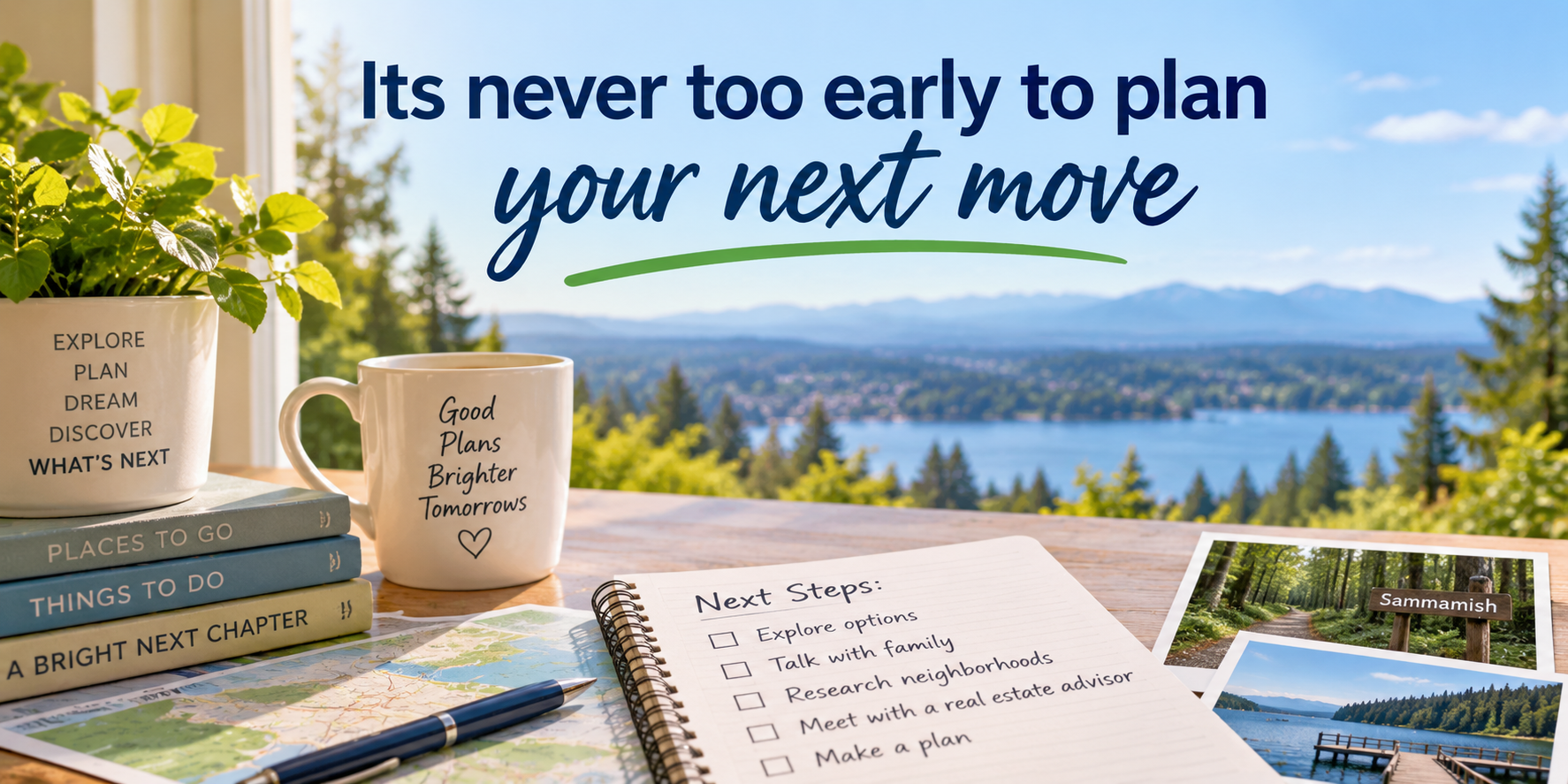
What's Next? It’s Never too Early to Plan Your Next Move
Planning Ahead | Kelly Azzarello Real Estate
Most people don't wake up one day and suddenly decide to move.
What we usually see is something quieter — a conversation, a thought, a moment where someone starts asking themselves: What's next?
And here's what's important to understand: thinking about what's next doesn't mean you're committing to a specific decision or a specific timeline. It simply means you're being thoughtful. Planning ahead is not about pressure — it's about giving yourself choices, and keeping control over them.
Why People Wait (And Why That Can Work Against You)
One of the most common things we hear from homeowners is, "We know we should think about this — we're just not ready yet."
And that makes complete sense. Life is busy. Things feel comfortable. Nothing is forcing a change.
But what often happens is this: planning gets delayed until a decision is forced — by health, by family needs, by home maintenance, or by a sudden shift in circumstances. When that happens, options shrink, timelines tighten, and stress increases.
Here's the key insight: planning early doesn't mean acting early. It means you're making decisions on your terms, instead of reacting to someone else's clock.
Planning and Deciding Are Two Different Things
There's an important distinction that often gets overlooked.
Planning is about understanding options, exploring "what if" scenarios, and gaining clarity without committing to anything. Deciding is about taking action.
You can plan years in advance without ever setting a move date. In fact, the best plans often sit quietly in the background — ready if and when you need them. Most people find real relief once things are written down and thought through. The anxiety tends to fade.
What Early Planning Actually Looks Like
Early planning doesn't have to feel complicated or overwhelming. Take your time, get help if you need it, and remember — you're not in a rush. You're investing a little thought now to make things easier later.
Start with simple questions:
Does our home still fit how we live today?
How might that change in five or ten years?
What would we want more of? What would we want less of?
For some people, planning ahead confirms that staying put makes perfect sense. For others, it opens the door to possibilities they hadn't considered. There's no right answer — only what fits your life.
Planning Helps the People Around You Too
Early planning doesn't just benefit you — it helps your family as well.
Adult children often worry, even if they don't say it out loud. They wonder what you want. They wonder if there's a plan at all. When you've thought things through, those conversations become calmer, clearer, and far less emotional.
Planning doesn't take away independence — it protects it. And it takes the burden off everyone involved so that decisions don't fall on family or friends later, while you remain fully in control.
Let's Start the Conversation
We've created a simple planning guide to go along with this series — something you can use to organize your thoughts and explore your options at your own pace. You can access it on our website at KellyAzzarello.com.
And if you'd ever like to talk through your specific needs or goals, we're always here to help. No pressure, no timelines — just thoughtful guidance when you're ready.
📞 425.830.6457 | KellyAzzarello.com