
Is Bolting Your Foundation Worth It? Earthquake Retrofits for Eastside Homes
Some home upgrades you can see from the street. This one you can't. A foundation retrofit happens in the crawlspace, where almost nobody looks until a home inspector, or an earthquake, forces the question.
It's also one of the most cost-effective things the owner of an older Eastside home can do. Below, we walk through what a retrofit is, why it makes financial sense, and how to tell whether your home needs one. It's part of our series on hidden issues worth understanding before they get expensive, whether or not you plan to sell soon.
Why this matters on the Eastside
We live and work on top of active faults. The Seattle Fault runs east to west beneath downtown Seattle and Puget Sound, passes through or near Bellevue and Mercer Island, and reaches toward the foothills near Issaquah. It last ruptured about 1,100 years ago in a quake estimated at magnitude 7 or higher.
Offshore, the Cascadia Subduction Zone is capable of a magnitude 9 earthquake. The U.S. Geological Survey has put the chance of one striking within the next 50 years at about 14 percent. Nobody can predict the date, which is the whole point: the time to prepare is before there is one.
What actually fails in an older house
Most older homes in our area are a wood-frame house sitting on a concrete foundation. In many of them, the frame is held in place mostly by its own weight, with little or nothing fastening it to the concrete. Between the foundation and the first floor there is often a short framed wall called a cripple wall (also called a pony wall), and in older homes it is frequently open framing with no plywood bracing.
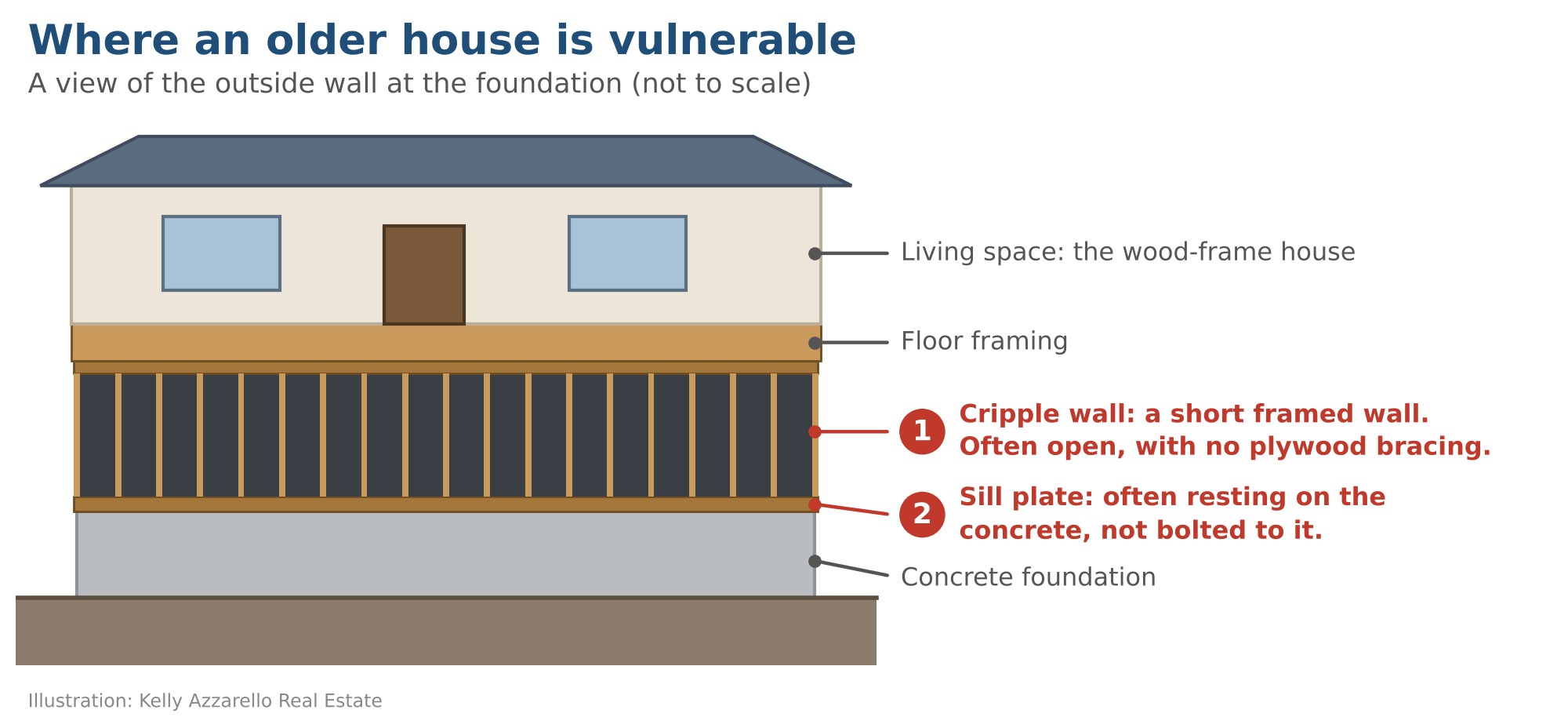
Figure 1. The two weak points in many older homes: the cripple wall and the sill plate.
According to the City of Seattle's retrofit guidance, most earthquake damage to single-family homes comes from one of two failures: the house jumping off its foundation, or a weak cripple wall collapsing. Either one can leave a home unlivable and very expensive to repair.
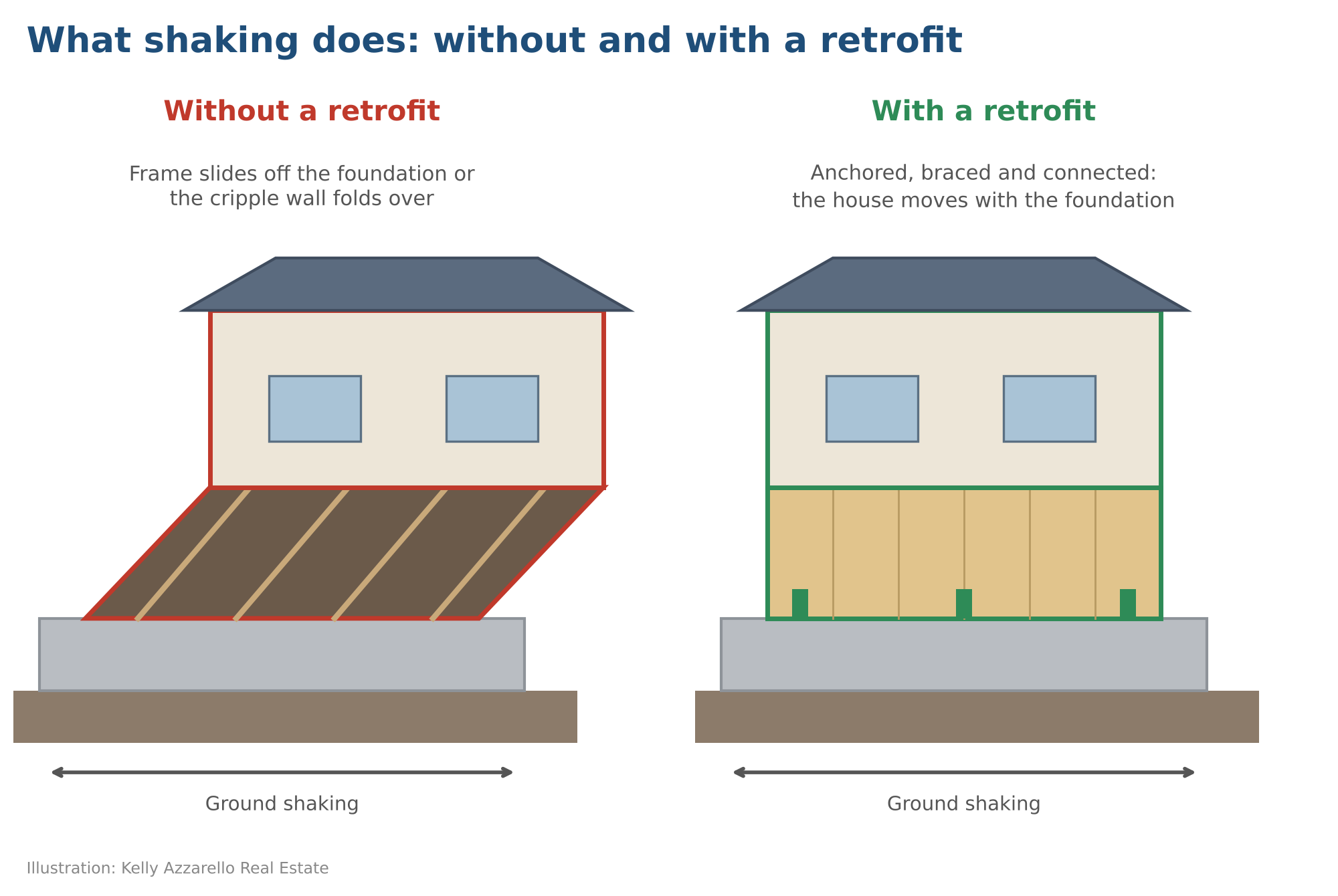
Figure 2. Without a retrofit, the frame can slide or the cripple wall can fold. With one, the house moves with the foundation.
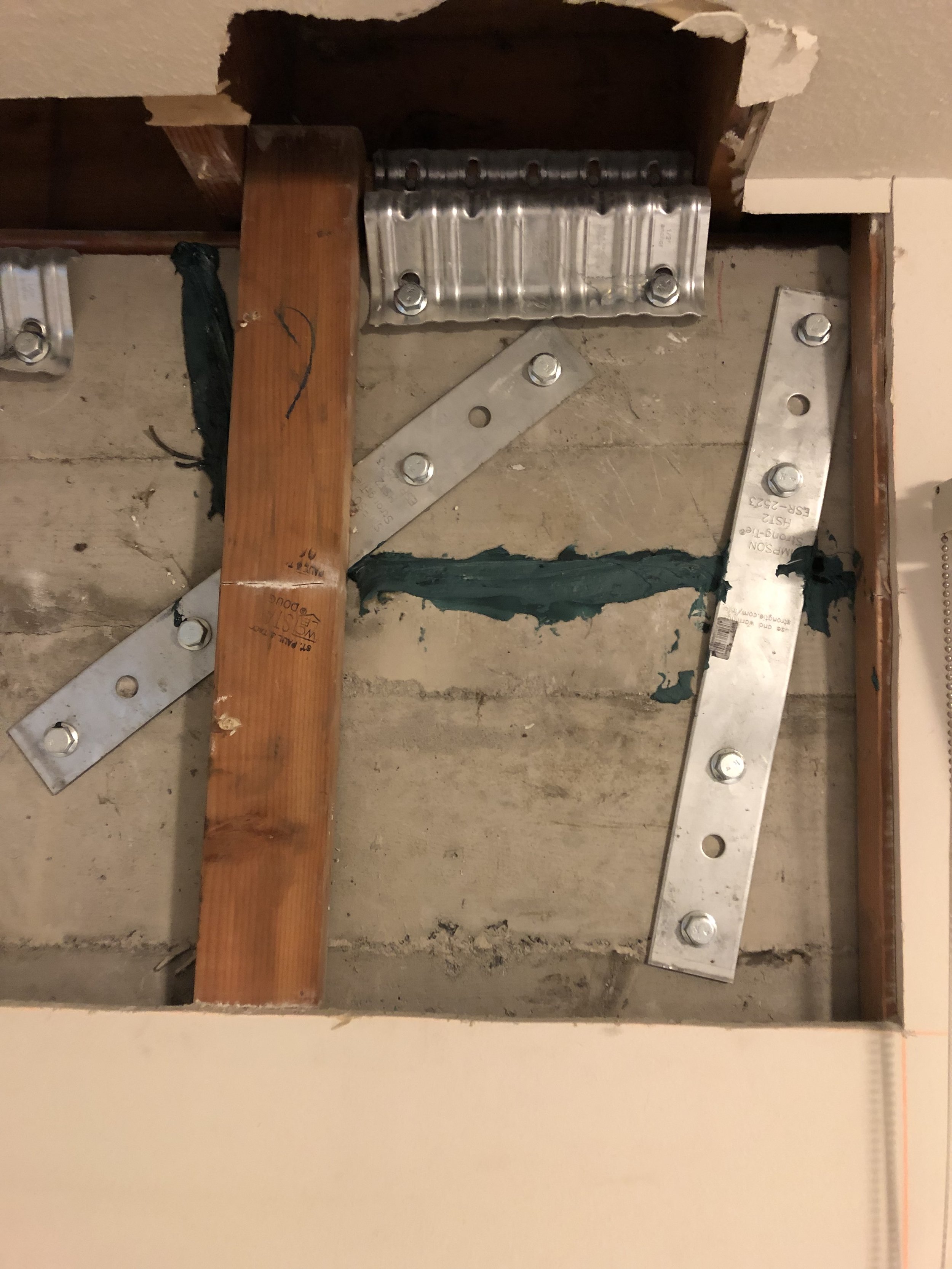
Strapping applied.
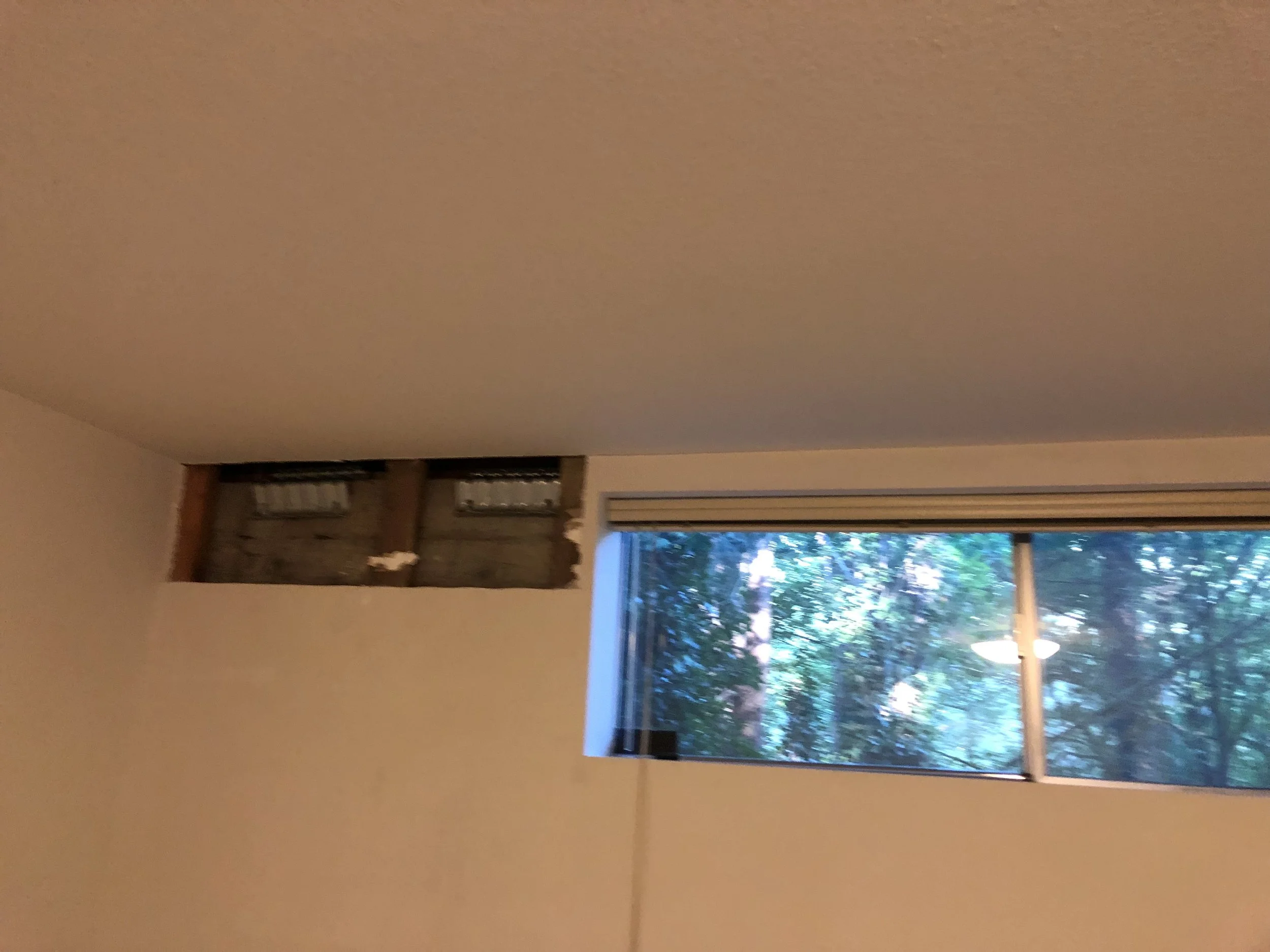
Drywall removed to facilie seismic retrofit.
Is your home a candidate?
Age is the quickest clue. Local retrofit contractors say homes built before about 1980 may not be properly secured, and homes built before about 1965 typically have no anchor bolts at all. A lot of the Eastside's older housing stock falls in that window, including pockets of Bellevue, Renton, Redmond and Issaquah.
Newer neighborhoods, like much of Sammamish and Klahanie, were built under more modern codes and are more likely to be anchored already. "More likely" isn't the same as confirmed, so it's worth a look. A quick check from the crawlspace access:
• Bolts: Look for bolt heads or nuts with square plate washers along the wood that sits on top of the concrete.
• Plywood: Look for plywood nailed to the short walls between the concrete and the floor. Open stud framing is a flag.
• Hardware: Look for metal connectors tying the floor framing to the wall below.
• Not sure? Ask a licensed contractor or structural engineer to take a look. Crawlspaces can hide moisture, wiring and pests, so we don't suggest crawling in alone if you're unsure.
Homes built on a slab, with no crawlspace, don't have this particular weakness. Homes with finished basements or unusual layouts may need an engineer's input.
What a retrofit involves: anchor, brace, connect
The City of Seattle sums the work up in three words, and the idea is simple: give the house a continuous path from the roof to the ground so it can't separate from its foundation.
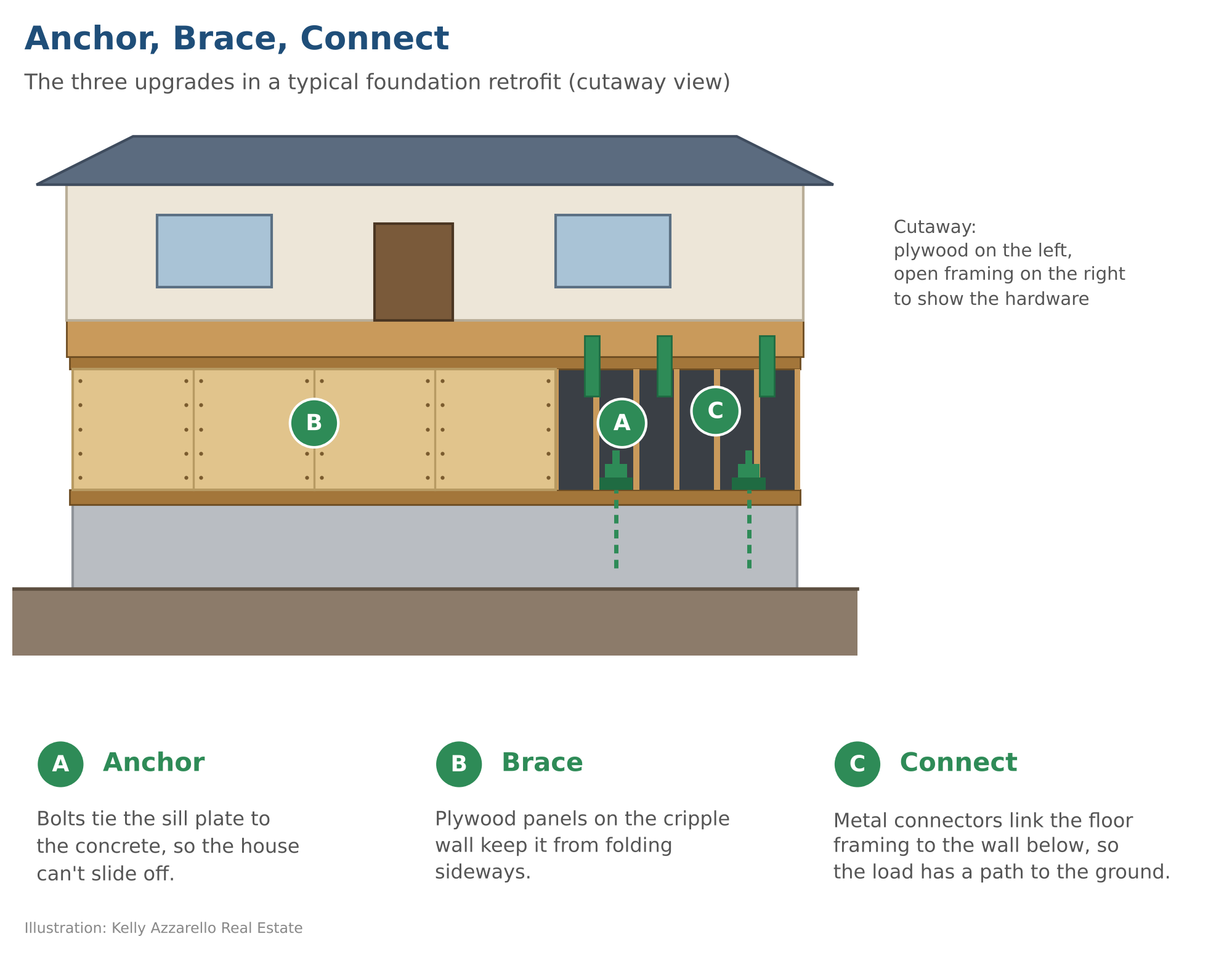
Figure 3. Anchor, brace, connect: the three parts of a typical foundation retrofit.
• Anchor: Bolts fasten the wood sill plate to the concrete foundation.
• Brace: Plywood panels on the cripple walls keep them from folding sideways.
• Connect: Metal framing hardware ties the floor framing to the walls below.
Most of the work happens in the crawlspace rather than inside your living space, which makes it a relatively low-disruption project.
Why it's a good investment
Think of it as a small premium against a large loss that, for most homeowners, isn't covered.
The cost is modest compared to the exposure. Seattle-area retrofit contractors put the average job at roughly $5,000 to $12,000, with higher figures for homes with finished basements. National cost guides list Seattle-area foundation bolting from about $1,100 to $5,600 and cripple wall bracing from about $1,100 to $3,300, so the size and access of your crawlspace matter a great deal.
Standard homeowners insurance doesn't cover earthquakes. That takes a separate policy, and those commonly carry deductibles of 10 to 25 percent. On a home with $600,000 of dwelling coverage, that is $60,000 to $150,000 out of your pocket before the policy pays anything. A retrofit lowers the odds of the most common kind of structural failure, which is damage you may have to absorb yourself.
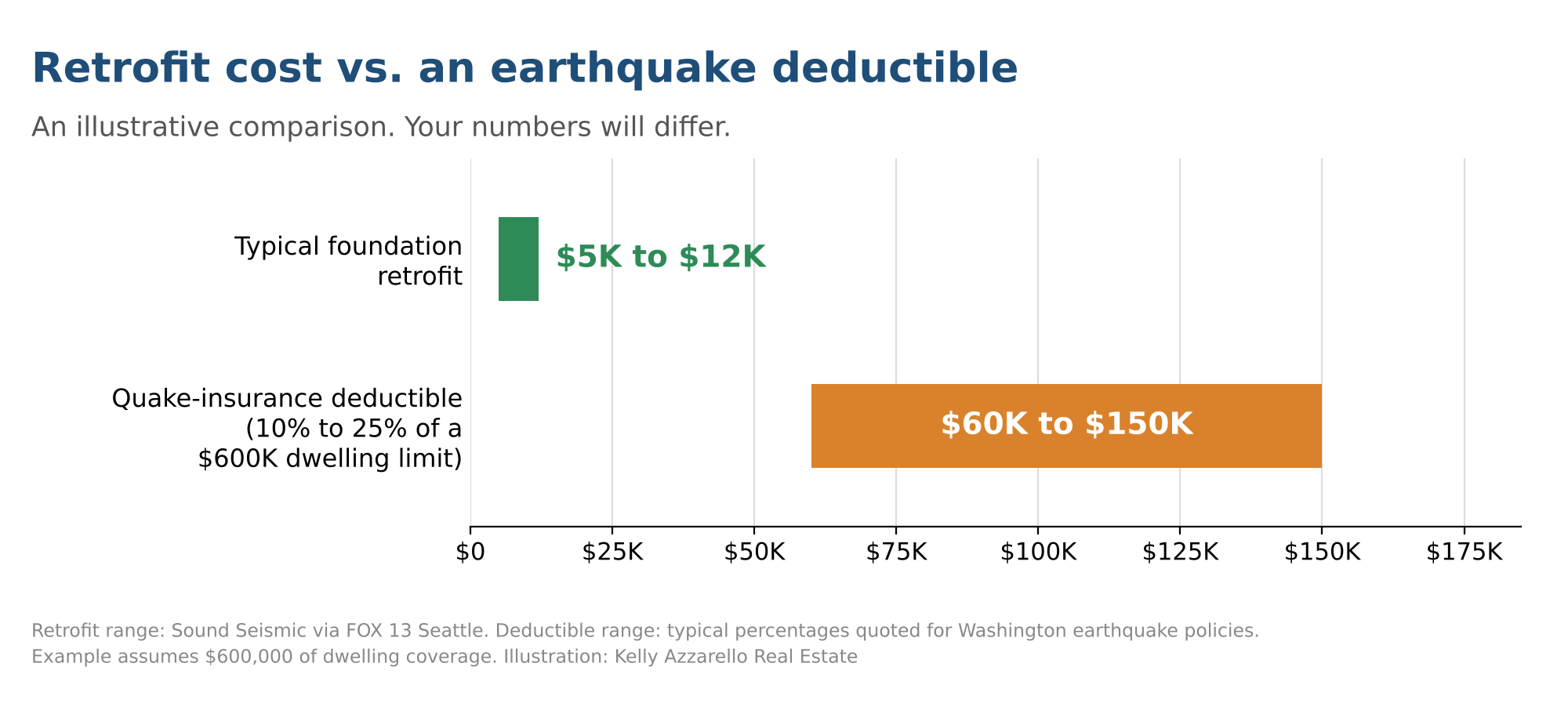
Figure 4. An illustrative comparison. Your coverage and costs will differ.
Some insurers reward it. Homes with foundation bolting or cripple wall bracing may qualify for earthquake premium discounts with some carriers. It's worth asking your insurance agent before and after the work.
It protects rentals and the people in them. For investment property, a retrofit protects both the asset and the safety of the tenants who live there.
It makes a house easier to sell. We can't promise a retrofit adds dollar-for-dollar value, and we wouldn't want you to count on that. What it does is remove an unknown. Inspectors typically note whether a foundation is anchored, and buyers in earthquake country can reasonably ask about it. A permitted, documented retrofit turns a possible negotiating point into a selling point.
What a retrofit won't do
A retrofit addresses the two most common failures. It doesn't make a home earthquake-proof. Unreinforced brick chimneys, heavy masonry veneer and some garage designs are separate issues and may need their own attention.
Permits are generally required. Seattle and most communities in the Northwest require one for this work, and each Eastside city has its own process, so check with yours before work begins. Get more than one bid, and ask each contractor to explain exactly what they'll anchor, brace and connect.
Thinking about selling?
If you may sell in the next few years and your home falls in the age range above, a retrofit can be one of the smarter projects to do first. Handling it on your own timeline, with permits and paperwork in hand, is far easier than negotiating a repair request against a closing date.
From Our Own Experience
A few years ago a good friend told me about this. I wasn’t aware of the underlying issues or the history of the home, but over lunch we had a long discussion. Especially if you’re buying an older home, you need to make certain that the
While our friend wasn’t ready to sell, he was very concerned about the safety of his family AND his eventual resale value of the home.
Wondering about your own foundation?
As agents, we work with contractors, suppliers and vendors regularly, and we've helped clients through big repairs. We can't recommend specific companies, but we can help you find the right fit and compare bids, whether you're buying, selling or just planning ahead.
Kelly Azzarello Real Estate | Compass
(425) 830-6457 | kelly@kellyazzarello.com | www.kellyazzarello.com
We're real estate professionals, not engineers or contractors. This post is general information, not structural, insurance or legal advice. A licensed structural engineer or contractor can assess your specific home, and your insurance agent can explain your coverage options.
Sources and further reading
• City of Seattle SDCI: Protect Your Home from Earthquake Damage (PDF)
• FOX 13 Seattle: Does your home need an earthquake retrofit? Here's how to check
• KOMO News: 14 percent chance of megaquake hitting Seattle, experts say
• Angi: How much does earthquake retrofitting cost in Seattle?
• Earthquake Tracker: Earthquake insurance in Washington State
• Earthquake Tracker: The Seattle Fault