

Because You Can Have the Suburb and Still Make the Meeting
Part of the Why Issaquah? series: Because You Can Have the Suburb and Still Make the Meeting
Issaquah sits about 16 miles east of downtown Seattle, right off Interstate 90, a 20-to-30-minute drive depending on traffic, and a straight shot with no lake crossing to navigate. Bellevue is closer still, roughly 15 minutes away, which puts Microsoft's Redmond campus, Amazon's Bellevue offices, and the rest of the Eastside tech corridor within easy commuting range without giving up the feel of a smaller, more residential city.
A Suburb With Its Own Anchor Employer
Issaquah isn't just a bedroom community, either. It's home to the world headquarters of Costco Wholesale, one of the largest employers on the Eastside. That combination of a genuine local employment base plus quick highway access to Bellevue and Seattle gives Issaquah a different commuting profile than cities that are purely residential.
Getting Around Without Driving the Whole Way
Issaquah has two real transit hubs: the Issaquah Transit Center downtown and the Issaquah Highlands Park & Ride up on the plateau, both serving as anchor points for the routes below.
● Route 203 connects Issaquah Highlands, North Issaquah, and the Issaquah Transit Center to Sound Transit's 2 Line light rail at South Bellevue Station, by way of Newport Way and Factoria.
● ST Express Route 556 runs directly to Bellevue Transit Center and Bellevue Downtown Station, connecting to the 2 Line from there, with stops added right on Sunset Way and Gilman Boulevard, roughly every 15 minutes.
● Route 269 links Issaquah Highlands to Mercer Island and the Overlake/Redmond area.
● Route 215 covers the corridor out to Snoqualmie and North Bend, for anyone commuting the other direction.
● King County Metro's on-demand Metro Flex service also operates within Issaquah, for the last-mile trips a fixed route doesn't cover.
A word of caution on any of this in print: King County Metro and Sound Transit restructured a meaningful share of Eastside bus service in August 2026 to connect better with 2 Line light rail, replacing some long-standing routes outright. Transit route numbers and schedules are worth reconfirming against Sound Transit's and King County Metro's own sites before publishing, since they do change.
For drivers and cyclists, Issaquah also has a bike trail network connecting downtown to the Gilman Boulevard shopping district, Lake Sammamish State Park, and on toward Redmond, and multiple park-and-ride lots beyond the Highlands facility for anyone doing a hybrid drive-then-transit commute. Some employers add their own layer on top: Microsoft, for one, runs its private Connector shuttle with a stop in Issaquah, for employees who'd rather skip both driving and public transit.
The Trade-Off Buyers Are Actually Weighing
When buyers compare Issaquah to Sammamish, Bellevue, or Redmond, the conversation almost always comes back to this same trade-off: how much commute time are you willing to spend to get more land, more mountain access, and a lower price point per square foot? Issaquah tends to land in a sweet spot: close enough to the job centers to keep the commute reasonable, far enough out to feel genuinely suburban, with the Issaquah Alps and Lake Sammamish as a bonus most closer-in cities can't match.
For Buyers & Sellers
Commute time to specific employers, Microsoft, Amazon, downtown Seattle, Costco HQ, is one of the first things relocating buyers ask about, especially those coming from out of state who don't yet have an intuitive feel for Eastside geography. Framing a listing's location in minutes to these anchor points, not just miles, tends to land better than a generic "convenient location" line.
Not sure how a given Issaquah neighborhood stacks up against Sammamish or Bellevue for your specific commute? Send us your work address. Kelly Azzarello Real Estate can walk you through the real drive-time trade-offs before you fall in love with a house.
Because There's a Neighborhood for Every Kind of Buyer
Part of the Why Issaquah? series: Because There's a Neighborhood for Every Kind of Buyer
Our overview post talked about Issaquah in three broad strokes: the valley floor, the plateau, and the rural edges. That's a good starting map, but once a buyer is actually comparing homes, the real decisions happen at the neighborhood level. Here's a closer look at the areas that come up most often in our conversations with buyers.
Olde Town / Issaquah Valley: The Original Town
This is downtown in the truest sense: the historic core along Front Street and the surrounding valley streets, many of them tracing back to the Pickering family's original farmland. Homes here range from century-old cottages to infill construction, all within walking distance of Gilman Village, the Salmon Hatchery, and the restaurants and shops that make up Issaquah's walkable heart. Buyers who want small-town character and don't mind older housing stock gravitate here first.
Issaquah Highlands: The Planned Community on the Plateau
Built out on Grand Ridge starting in the late 1990s on the site of a former coal mine, the Highlands is Issaquah's newest large-scale neighborhood: contemporary construction, walkable retail at Grand Ridge Plaza, parks, and a noticeably different architectural feel than downtown. It's popular with buyers who want newer construction and easy access to I-90 and SR-900 without sacrificing mountain and territorial views.
Talus: Cougar Mountain's Trail-Access Community
On the west side of the city, Talus was built with sustainability and trail access as the organizing idea: a mix of townhomes and single-family homes woven into a network connecting directly to Cougar Mountain Regional Wildland Park's more than 200 miles of trails. It draws an eco-minded, outdoors-first buyer who wants low-maintenance living without giving up quick access to the woods.
Squak Mountain: Wooded and Established
A quieter, older residential area on the slopes of Squak Mountain, with mid-century homes alongside custom builds, mature trees, and direct access to Squak Mountain State Park's trail network. It tends to appeal to buyers who want privacy and forest surroundings but still want to be minutes, not miles, from downtown.
Montreux: Issaquah's Gated Luxury Estate Community
On Cougar Mountain's northern slopes, Montreux is a 260-acre, HOA-governed master-planned community of roughly 250 single-family homes, with about half its total acreage deeded to homeowners as shared, wooded common area. Many homes take in views of Lake Sammamish and the Cascades, and the community sits within the Liberty High School attendance area, one of the state's stronger-performing public high schools. It's widely marketed as Issaquah's gated luxury estate neighborhood, though gating appears to apply to part of the community rather than the whole thing; confirm the current boundary before stating it flatly in a listing. Either way, it draws buyers comparing it against communities like Sammamish's Sahalee.
For Buyers & Sellers
These neighborhoods aren't interchangeable, even when they're a few minutes apart. A buyer who loved Talus for its trail access probably won't love Montreux's gated formality, and vice versa. Matching the neighborhood's personality to the buyer, not just the bedroom count, is where a lot of the real value in working with a local agent shows up. Sellers benefit from the same lens: knowing exactly which of these identities your home fits helps target marketing at the buyer who will actually fall for it.
Want a tour that actually covers the differences between these areas rather than just the listings? Reach out to Kelly Azzarello Real Estate. We know these neighborhoods block by block.
🔗 Sources & Links to Verify
No confirmed public-domain photos found for specific Issaquah neighborhoods. Recommend Kelly's own listing/walkthrough photography, or the city's Montreux/Squak Mountain neighborhood pages (issaquahwa.gov) for reference only, not reuse.

Because This Town Throws a Party for Fish
Part of the Why Issaquah? series: Because This Town Throws a Party for Fish
📷 PHOTO PLACEHOLDER: Spawning salmon in Issaquah Creek / the hatchery, and the Salmon Days Grande Parade on Front Street.
Every October, something happens in Issaquah that you won't find on most cities' event calendars: salmon come home, and the whole town shows up to watch. Issaquah Salmon Days, held the first full weekend of October (October 3–4 in 2026), is Washington's largest two-day festival: nearly 600 vendor booths, a Grande Parade, two live entertainment stages, a Field of Fun for kids, and, at the center of it all, thousands of people leaning over the Issaquah Creek bridge to watch spawning salmon fight their way upstream to the historic hatchery.
A Name That Comes From the Creek Itself
The town's name is an anglicized version of a Southern Lushootseed word tied to this same waterway, variously translated as "the sound of birds," "snake," or "little stream." Long before Issaquah was a commuter suburb, it was Squak Valley, a place defined by the creek running through it. Salmon Days, first held in 1970 as a replacement for the town's fading Labor Day celebration, was built specifically to honor that relationship, and more than fifty years later, it's still the single best illustration of what makes Issaquah feel like a town rather than just a zip code.
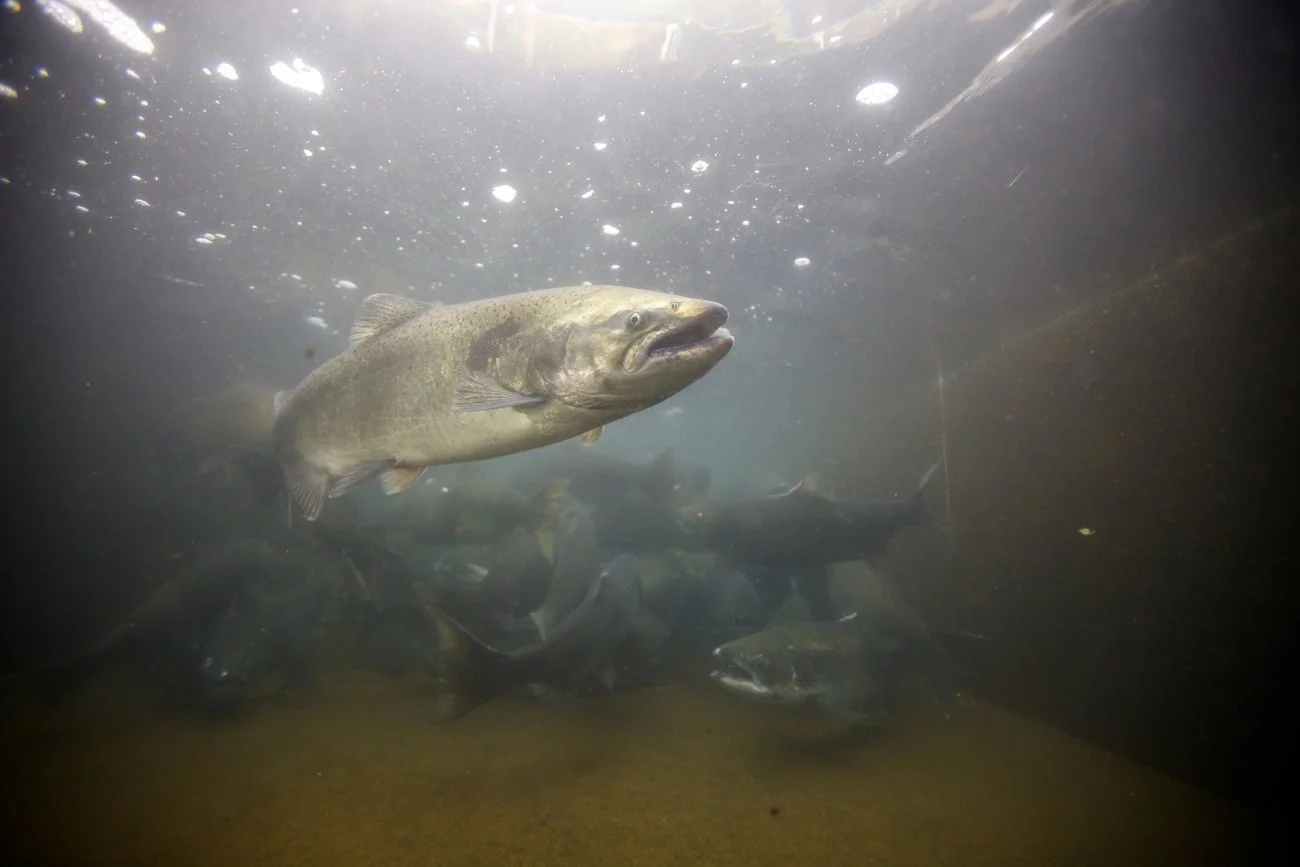
The Issaquah Salmon Hatchery, right downtown on Sunset Way, is open to visitors well beyond festival weekend. Watching chinook and coho salmon return to the exact stream where they hatched is the kind of thing that sounds like a school field trip and turns out to be genuinely moving, for kids and adults alike.
A Community That Doesn't Wait for October
Salmon Days is the headline, but it's really just the biggest night of a calendar that stays busy all year. Every Tuesday evening in summer, the City of Issaquah hosts Concerts on the Green, a free, family-friendly concert series on the lawn of the Issaquah Community Center, running an eight-week season from early July through late August. Thursdays belong to Gas Station Blues, a free outdoor blues series at the Historic Shell Station on Front Street, running the same July-through-August stretch. Bring a chair and a picnic and it's as close to a standing weekly neighborhood tradition as a city this size gets.
Saturdays belong to the Issaquah Farmers Market, held rain or shine at the historic Pickering Barn from May through September, 9 a.m. to 2 p.m. It's a genuine destination market: over 100 vendors on a typical weekend, live music, cooking demonstrations, and seasonal traditions like the Strawberry Festival and Kids' Day built right into the schedule.
Issaquah Farmers Market Video
Then August brings Al Fresco on Front, when the city closes Front Street to vehicle traffic every weekend, Saturday morning through Sunday night, and turns Olde Town into a walkable, mall-like stretch of outdoor dining, sidewalk shopping, live music, and pop-up activities. Restaurants spill out into the street, shops set up displays outside their doors, and for four weekends a year, downtown Issaquah becomes a place built entirely for wandering on foot.
Layer in the rest of the community calendar: ArtWalk & Music Stroll through historic downtown on first Fridays each summer, the classic-car gathering at Fenders on Front Street, and a steady stream of smaller festivals, markets, and Village Theatre productions. Salmon Days starts to look less like a once-a-year event and more like the biggest expression of something Issaquah does constantly: give people a reason to show up downtown.
Why This Matters When You're House-Hunting
A festival is just a festival, until you realize it's a proxy for something buyers actually care about: does this place have an identity, or is it just rooftops? Issaquah's answer is unambiguous. Between Salmon Days, the historic downtown core, and a genuine, decades-deep relationship with the creek and hatchery at its center, this is a city that knows what it is. For families relocating from out of state, or Eastside buyers comparing Issaquah to newer, less-defined developments, that sense of place is often exactly what tips the decision.
For Buyers & Sellers
Neighborhoods within walking distance of downtown Issaquah, think the historic core, Olde Town, and the streets around Sunset Way, let buyers market a genuine "we walked to the parade" lifestyle, not just a listing bullet point. If you're selling near downtown this fall, consider timing photos or an open house around Salmon Days weekend, when the neighborhood is at its most alive.
Curious which Issaquah neighborhoods put you close enough to downtown to make Salmon Days part of your own family tradition? Let's talk. Kelly Azzarello Real Estate can walk you through the options block by block.
🔗 Sources & Links to Verify
Public domain: Fall Chinook salmon (spawning): fws.gov/media/fall-chinook-salmon-adults-7 and fws.gov/media/fall-chinook-salmon-adults-0 (USFWS, explicitly Public Domain).
City's own Salmon Days photos (issaquahwa.gov / visitissaquahwa.com) are copyrighted. Do not reuse without permission.