


Because Living Outside City Utilities Means Understanding Septic and Wells
Part of the Why Issaquah? series: Because Living Outside City Utilities Means Understanding Septic and Wells
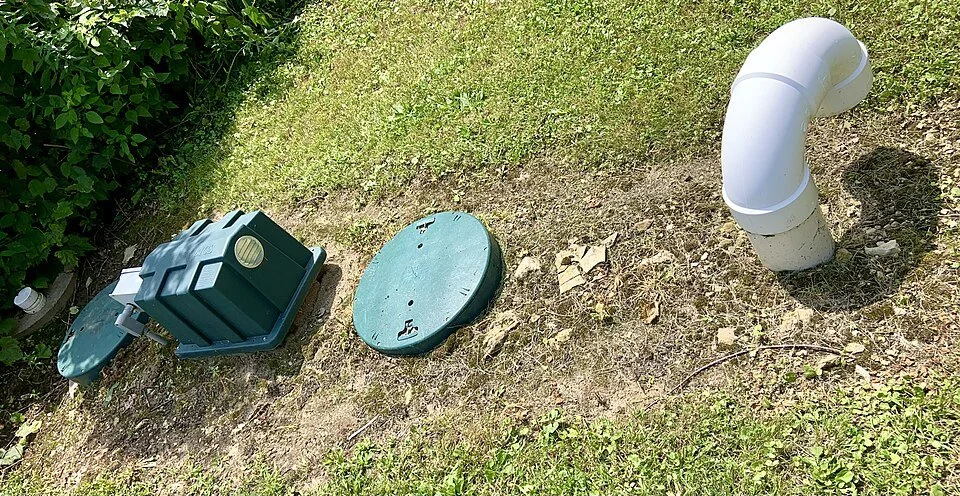
Septic system access
Anywhere outside a city's water and sewer lines, two systems take over: a private well for water, and an on-site septic system for wastewater. Neither is an upgrade or a downgrade. They're simply what a property runs on when there's no municipal main to connect to, and they come with their own rules, their own maintenance, and their own ways a deal can go sideways if nobody checks the details early.
Why These Systems Exist at All
A private well pulls groundwater up from below the property. A septic system treats and disperses wastewater on-site instead of piping it to a treatment plant. Both are standard, well-understood technology, not a compromise. The difference that actually matters for a buyer is that both systems live entirely on the property itself, which means both their capacity and their condition are fixed by whatever was designed, permitted, and installed there, not something a utility company manages on your behalf.
Septic Systems: Sized by Bedrooms, Not Bathrooms
Here's the detail that surprises almost everyone the first time they hear it: septic systems are sized by bedroom count, not bathroom count, and not square footage.
The logic is occupancy, not fixtures. More bedrooms generally means more people living in the home, and more people means more daily wastewater. So King County (and most Washington counties) size the tank and drainfield based on how many bedrooms the house has, or could have, using standard design-flow tables.
A 1-bedroom home is typically designed around a 1,000-gallon tank and 150 gallons per day of flow.
A 3-bedroom home moves up to roughly 450 gallons per day.
A 5-bedroom home requires roughly 750 gallons per day and a larger tank.
This is exactly why you'll sometimes see a home with what looks like ten bathrooms and only four official bedrooms, or the reverse: a home with several bonus rooms, offices, and dens but a surprisingly low bedroom count on paper. Bathrooms don't factor into septic sizing at all. And King County's own guidance is blunt about the bedroom count itself: a den, office, study, loft, bonus room, or any other room with a closet counts as a potential bedroom for septic purposes, regardless of what it's labeled on the floor plan or the listing. Renaming a bedroom doesn't change how the system is sized.
The real-world consequence: if a home is marketed with more bedrooms than its septic system was actually permitted for, that discrepancy can surface during a lender's appraisal and stall or renegotiate a deal. The number that matters is whatever is on file with the county health department as the system's approved design capacity, not what the listing says.
Why a Great Home Site Can Still Be Unbuildable
This is the part that catches buyers off guard on raw land or a teardown: the flat, buildable-looking spot for the house is only half the equation.
Every septic system also needs a reserve drainfield, a second area held in reserve in case the primary drainfield ever fails, plus setbacks from wells, property lines, water bodies, and steep slopes. How much space that actually requires depends on the soil's percolation rate. Poor-draining soil needs a much bigger footprint to handle the same amount of wastewater than good-draining soil does.
Put those together and a parcel can have a perfectly flat, perfectly legal home site, and still fail to qualify for a septic permit, because once every setback and the reserve area are accounted for, there's nowhere left on the lot to put the drainfield. This is exactly what a percolation test and a septic feasibility study are for, and exactly why skipping one on a rural or undeveloped lot is one of the more expensive mistakes a buyer can make.
Wells and Water Rights
In Washington, a private well serving a single home generally doesn't need its own state water-right permit; this is the "exempt well" provision under state law. It comes with real limits, though: exempt wells are capped at 5,000 gallons a day, and wells drilled after January 2018 carry a tighter 950-gallon annual average limit. Separate, uncapped exemptions cover livestock use and watering a lawn or garden under a half acre.
Some properties don't have their own dedicated well at all. A Group B water system is a shared water system serving multiple connections, and it requires its own county approval and a Certificate of Water Availability, separate from a standard private well.
Shared Wells: What to Check Before You're Committed
It's genuinely common in rural subdivisions for two or more properties to share a single well. When that's the case, the well needs a recorded agreement that runs with the land, meaning it binds future owners, not just whoever signed it originally. A real shared-well agreement should cover:
An easement actually granting access to the well and its equipment, recorded against the deed.
How maintenance and repair costs are split among the properties.
Each property's water allocation.
What happens if the well fails and a replacement has to be drilled.
If a property shares a well and there's no recorded agreement, or the deed doesn't actually grant an easement for it, that's a real problem to catch before closing, not after.
Maintenance, Lifespan, and Real Costs
None of this is a one-time cost. Rough, general ranges worth setting expectations around:
Drilling a new well typically runs $3,000 to $15,000, depending mostly on depth.
Installing a new septic system runs roughly $5,000 to $25,000 depending on the type, conventional gravity systems on the lower end, mound or aerobic treatment systems on the higher end for lots with poor soil or high groundwater.
Routine septic pumping is needed every 2 to 5 years, typically $300 to $600 a visit.
A full drainfield replacement, when one eventually fails, can run $20,000 or more.
A well and septic system in good condition, properly sized and properly maintained, can serve a home reliably for decades. The costs above aren't a reason to avoid a property with these systems; they're the numbers to budget for the way you'd budget for a roof or a furnace.
For Buyers & Sellers
Before writing an offer on any property outside city utilities: pull the septic permit and as-built record to confirm the approved bedroom count matches the listing, ask directly whether the well is private or shared and request any recorded agreement if it's shared, and if the lot is raw or undeveloped, get a percolation test and septic feasibility study before assuming the site is buildable at the size you're picturing.
Sellers benefit from having this documentation ready before listing; it answers the first questions a serious buyer's agent will ask, and its absence is one of the most common reasons a rural sale stalls partway through.
Buying or selling a property that runs on well and septic, anywhere in our coverage area? Reach out to Kelly Azzarello Real Estate. We can walk you through exactly what to check before you're under contract.
Kelly Azzarello Real Estate | Compass
📧 kelly@kellyazzarello.com | 📞 (425) 830-6457 | 🌐 kellyazzarello.com
Notes:
General cost ranges are national/regional estimates, not King County-specific quotes; get local contractor estimates before including exact figures in a public-facing version of this post.

Because the School District Is Bigger Than the City Itself
Part of the Why Issaquah? series: Because the School District Is Bigger Than the City Itself
This is where Issaquah's footprint really starts to sprawl past the City of Issaquah’s official boundaries.
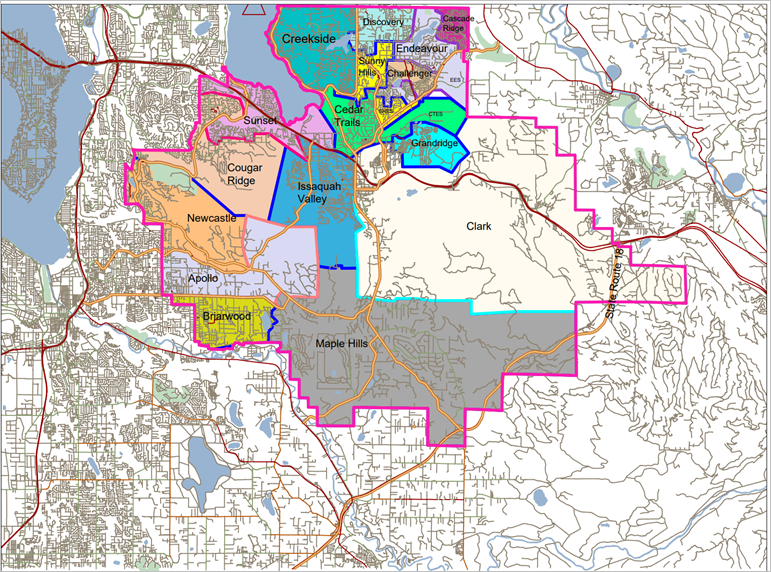
Map of the Issaquah School District elementary school boundaries.
Who It Covers
The Issaquah School District covers about 110 square miles across seven municipalities:
Issaquah
Sammamish
Bellevue
Newcastle
Renton
Preston
Unincorporated King County communities like Hobart and Mirrormont
It serves more than 18,000 students across 27 schools. It's consistently one of the top-ranked districts in the state, with graduation rates well above the statewide average.
High Schools
Three comprehensive high schools split the district today, each serving a geographic attendance zone:
Issaquah High School, the district's oldest, anchors the south side of the valley. It sits right behind the Issaquah Community Center on 2nd Ave SE.
Skyline High School, up on the Sammamish Plateau, serves the Highlands and Sammamish side.
Liberty High School covers the southwest.
A genuine fourth comprehensive high school is now under construction on the former Providence Heights College site, purchased by the district back in 2016. It broke ground in spring 2026, is targeting a fall 2027 opening, and is being built for roughly 650 to 700 students, specifically to relieve overcrowding at Skyline (running around 2,250 students) and Issaquah High (around 2,500). Confirm this is still on track before citing it as settled if you're reading this well after 2026.
Gibson Ek High School
There's also a fifth option today that doesn't work like the other three: Gibson Ek High School. It's not tied to a geographic attendance zone at all. Gibson Ek is the district's choice high school, an alternative, project-based program open to any 8th (and sometimes 9th) grader living within Issaquah School District boundaries, regardless of address. Getting in isn't a matter of which neighborhood you live in; students apply during a January-to-March window, and admission is decided by lottery, with a waitlist running into the fall. For families specifically interested in it, that's a very different process to plan around than simply buying in the right attendance zone.
For families choosing among the three geography-based schools, this means the specific school your kids attend can depend heavily on which side of Issaquah you land on. It's another reason the map matters more than the mailing address.
Elementary schools
The district has 16 elementary schools, each of which leads into a specific middle school, which in turn feed into one of the high schools (above)
Apollo
Briarwood
Cascade Ridge
Cedar Trails
Challenger
Clark
Cougar Ridge
Creekside
Discovery
Endeavour
Grand Ridge
Issaquah Valley
Maple Hills
Newcastle
Sunny Hills
Sunset
Middle schools
Beaver Lake
Cougar Mountain (the newest, opened in 2022)
Issaquah Middle
Maywood
Pacific Cascade
Pine Lake
Finding which school a student will attend
The district doesn't have an online address lookup tool. Its Find Your School page says to email the Transportation Department at transportation-enews@issaquah.wednet.edu with the full address, including city and ZIP, and they'll look up the assigned schools. The page says realtors can use this too, which fits the post's "check the actual attendance zone" advice. Linking to that page is safer than printing the email address, since the page will stay current if the address changes.
The district also has an Attendance Maps page with four PDF maps:
High school boundaries. This one also shows the outer edge of the whole district, so it's the best choice if you only want one map.
School feeder patterns, which show which elementary schools feed into which middle and high schools.
For Buyers & Sellers
School assignment is one of the first things relocating families ask about, and it's worth checking the actual attendance zone for a specific address rather than assuming based on neighborhood name; zone boundaries don't always follow the lines a buyer expects. For families interested in Gibson Ek specifically, timeline matters: the January-to-March application window means it's worth planning around well before move-in.
Sources:
Curious which attendance zone a specific home falls into, or want the honest rundown on Gibson Ek's process? Reach out to Kelly Azzarello Real Estate.
Kelly Azzarello Real Estate | Compass
📧 kelly@kellyazzarello.com | 📞 (425) 830-6457 | 🌐 kellyazzarello.com

Because Room to Roam Comes in Two Very Different Flavors
Part of the Why Issaquah? series: Because Room to Roam Comes in Two Very Different Flavors
Here's something we hear a lot: "People tell me there's open space and room to roam in Issaquah, but the town seems so small."
Both things are true. The confusion almost always comes down to two things: where a buyer has actually been looking, and which kind of "room to roam" they mean. Because under one Issaquah-area search, there are genuinely two different products.
Where People Look First, and Why It May Disappoint
Most first-time visitors see three things:
Downtown
The Issaquah Highlands
A standard subdivision or two
All three are genuinely great, but none of them is where room to roam actually lives.
Flavor One: Inside City Limits, Wooded and Private
If you're picturing a traditional suburban neighborhood, just with a bigger yard, Issaquah's core doesn't really offer that. What it offers instead comes in two distinct flavors, each worth understanding on its own terms.
Issaquah's boundary climbs up onto the lower slopes of Cougar Mountain and Squak Mountain, real forested terrain that was never going to be developed like the downtown grid. That's where the city's own large-lot zoning lives.
Two zones matter most:
C-Res (Conservancy-Residential): one dwelling unit per 5 acres. Minimum lot size, 5 acres.
SF-E (Single-Family Estates): roughly 1.24 units per acre. Minimum lot size, 35,000 square feet, a bit over three-quarters of an acre.
You'll find this in practice on Squak Mountain's established large-lot streets, and in the Montreux community on Cougar Mountain's northern slopes.
The catch: a 5-acre C-Res lot on paper and a 5-acre usable building envelope are two different things. Steep slope hazard regulations, geological hazard setbacks, and a forested hillside preservation chapter all limit grading and construction on this kind of terrain. A parcel can look like five usable acres on a map and turn out to be one flat building pad surrounded by four acres of protected hillside. A geotechnical or critical-areas study before writing an offer isn't optional homework here, it's the whole ballgame.
What you get in exchange: full city utilities, Issaquah city services, and a short drive to downtown.
Flavor Two: Just Outside the Line, Real Acreage
For buyers who want flat, fenced, genuinely usable land rather than wooded hillside, the answer sits just past the city boundary, in unincorporated King County, often carrying an Issaquah-area address (in whole or in part) and often the Issaquah School District.
This land is typically zoned RA-5 (one dwelling unit per five acres) or similar under the county's rural area code, which is what makes real 5-plus-acre, low-slope parcels realistic here in a way they rarely are a few miles closer to downtown. A handful of specific communities anchor this side of the map:
Hobart, along the Issaquah-Hobart Road corridor, where properties average roughly two and a half acres. Its mailing address is mixed, spanning Issaquah's 98027, Maple Valley's 98038, and a small historic Hobart ZIP, so only part of it actually carries an Issaquah address.
Mirrormont, a forested, established community with its own internal street network, averaging roughly a half-acre to just under an acre on core streets and climbing toward two-plus acres on others.
May Valley, along SE May Valley Road, the most rural-feeling of the group, with an average parcel size north of three and a half acres.
What you get in exchange: private well and septic instead of city utilities, narrower and often unlit roads, and a longer commute than a downtown or Highlands address.
Comparing the Two Directly
For a buyer weighing both, the trade-off comes down to this:
Inside city limits (Squak Mountain, Montreux): privacy and wooded elbow room, full city services, a short commute, but real limits on how much of a large lot is actually buildable.
Outside city limits (Hobart, Mirrormont, May Valley): genuinely flat, usable acreage and a lower price per acre, but well and septic systems and a longer drive.
Neither is a downgrade from the other. They're different answers to the same question, and the right one depends entirely on whether a buyer's priority is privacy-with-convenience or land-you-can-actually-use.
For Buyers & Sellers
The single most useful thing to establish early as a buyer chasing "room to roam" is which version you actually mean. Both exist under an Issaquah address. They are not the same product, and touring the wrong one first is what creates the "this city feels so small" disappointment in the first place.
Sellers with a larger in-city lot should have a critical-areas or slope study ready before listing. Sellers with unincorporated acreage should lead with lot size and rural character explicitly, since that's exactly what these buyers search by.
Curious which flavor of room to roam actually fits what you're picturing? Reach out to Kelly Azzarello Real Estate and we'll walk through both sides of the map with you.
Kelly Azzarello Real Estate | Compass
📧 kelly@kellyazzarello.com | 📞 (425) 830-6457 | 🌐 kellyazzarello.com

Because This Town Shows Up for Its Kids' Games
Part of the Why Issaquah? series: Because This Town Shows Up for Its Kids' Games
Why Issaquah? Because This Town Shows Up for Its Kids' Games

Soccer players
Ask around Issaquah on a Saturday morning and you'll find a fair number of families headed to a diamond, a pool deck, or a soccer sideline before they've even had coffee. Club sports run deep here, and three organizations in particular have been building athletes, and community, for decades: Issaquah Little League, the Issaquah Swim Team, and the Issaquah Soccer Club.
Issaquah Little League: Baseball and Softball
We couldn't pin down an exact founding year for Issaquah Little League itself, but the evidence points to it being the oldest of the town's major youth sports organizations by a wide margin. Little League Baseball chartered new local leagues across nearly every American town through the 1950s and 1960s, and Issaquah's own league carries every sign of that vintage: a long-running nonprofit filing history and the kind of "as far back as people can remember" community presence that newer clubs don't have yet. Treat this as an educated guess pending confirmation, not a sourced date.
One detail worth knowing: there's no separate "girls softball" organization in Issaquah. Softball runs as a division inside Little League itself, alongside baseball, not as its own club. Issaquah's Little League softball program is genuinely competitive too; a Majors All-Star softball team represented Issaquah at the Little League Softball World Series in 2022.
The Sockeyes: Issaquah Swim Team (1976)
Founded in 1976, the Issaquah Swim Team, everyone just calls them the Sockeyes, is a year-round, USA Swimming-affiliated club with more than 300 members ranging from beginning age-groupers to national-level competitors. IST operates out of multiple pool facilities around the greater Issaquah area and has built a genuine pipeline: program graduates regularly go on to swim at the Division I, II, and III collegiate level, and the club sends swimmers to national-caliber meets most years. There's also an active Masters program for adults, so the pool deck isn't just a kids' scene. Plenty of grown-ups training for fitness, open water swims, or triathlons swim under the same IST banner. For families who prioritize a serious, well-coached swim program, the Sockeyes are one of the better-known clubs on the Eastside.

The Gunners: Issaquah Soccer Club (1980)
On the soccer side, the Issaquah Soccer Club, known by its club identity as the ISC Gunners, has been serving the community since 1980 and now fields well over 300 youth teams and roughly 3,000 kids a year, from tiny recreational players under age 5 up through competitive travel teams. The club runs a tiered system: Recreational teams for kids who want one relaxed fall season, and Arsenal, the club's select-level program, for players from about U11 through U18 who want a more competitive, year-round commitment, with top Arsenal teams advancing into higher regional leagues. At the very top, ISC has also fielded Premier Development League and Women's Premier Soccer League teams, giving talented local players a realistic pathway to see high-level and even semi-professional soccer up close, in their own town. Home base for the club's summer season is Lake Sammamish State Park, where ISC leases and maintains a cluster of grass fields. More on that in our post about the park itself.
Plenty Beyond Little League, Swimming, and Soccer
Those three may be the biggest and longest-running, but they're far from the only game in town. Youth lacrosse and Eastside-area travel baseball and basketball clubs draw heavily from Issaquah families, and the Issaquah School District's three (soon to be four) comprehensive high schools field deep, well-regarded athletics programs of their own across essentially every sport. Combine that with the informal side: pickup basketball at the community center, weekend rides on the Issaquah Alps' extensive trail network, and a genuinely outdoors-first culture. And it adds up to a town where organized sport isn't an extracurricular afterthought, it's part of the weekly rhythm.
For Buyers & Sellers
For families relocating with kids already committed to club swimming or soccer, proximity to IST's pool facilities or ISC's practice fields can be a genuine deciding factor between neighborhoods. It's worth asking directly rather than assuming it doesn't matter. And a listing near Lake Sammamish State Park or one of the club's regular practice sites can reasonably highlight that convenience for the right buyer.
Want help figuring out which Issaquah neighborhoods put you closest to the pools, fields, or programs your family already loves? Reach out to Kelly Azzarello Real Estate. We know this community, on and off the field.
Kelly Azzarello Real Estate | Compass
📧 kelly@kellyazzarello.com | 📞 (425) 830-6457 | 🌐 kellyazzarello.com

Because You Can Have the Suburb and Still Make the Meeting
Part of the Why Issaquah? series: Because You Can Have the Suburb and Still Make the Meeting
Issaquah sits about 16 miles east of downtown Seattle, right off Interstate 90, a 20-to-30-minute drive depending on traffic, and a straight shot with no lake crossing to navigate. Bellevue is closer still, roughly 15 minutes away, which puts Microsoft's Redmond campus, Amazon's Bellevue offices, and the rest of the Eastside tech corridor within easy commuting range without giving up the feel of a smaller, more residential city.
A Suburb With Its Own Anchor Employer
Issaquah isn't just a bedroom community, either. It's home to the world headquarters of Costco Wholesale, one of the largest employers on the Eastside. That combination of a genuine local employment base plus quick highway access to Bellevue and Seattle gives Issaquah a different commuting profile than cities that are purely residential.
Getting Around Without Driving the Whole Way
Issaquah has two real transit hubs: the Issaquah Transit Center downtown and the Issaquah Highlands Park & Ride up on the plateau, both serving as anchor points for the routes below.
● Route 203 connects Issaquah Highlands, North Issaquah, and the Issaquah Transit Center to Sound Transit's 2 Line light rail at South Bellevue Station, by way of Newport Way and Factoria.
● ST Express Route 556 runs directly to Bellevue Transit Center and Bellevue Downtown Station, connecting to the 2 Line from there, with stops added right on Sunset Way and Gilman Boulevard, roughly every 15 minutes.
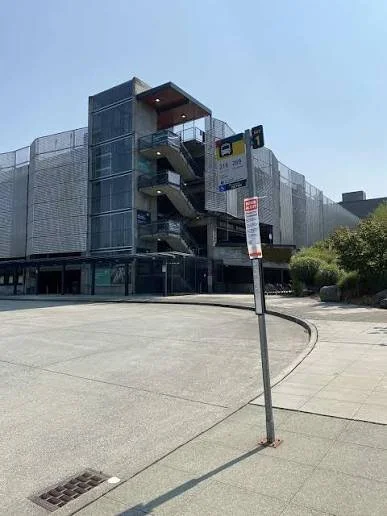
Issaquah Highlands Park and Ride
● Route 269 links Issaquah Highlands to Mercer Island and the Overlake/Redmond area.
● Route 215 covers the corridor out to Snoqualmie and North Bend, for anyone commuting the other direction.
● King County Metro's on-demand Metro Flex service also operates within Issaquah, for the last-mile trips a fixed route doesn't cover.
A word of caution on any of this in print: King County Metro and Sound Transit restructured a meaningful share of Eastside bus service in August 2026 to connect better with 2 Line light rail, replacing some long-standing routes outright. Transit route numbers and schedules are worth reconfirming against Sound Transit's and King County Metro's own sites before publishing, since they do change.
Alternatives to Public Transportation:
For drivers and cyclists, Issaquah also has a bike trail network connecting downtown to the Gilman Boulevard shopping district, Lake Sammamish State Park, and on toward Redmond, and multiple park-and-ride lots beyond the Highlands facility for anyone doing a hybrid drive-then-transit commute. Some employers add their own layer on top: Microsoft, for one, runs its private Connector shuttle with a stop in Issaquah, for employees who'd rather skip both driving and public transit.
The Trade-Off Buyers Are Actually Weighing
When buyers compare Issaquah to Sammamish, Bellevue, or Redmond, the conversation almost always comes back to this same trade-off: how much commute time are you willing to spend to get more land, more mountain access, and a lower price point per square foot? Issaquah tends to land in a sweet spot: close enough to the job centers to keep the commute reasonable, far enough out to feel genuinely suburban, with the Issaquah Alps and Lake Sammamish as a bonus most closer-in cities can't match.
For Buyers & Sellers
Commute time to specific employers, Microsoft, Amazon, downtown Seattle, Costco HQ, is one of the first things relocating buyers ask about, especially those coming from out of state who don't yet have an intuitive feel for Eastside geography. Framing a listing's location in minutes to these anchor points, not just miles, tends to land better than a generic "convenient location" line.
Not sure how a given Issaquah neighborhood stacks up against Sammamish or Bellevue for your specific commute? Send us your work address. Kelly Azzarello Real Estate can walk you through the real drive-time trade-offs before you fall in love with a house.
Kelly Azzarello Real Estate | Compass
📧 kelly@kellyazzarello.com | 📞 (425) 830-6457 | 🌐 kellyazzarello.com

Because There's a Neighborhood for Every Kind of Buyer
Part of the Why Issaquah? series: Because There's a Neighborhood for Every Kind of Buyer
Our overview post talked about Issaquah in three broad strokes: the valley floor, the plateau, and the rural edges. That's a good starting map, but once a buyer is actually comparing homes, the real decisions happen at the neighborhood level. Here's a closer look at the areas that come up most often in our conversations with buyers.
Olde Town / Issaquah Valley: The Original Town
This is downtown in the truest sense: the historic core along Front Street and the surrounding valley streets, many of them tracing back to the Pickering family's original farmland. Homes here range from century-old cottages to infill construction, all within walking distance of Gilman Village, the Salmon Hatchery, and the restaurants and shops that make up Issaquah's walkable heart. Buyers who want small-town character and don't mind older housing stock gravitate here first.
Issaquah Highlands: The Planned Community on the Plateau
Built out on Grand Ridge starting in the late 1990s on the site of a former coal mine, the Highlands is Issaquah's newest large-scale neighborhood: contemporary construction, walkable retail at Grand Ridge Plaza, parks, and a noticeably different architectural feel than downtown. It's popular with buyers who want newer construction and easy access to I-90 and SR-900 without sacrificing mountain and territorial views.
Talus: Cougar Mountain's Trail-Access Community
On the west side of the city, Talus was built with sustainability and trail access as the organizing idea: a mix of townhomes and single-family homes woven into a network connecting directly to Cougar Mountain Regional Wildland Park's more than 200 miles of trails. It draws an eco-minded, outdoors-first buyer who wants low-maintenance living without giving up quick access to the woods.
Squak Mountain: Wooded and Established
A quieter, older residential area on the slopes of Squak Mountain, with mid-century homes alongside custom builds, mature trees, and direct access to Squak Mountain State Park's trail network. It tends to appeal to buyers who want privacy and forest surroundings but still want to be minutes, not miles, from downtown.
Montreux: Issaquah's Gated Luxury Estate Community
On Cougar Mountain's northern slopes, Montreux is a 260-acre, HOA-governed master-planned community of roughly 250 single-family homes, with about half its total acreage deeded to homeowners as shared, wooded common area. Many homes take in views of Lake Sammamish and the Cascades, and the community sits within the Liberty High School attendance area, one of the state's stronger-performing public high schools. It's widely marketed as Issaquah's gated luxury estate neighborhood, though gating appears to apply to part of the community rather than the whole thing; confirm the current boundary before stating it flatly in a listing. Either way, it draws buyers comparing it against communities like Sammamish's Sahalee.
For Buyers & Sellers
These neighborhoods aren't interchangeable, even when they're a few minutes apart. A buyer who loved Talus for its trail access probably won't love Montreux's gated formality, and vice versa. Matching the neighborhood's personality to the buyer, not just the bedroom count, is where a lot of the real value in working with a local agent shows up. Sellers benefit from the same lens: knowing exactly which of these identities your home fits helps target marketing at the buyer who will actually fall for it.
Want a tour that actually covers the differences between these areas rather than just the listings? Reach out to Kelly Azzarello Real Estate. We know these neighborhoods block by block.
Kelly Azzarello Real Estate | Compass
📧 kelly@kellyazzarello.com | 📞 (425) 830-6457 | 🌐 kellyazzarello.com

Because This Town Throws a Party for Fish
Part of the Why Issaquah? series: Because This Town Throws a Party for Fish

Salmon Days 2026 Logo
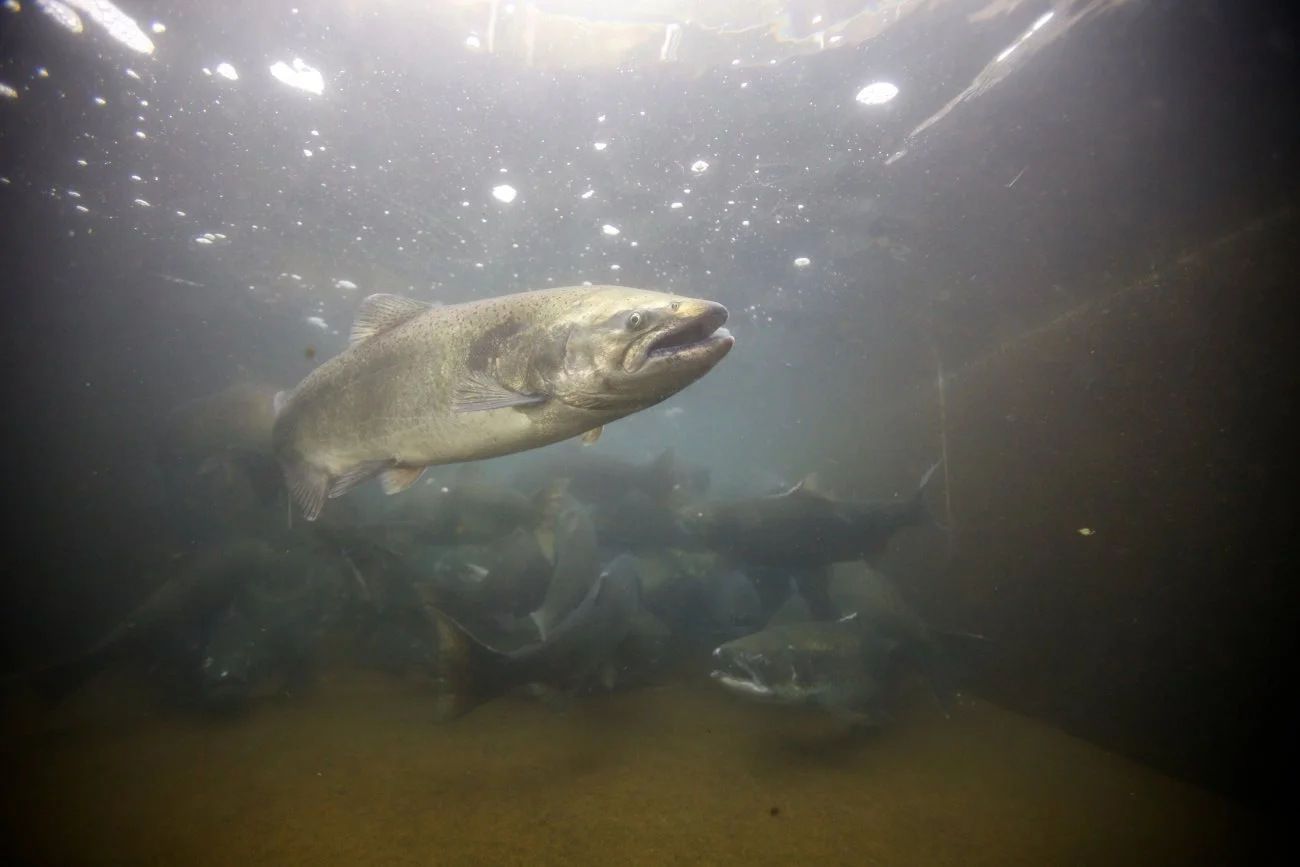
Every October, something happens in Issaquah that you won't find on most cities' event calendars: salmon come home, and the whole town shows up to watch. Issaquah Salmon Days, held the first full weekend of October (October 3–4 in 2026), is Washington's largest two-day festival: nearly 600 vendor booths, a Grande Parade, two live entertainment stages, a Field of Fun for kids, and, at the center of it all, thousands of people leaning over the Issaquah Creek bridge to watch spawning salmon fight their way upstream to the historic hatchery.
A Name That Comes From the Creek Itself
The town's name is an anglicized version of a Southern Lushootseed word tied to this same waterway, variously translated as "the sound of birds," "snake," or "little stream." Long before Issaquah was a commuter suburb, it was Squak Valley, a place defined by the creek running through it. Salmon Days, first held in 1970 as a replacement for the town's fading Labor Day celebration, was built specifically to honor that relationship, and more than fifty years later, it's still the single best illustration of what makes Issaquah feel like a town rather than just a zip code.
The Issaquah Salmon Hatchery, right downtown on Sunset Way, is open to visitors well beyond festival weekend. Watching chinook and coho salmon return to the exact stream where they hatched is the kind of thing that sounds like a school field trip and turns out to be genuinely moving, for kids and adults alike.
A Community That Doesn't Wait for October
Salmon Days is the headline, but it's really just the biggest night of a calendar that stays busy all year. Every Tuesday evening in summer, the City of Issaquah hosts Concerts on the Green, a free, family-friendly concert series on the lawn of the Issaquah Community Center, running an eight-week season from early July through late August. Thursdays belong to Gas Station Blues, a free outdoor blues series at the Historic Shell Station on Front Street, running the same July-through-August stretch. Bring a chair and a picnic and it's as close to a standing weekly neighborhood tradition as a city this size gets.
Issaquah Farmers Market Video
Saturdays belong to the Issaquah Farmers Market, held rain or shine at the historic Pickering Barn from May through September, 9 a.m. to 2 p.m. It's a genuine destination market: over 100 vendors on a typical weekend, live music, cooking demonstrations, and seasonal traditions like the Strawberry Festival and Kids' Day built right into the schedule.
Then August brings Al Fresco on Front, when the city closes Front Street to vehicle traffic every weekend, Saturday morning through Sunday night, and turns Olde Town into a walkable, mall-like stretch of outdoor dining, sidewalk shopping, live music, and pop-up activities. Restaurants spill out into the street, shops set up displays outside their doors, and for four weekends a year, downtown Issaquah becomes a place built entirely for wandering on foot.
Layer in the rest of the community calendar: ArtWalk & Music Stroll through historic downtown on first Fridays each summer, the classic-car gathering at Fenders on Front Street, and a steady stream of smaller festivals, markets, and Village Theatre productions. Salmon Days starts to look less like a once-a-year event and more like the biggest expression of something Issaquah does constantly: give people a reason to show up downtown.
Why This Matters When You're House-Hunting
A festival is just a festival, until you realize it's a proxy for something buyers actually care about: does this place have an identity, or is it just rooftops? Issaquah's answer is unambiguous. Between Salmon Days, the historic downtown core, and a genuine, decades-deep relationship with the creek and hatchery at its center, this is a city that knows what it is. For families relocating from out of state, or Eastside buyers comparing Issaquah to newer, less-defined developments, that sense of place is often exactly what tips the decision.
For Buyers & Sellers
Neighborhoods within walking distance of downtown Issaquah, think the historic core, Olde Town, and the streets around Sunset Way, let buyers market a genuine "we walked to the parade" lifestyle, not just a listing bullet point. If you're selling near downtown this fall, consider timing photos or an open house around Salmon Days weekend, when the neighborhood is at its most alive.
Curious which Issaquah neighborhoods put you close enough to downtown to make Salmon Days part of your own family tradition? Let's talk. Kelly Azzarello Real Estate can walk you through the options block by block.
Kelly Azzarello Real Estate | Compass
📧 kelly@kellyazzarello.com | 📞 (425) 830-6457 | 🌐 kellyazzarello.com

Because You Can Do a Costco Run at Costco's Actual Backyard
Part of the Why Issaquah? series: Because You Can Do a Costco Run at Costco's Actual Backyard
Why Issaquah? Because You Can Do a Costco Run at Costco's Actual Backyard
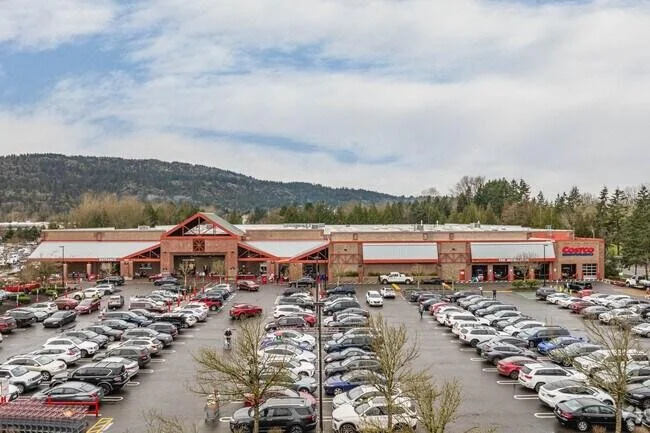
Gilman Village and Olde Town cover the charm side of Issaquah shopping, but most weeks, buyers care just as much about the unglamorous stuff: where's the closest Target, is there a real grocery store nearby, can I get errands done without driving to Bellevue? On that front, Issaquah punches well above its size, with two full retail corridors and a genuinely funny bit of local trivia involving the world's largest warehouse retailer.
Issaquah Commons: The Valley Floor's One-Stop Corridor
Right on Gilman Boulevard, Issaquah Commons packs a Target, Trader Joe's, Safeway, and an REI flagship into one walkable, open-air center, alongside Sephora, Athleta, and, as of a 2024 expansion, a full Barnes & Noble. It's the kind of everyday retail spread that lets most households handle groceries, home goods, and outdoor gear in a single stop, all just off I-90.
Grand Ridge Plaza: The Highlands' Own Retail Hub
Up on the plateau, Issaquah Highlands residents don't have to head back down the hill for essentials. Grand Ridge Plaza brings its own Safeway, Dick's Sporting Goods, Marshalls, HomeGoods, Ulta Beauty, and a 12-screen Regal Cinemas into one center, built specifically to serve the Highlands' master-planned community without a trip down to the valley floor. It's a small but meaningful detail for buyers comparing life on the plateau versus downtown: the Highlands genuinely functions as its own self-contained neighborhood, errands included.
The Costco Detail Most Buyers Don't Know
Here's the fun one: when Costco moved its world headquarters to Issaquah, it deliberately built the corporate campus right next to an actual working Costco warehouse, specifically so buyers and executives could walk over and check real merchandise and real customer behavior on the sales floor. That warehouse, at 1801 10th Ave NW, is still open to the public today, which means a routine Costco run in Issaquah happens in the literal shadow of the company's global headquarters. It's a small thing, but it's the kind of only-in-Issaquah detail that tends to stick with relocating buyers.
Groceries, Covered Every Way
Beyond the big anchors, Issaquah's grocery scene covers the full range of shopping styles: Safeway and Fred Meyer for full-service, one-stop trips, QFC for a smaller neighborhood option, Trader Joe's for the specialty/value middle ground, and PCC Community Markets, an organic, community-owned grocery co-op near Pickering Barn, for buyers who want a farm-to-table, locally sourced option close to home.
The city's ethnic and specialty grocery options have grown too. Mayuri International Foods, a South Asian grocer with a halal butcher counter, bakery, and prepared foods, opened in Pickering Place in early 2025. Uwajimaya, the well-known Pacific Northwest Asian grocery chain with longtime stores in Seattle, Bellevue, and Renton, has announced a fifth location taking over the former Rite Aid space at Town & Country Square; it hadn't opened as of this writing, so confirm current status before publishing.
Round it out with a Michaels craft store at Pickering Square, and the day-to-day errand list is about as covered as a suburb this size gets.
For Buyers & Sellers
Which retail corridor a home sits closest to is worth calling out specifically: Issaquah Commons for valley-floor and downtown-adjacent listings, Grand Ridge Plaza for Highlands listings. For buyers moving from a market without easy big-box or grocery access, being able to say "Target and Trader Joe's are five minutes away" answers a practical question before they have to ask it.
Curious which Issaquah neighborhoods put your daily errands closest to home? Reach out to Kelly Azzarello Real Estate. We can map it out for you.
Kelly Azzarello Real Estate | Compass
📧 kelly@kellyazzarello.com | 📞 (425) 830-6457 | 🌐 kellyazzarello.com
NOTE: Uwajimaya's Issaquah store was announced but not yet open as of this post (September 2026).

Because the View From Poo Poo Point Never Gets Old
Part of the Why Issaquah? series: Because the View From Poo Poo Point Never Gets Old
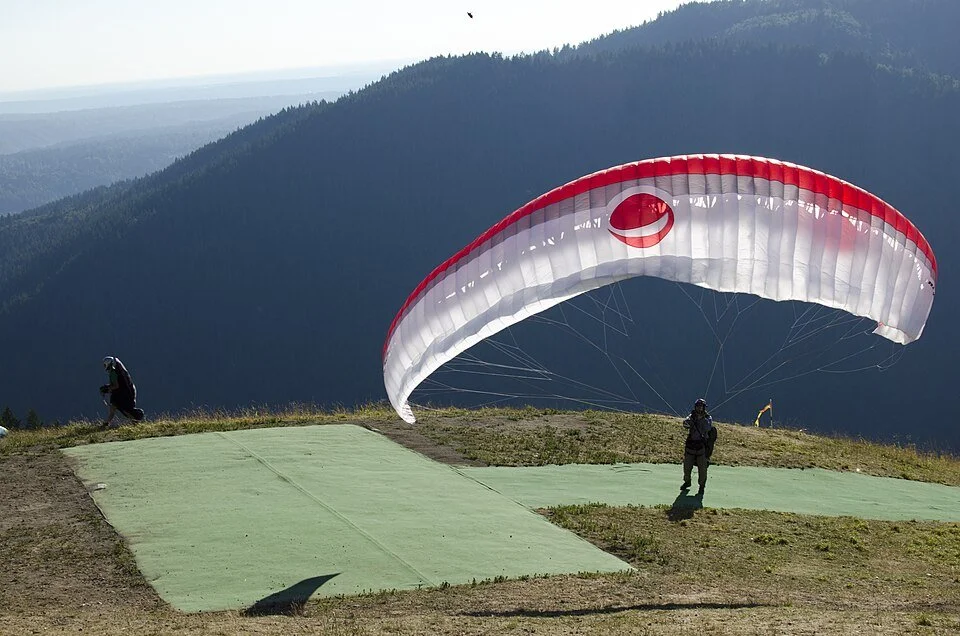
Ask a longtime Issaquah resident what makes this city different from anywhere else on the Eastside, and there's a decent chance the answer involves a hillside covered in colorful nylon wings. Welcome to Poo Poo Point, the summit on West Tiger Mountain where hikers earn a jaw-dropping view of Mount Rainier and Lake Sammamish, and where, on a clear day, you'll watch paragliders run straight off the grassy knoll and disappear into the sky.
A Trailhead That's Basically a Neighborhood Amenity
Most cities point to a park. Issaquah points to a mountain. The Chirico Trail climbs about 1,700 feet over roughly 3.8 miles round trip, steep enough to feel like an accomplishment, short enough to knock out before lunch. The longer, gentler route starts right from Issaquah High School, which tells you everything about how woven into daily life this trail really is. Kids grow up here treating a 4-mile mountain hike the way other towns treat a walk around the block.
The name itself is local lore: it's said to come from the steam whistle sound of old logging equipment that once worked this hillside, not the joke every second-grader assumes. Around the 1970s the timber company cleared the summit so thoroughly that the open, grassy launch point was born, and pilots noticed. Tiger Mountain has since become one of the best-known paragliding and hang-gliding sites in the country, with a local outfitter running tandem flights right from the base.
You Don't Have to Fly to Love It Up There
Here's the part that surprises newcomers: most of the people at the top on any given weekend aren't gliding at all. They're hikers who came specifically to watch. Poo Poo Point has two separate viewpoints, the South Launch and the North Launch, both of which double as some of the best spectator seating in the state. Families spread out a picnic on the grassy knoll, dogs nap in the sun, and everyone watches for that moment when a pilot takes a few running steps and simply lifts off the hillside. It's become its own kind of local ritual: a genuinely free, genuinely spectacular way to spend a Saturday morning, whether or not you have any interest in leaving the ground yourself.
The Company Behind the Wings: Seattle Paragliding
If watching from the grass turns into wanting to try it yourself, the outfitter most pilots and first-timers know by name is Seattle Paragliding, based right at the foot of Tiger Mountain on Issaquah-Hobart Road, next to the landing zone. They offer tandem flights with a certified instructor pilot doing all the technical work. No experience, and essentially no age limit, required; they've flown passengers from age 5 to well into their 90s. You either ride their shuttle up to the launch or hike up yourself and pay a smaller fee to have your gear shuttled, then run a few steps downhill with your instructor and the wing does the rest. Beyond one-time tandem flights, they also run a full paragliding school for people who want to get certified and fly solo, complete with a private training hill, plus tandem "party" packages for groups. For a lot of visitors, watching from Poo Poo Point on one trip and booking a flight on the next is basically the Issaquah bucket-list arc.
What It's Really Selling: Proximity to the Extraordinary
Here's the thing buyers relocating from denser markets don't always expect: this isn't a drive-an-hour-to-the-trailhead kind of outdoor access. Poo Poo Point, and the rest of the Issaquah Alps, sit inside the city limits or a few minutes past them. You can have a normal Tuesday and be standing on a ridgeline watching someone launch off a mountain by 6 p.m.
For buyers weighing Issaquah against other Eastside cities, this is often the tiebreaker. It's not just that there's a trail nearby. It's that the trail is dramatic, the payoff is real, and it's part of the identity of the place rather than an afterthought.
For Buyers & Sellers
Homes within easy reach of the Poo Poo Point / Tiger Mountain trailheads, particularly in the Issaquah Highlands and neighborhoods off Newport Way and SE Issaquah-Fall City Road, consistently draw buyers who list "outdoor access" as a top priority. If you're selling in one of these pockets, it's worth calling out trail proximity explicitly in your listing; it's a detail relocating buyers search for by name.
Thinking about a move to a neighborhood where a mountain view, or a mountain launch pad, is part of daily life? We'd love to show you around. Reach out to Kelly Azzarello Real Estate to talk about which Issaquah neighborhoods put you closest to the trails that matter most to you.
Kelly Azzarello Real Estate | Compass
📧 kelly@kellyazzarello.com | 📞 (425) 830-6457 | 🌐 kellyazzarello.com