


Because This Town Throws a Party for Fish
Part of the Why Issaquah? series: Because This Town Throws a Party for Fish
Salmon Days 2026 Logo
Every October, something happens in Issaquah that you won't find on most cities' event calendars: salmon come home, and the whole town shows up to watch. Issaquah Salmon Days, held the first full weekend of October (October 3–4 in 2026), is Washington's largest two-day festival: nearly 600 vendor booths, a Grande Parade, two live entertainment stages, a Field of Fun for kids, and, at the center of it all, thousands of people leaning over the Issaquah Creek bridge to watch spawning salmon fight their way upstream to the historic hatchery.
A Name That Comes From the Creek Itself
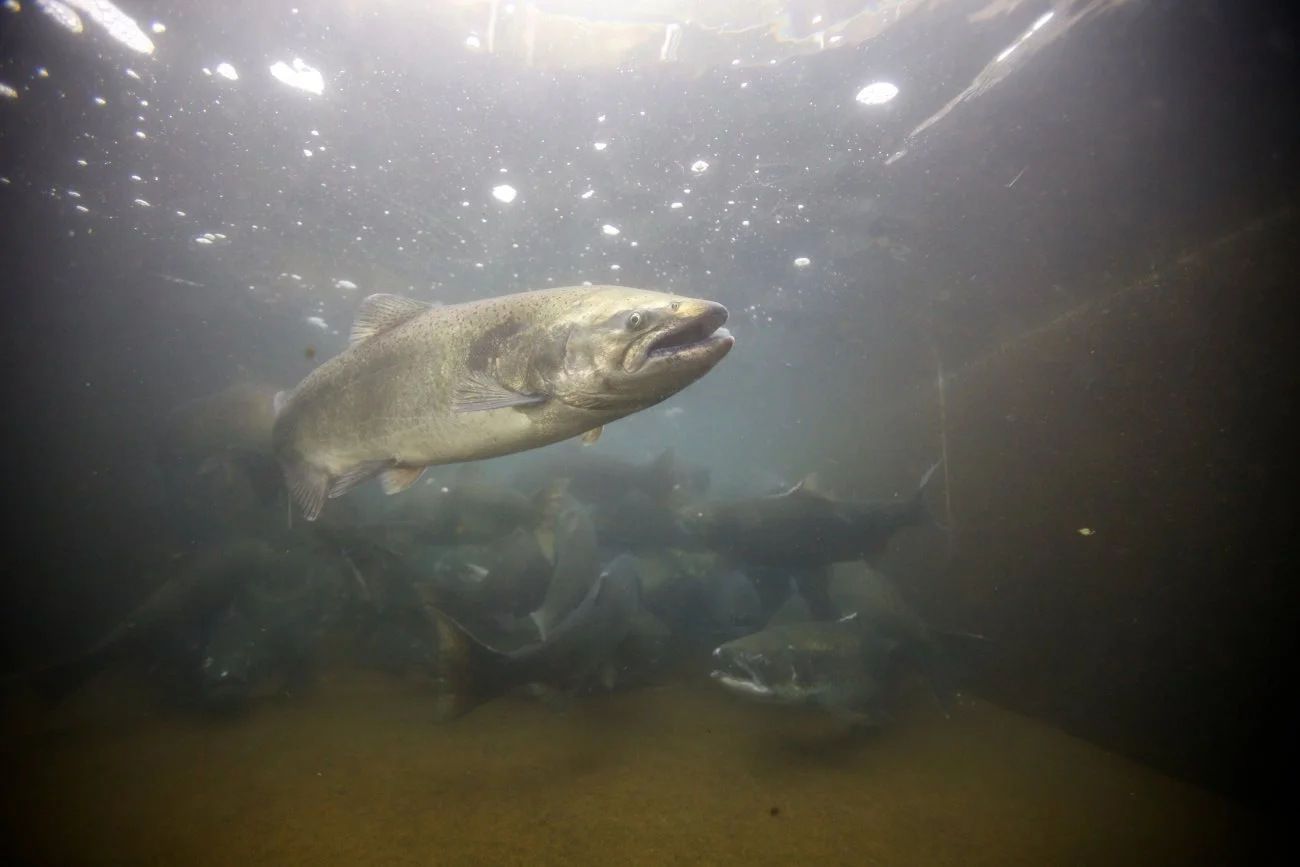
The town's name is an anglicized version of a Southern Lushootseed word tied to this same waterway, variously translated as "the sound of birds," "snake," or "little stream." Long before Issaquah was a commuter suburb, it was Squak Valley, a place defined by the creek running through it. Salmon Days, first held in 1970 as a replacement for the town's fading Labor Day celebration, was built specifically to honor that relationship, and more than fifty years later, it's still the single best illustration of what makes Issaquah feel like a town rather than just a zip code.
The Issaquah Salmon Hatchery, right downtown on Sunset Way, is open to visitors well beyond festival weekend. Watching chinook and coho salmon return to the exact stream where they hatched is the kind of thing that sounds like a school field trip and turns out to be genuinely moving, for kids and adults alike.
A Community That Doesn't Wait for October
Salmon Days is the headline, but it's really just the biggest night of a calendar that stays busy all year. Every Tuesday evening in summer, the City of Issaquah hosts Concerts on the Green, a free, family-friendly concert series on the lawn of the Issaquah Community Center, running an eight-week season from early July through late August. Thursdays belong to Gas Station Blues, a free outdoor blues series at the Historic Shell Station on Front Street, running the same July-through-August stretch. Bring a chair and a picnic and it's as close to a standing weekly neighborhood tradition as a city this size gets.
Issaquah Farmers Market Video
Saturdays belong to the Issaquah Farmers Market, held rain or shine at the historic Pickering Barn from May through September, 9 a.m. to 2 p.m. It's a genuine destination market: over 100 vendors on a typical weekend, live music, cooking demonstrations, and seasonal traditions like the Strawberry Festival and Kids' Day built right into the schedule.
Then August brings Al Fresco on Front, when the city closes Front Street to vehicle traffic every weekend, Saturday morning through Sunday night, and turns Olde Town into a walkable, mall-like stretch of outdoor dining, sidewalk shopping, live music, and pop-up activities. Restaurants spill out into the street, shops set up displays outside their doors, and for four weekends a year, downtown Issaquah becomes a place built entirely for wandering on foot.
Layer in the rest of the community calendar: ArtWalk & Music Stroll through historic downtown on first Fridays each summer, the classic-car gathering at Fenders on Front Street, and a steady stream of smaller festivals, markets, and Village Theatre productions. Salmon Days starts to look less like a once-a-year event and more like the biggest expression of something Issaquah does constantly: give people a reason to show up downtown.
Why This Matters When You're House-Hunting
A festival is just a festival, until you realize it's a proxy for something buyers actually care about: does this place have an identity, or is it just rooftops? Issaquah's answer is unambiguous. Between Salmon Days, the historic downtown core, and a genuine, decades-deep relationship with the creek and hatchery at its center, this is a city that knows what it is. For families relocating from out of state, or Eastside buyers comparing Issaquah to newer, less-defined developments, that sense of place is often exactly what tips the decision.
For Buyers & Sellers
Neighborhoods within walking distance of downtown Issaquah, think the historic core, Olde Town, and the streets around Sunset Way, let buyers market a genuine "we walked to the parade" lifestyle, not just a listing bullet point. If you're selling near downtown this fall, consider timing photos or an open house around Salmon Days weekend, when the neighborhood is at its most alive.
Curious which Issaquah neighborhoods put you close enough to downtown to make Salmon Days part of your own family tradition? Let's talk. Kelly Azzarello Real Estate can walk you through the options block by block.
Kelly Azzarello Real Estate | Compass
📧 kelly@kellyazzarello.com | 📞 (425) 830-6457 | 🌐 kellyazzarello.com

Because the View From Poo Poo Point Never Gets Old
Part of the Why Issaquah? series: Because the View From Poo Poo Point Never Gets Old
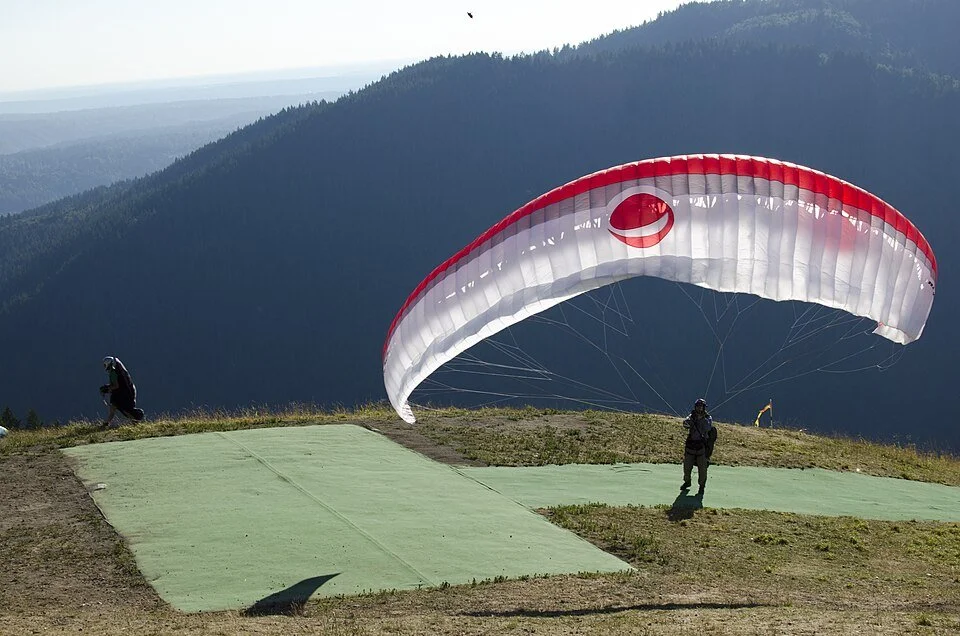
Ask a longtime Issaquah resident what makes this city different from anywhere else on the Eastside, and there's a decent chance the answer involves a hillside covered in colorful nylon wings. Welcome to Poo Poo Point, the summit on West Tiger Mountain where hikers earn a jaw-dropping view of Mount Rainier and Lake Sammamish, and where, on a clear day, you'll watch paragliders run straight off the grassy knoll and disappear into the sky.
A Trailhead That's Basically a Neighborhood Amenity
Most cities point to a park. Issaquah points to a mountain. The Chirico Trail climbs about 1,700 feet over roughly 3.8 miles round trip, steep enough to feel like an accomplishment, short enough to knock out before lunch. The longer, gentler route starts right from Issaquah High School, which tells you everything about how woven into daily life this trail really is. Kids grow up here treating a 4-mile mountain hike the way other towns treat a walk around the block.
The name itself is local lore: it's said to come from the steam whistle sound of old logging equipment that once worked this hillside, not the joke every second-grader assumes. Around the 1970s the timber company cleared the summit so thoroughly that the open, grassy launch point was born, and pilots noticed. Tiger Mountain has since become one of the best-known paragliding and hang-gliding sites in the country, with a local outfitter running tandem flights right from the base.
You Don't Have to Fly to Love It Up There
Here's the part that surprises newcomers: most of the people at the top on any given weekend aren't gliding at all. They're hikers who came specifically to watch. Poo Poo Point has two separate viewpoints, the South Launch and the North Launch, both of which double as some of the best spectator seating in the state. Families spread out a picnic on the grassy knoll, dogs nap in the sun, and everyone watches for that moment when a pilot takes a few running steps and simply lifts off the hillside. It's become its own kind of local ritual: a genuinely free, genuinely spectacular way to spend a Saturday morning, whether or not you have any interest in leaving the ground yourself.
The Company Behind the Wings: Seattle Paragliding
If watching from the grass turns into wanting to try it yourself, the outfitter most pilots and first-timers know by name is Seattle Paragliding, based right at the foot of Tiger Mountain on Issaquah-Hobart Road, next to the landing zone. They offer tandem flights with a certified instructor pilot doing all the technical work. No experience, and essentially no age limit, required; they've flown passengers from age 5 to well into their 90s. You either ride their shuttle up to the launch or hike up yourself and pay a smaller fee to have your gear shuttled, then run a few steps downhill with your instructor and the wing does the rest. Beyond one-time tandem flights, they also run a full paragliding school for people who want to get certified and fly solo, complete with a private training hill, plus tandem "party" packages for groups. For a lot of visitors, watching from Poo Poo Point on one trip and booking a flight on the next is basically the Issaquah bucket-list arc.
What It's Really Selling: Proximity to the Extraordinary
Here's the thing buyers relocating from denser markets don't always expect: this isn't a drive-an-hour-to-the-trailhead kind of outdoor access. Poo Poo Point, and the rest of the Issaquah Alps, sit inside the city limits or a few minutes past them. You can have a normal Tuesday and be standing on a ridgeline watching someone launch off a mountain by 6 p.m.
For buyers weighing Issaquah against other Eastside cities, this is often the tiebreaker. It's not just that there's a trail nearby. It's that the trail is dramatic, the payoff is real, and it's part of the identity of the place rather than an afterthought.
For Buyers & Sellers
Homes within easy reach of the Poo Poo Point / Tiger Mountain trailheads, particularly in the Issaquah Highlands and neighborhoods off Newport Way and SE Issaquah-Fall City Road, consistently draw buyers who list "outdoor access" as a top priority. If you're selling in one of these pockets, it's worth calling out trail proximity explicitly in your listing; it's a detail relocating buyers search for by name.
Thinking about a move to a neighborhood where a mountain view, or a mountain launch pad, is part of daily life? We'd love to show you around. Reach out to Kelly Azzarello Real Estate to talk about which Issaquah neighborhoods put you closest to the trails that matter most to you.
Kelly Azzarello Real Estate | Compass
📧 kelly@kellyazzarello.com | 📞 (425) 830-6457 | 🌐 kellyazzarello.com