

10: Duthie Hill Mountain Bike Park
Duthie Hill isn’t a neighborhood park with a bike rack, it’s a genuinely world-class, purpose-built mountain bike park. Here’s what’s actually there, who can ride, and how to get in.
Duthie Hill Mountain Bike Park - King County Parks
A Plateau Amenity Worth Knowing
We’ve mentioned Duthie Hill a few times already in this series, in the outdoor life post and again in the Trossachs neighborhood spotlight, and it deserves its own closer look. This isn’t a neighborhood park with a bike rack. It’s a genuinely world-class, purpose-built mountain bike park that draws riders from across the region, and it sits close enough to Sammamish’s southeastern edge that it functions as a real amenity for the plateau even though it’s technically just outside city limits.
What’s actually there
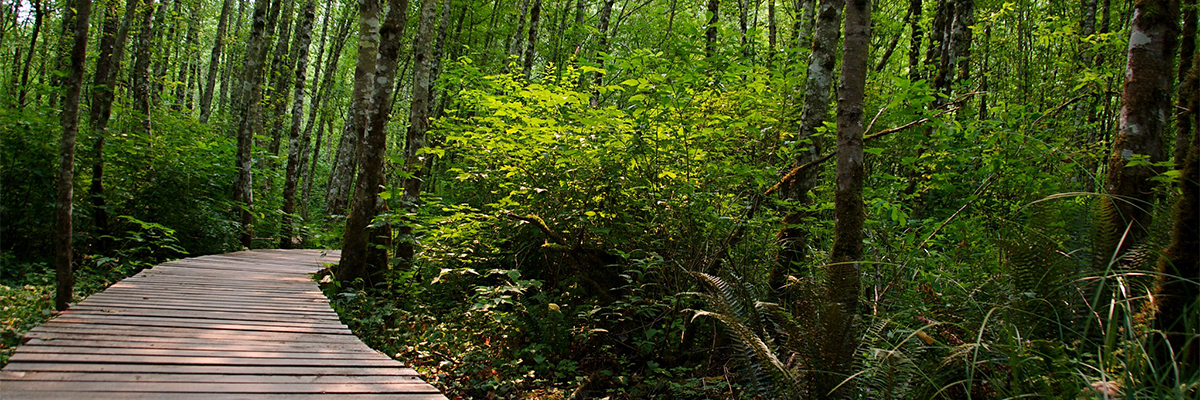
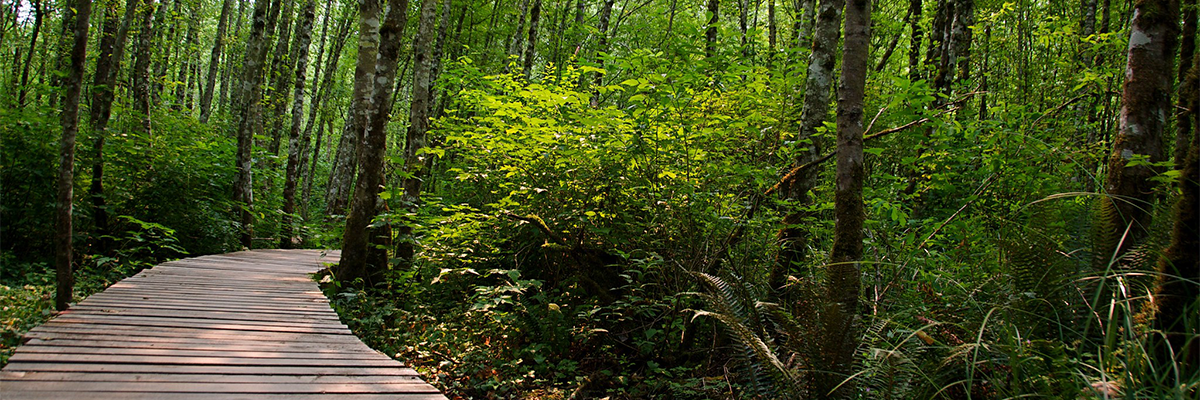
Duthie Hill covers 120 acres of dense evergreen forest, Douglas fir and western hemlock, with well-draining soils that keep it rideable close to year-round. The trail layout is distinctive: a six-mile network of rolling singletrack forms a four-leaf clover shape around a 2.5-acre central clearing. That clearing is the social hub of the park, with informational kiosks, skill-building features, a picnic shelter, and an engraved donor bench.
Inside each of the four “cloverleaf” lobes, riders find downhill-only freeride trails loaded with berms, jumps, and drop-offs, each lobe has its own character and difficulty range. The outer, cross-country style trails ring the whole park and are shared, one-way, and open to hikers and trail runners as well as bikers.
[PHOTO PLACEHOLDER: a jump line or berm feature, to show the freeride side of the park]
Trail breakdown
A few of the named trails riders navigate by, with approximate length and difficulty:
• Braveheart — advanced, 0.39 miles. The only advanced-rated cross-country trail at Duthie, mostly fast and flowy with a rock garden entrance and an off-camber root roll that bumps up the difficulty.
• Step It Up — intermediate, 1.3 miles. One of the longer cross-country style trails, fast and flowy with optional skinnies and log rides along the way.
• Movin’ On — intermediate, 0.83 miles. More technical than Step It Up, with tight turns, ladders, bridges, and skinnies throughout, a good training trail.
• Ryans — intermediate, 0.29 miles. Short, fun, and flowy.
• The Great Space Coaster — advanced, a feature-rich trail branching off “Bootcamp” with North Shore-style ladder bridges and skinnies, a real test of balance.
Beyond the park boundary itself, Grand Ridge Park connects directly to the south with its own popular cross-country riding, and the trails at Soaring Eagle Regional Park are accessible less than 2 miles to the north.
[PHOTO PLACEHOLDER: a technical feature like a skinny, ladder bridge, or log ride from the central clearing skills area]
Who built it, and who takes care of it
Duthie Hill was designed and built by the Evergreen Mountain Bike Alliance in partnership with King County, funded through King County’s Community Partnerships and Grants program along with Youth Sports Facilities grants, roughly $225,000 in private donations, and thousands of hours of volunteer labor. Phase 1 opened in 2010; Phase 2 completed in May 2012. The park now sees an estimated 100,000 rider visits a year, and Evergreen continues to maintain the trails through ongoing volunteer stewardship.
The Evergreen Mountain Bike Festival is held at Duthie every June and draws riders from across the region for a full day of racing, demos, and community events.
Who can ride, and the rules that keep it working
Duthie Hill is genuinely built for every skill level, from kids on push bikes learning to balance in the clearing to expert riders chasing the advanced lines. A few rules worth knowing before a first visit:
• All trails are one-way. Signage at each trailhead marks direction, and the whole system depends on everyone riding the correct way.
• The cross-country and perimeter trails are shared with hikers and trail runners; the downhill freeride trails inside each cloverleaf are bike-only.
• No overnight parking. The lots are day-use only.
• Pack out your trash. Facilities are minimal beyond a single restroom near the main lot.
• Evergreen’s youth and teen dirt camps require full-face helmets for advanced sessions, a good baseline expectation for anyone riding the more technical freeride lines, even outside a formal class.
Evergreen also runs a full slate of classes and camps at Duthie, from beginner-level youth dirt camps (ages 8 to 13) through intermediate and advanced teen and adult sessions, plus skills clinics for riders looking to progress. Scholarships are available for camps based on financial need.
Accessibility and adaptive riding
Worth being upfront about what this is and isn’t: Duthie Hill is natural-surface singletrack throughout, not a paved trail, and it isn’t a standard wheelchair-accessible path the way sections of the Sammamish River Trail or Cedar River Trail are. That said, it’s become a genuine, well-documented destination for adaptive mountain biking, more so than most parks in the region.
Evergreen Mountain Bike Alliance launched an Adaptive Mountain Bike (aMTB) program a few years back in partnership with Outdoors for All, a Seattle-based nonprofit founded in 1979 that provides adaptive outdoor recreation for children and adults with disabilities. Outdoors for All runs a beginner mountain biking series at Duthie Hill specifically, using electric-assist adaptive mountain bikes, handcycles, prone cycles, and recumbent trikes, alongside standard two-wheeled bikes, for riders who are already comfortable on a bike but new to mountain biking. Registration is required and eligibility criteria apply; details are on the Outdoors for All website.
On the trail-building side, Evergreen’s crews have been physically modifying parts of Duthie, widening the Bootcamp trail in particular, using what they call “universal trail design”: removing pinch points and cutting brush wider, without changing the character or difficulty progression of the trail itself, so a broader range of equipment can actually ride it. New connector trails added in recent years also mean riders can get from the parking lot to the central clearing entirely on trail, without using the access road, which matters for anyone for whom the road shoulder isn’t a safe or practical option.
King County Parks has highlighted Duthie Hill directly in its own accessibility materials as a place where adaptive mountain biking is demonstrated in practice, which is a meaningful acknowledgment for a park that started out built purely for traditional two-wheeled riding.
Getting there
The park sits on the Sammamish Plateau at the Issaquah-Fall City Road entrance, with a roughly 74-vehicle parking lot on the north side of the road. King County Metro routes 269 and 554 stop on Issaquah-Pine Lake Road SE nearby, so it’s reachable without a car for riders coming from elsewhere on the plateau. On busy weekends, overflow parking has historically been available at nearby schools, though that’s worth confirming directly with Evergreen or King County before counting on it.
The layout, at a glance
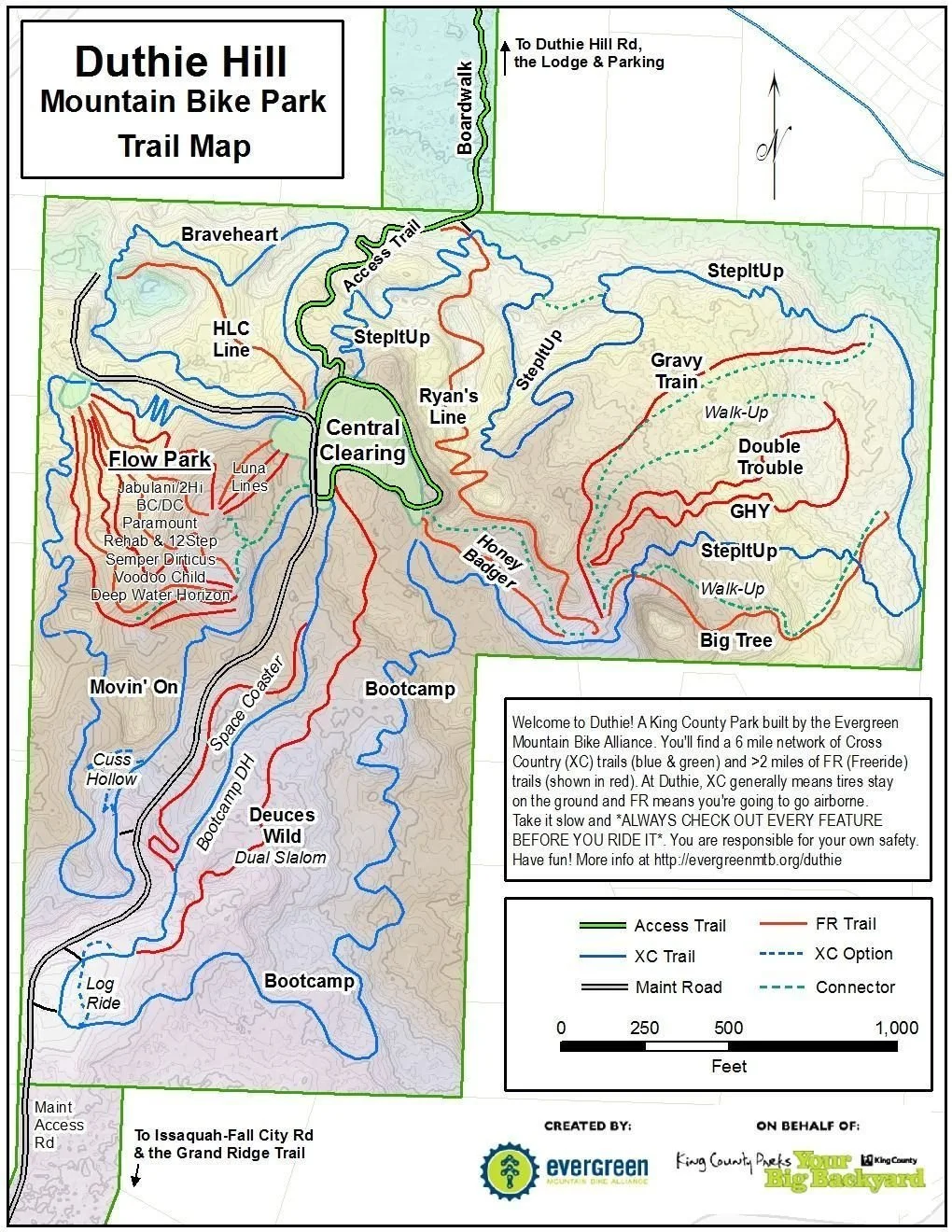
Map courtesy of King County Parks and Evergreen Mountain Bike Alliance.
This is a supplementary post in our Why Sammamish? series, expanding on a landmark first mentioned in our outdoor life post and our Trossachs neighborhood spotlight.
Kelly Azzarello Real Estate | Compass 📧 kelly@kellyazzarello.com 📞 (425) 830-6457 🌐 kellyazzarello.com
09: Neighborhood Spotlight: Trossachs
Trossachs is Sammamish’s answer to newer, larger, more private living, still on the plateau, still in the Issaquah schools. Here’s a full spotlight on the neighborhood and who it’s really for.
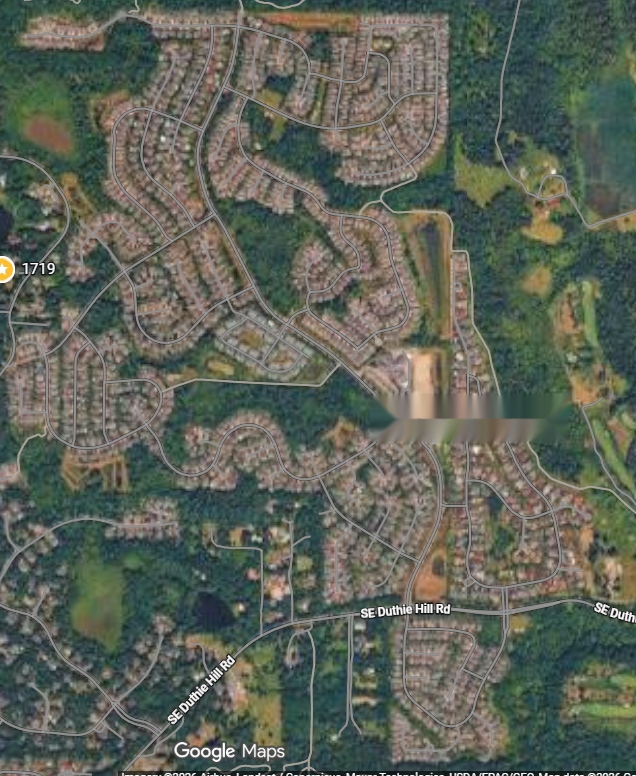
Trossachs sits on the eastern edge of the Sammamish Plateau, and it reads differently from Klahanie almost immediately: newer, larger homes, more deliberate planning, and a name borrowed from the Scottish Highlands rather than the local landscape. It’s one of the plateau’s more upscale addresses, and it’s worth understanding on its own terms.
A master-planned community, built later than most
Where Klahanie traces back to 1984, Trossachs came together mostly in the 1990s and 2000s, with some sections continuing to develop into the 2010s. It was planned from the outset as a cohesive, upscale community: integrated parks, extensive greenbelts, and large lots by plateau standards. The Scottish Highland theme shows up in the street names throughout, echoing the same naming convention Bellevue used for its Somerset neighborhood.
According to Census data, Trossachs is home to roughly 6,800 residents. Homes here are almost entirely single-family, typically running 3,000 to over 5,000 square feet, on lots larger than what you’ll find in the central plateau, with architecture ranging from traditional estate styles to contemporary Pacific Northwest design. Several sub-neighborhoods within Trossachs, including Glencoe, Preswick, and Blackstone, represent different size and price tiers within the broader community, and Sterling Square adds a condominium option within the same overall Trossachs footprint.
Schools right in the neighborhood
Cascade Ridge Elementary, on Trossachs Boulevard, sits inside the neighborhood itself, an all-walking school for the families around it, with a strong community feel that comes from that proximity. It’s also the north campus for the Issaquah School District’s Science Technology magnet program for 4th and 5th graders, and it consistently ranks among the top elementary schools in Washington State. From there, Trossachs feeds into Beaver Lake Middle School and on to Skyline High School, the same Issaquah School District pathway covered in our schools post.
Parks, trails, and what’s just outside the door
Trossachs Community Park, on Trossachs Boulevard, is the neighborhood’s own recreational anchor: tennis courts, a basketball court, a playground, and genuinely notable mountain views on a clear day, plus a small community library where residents can take or leave a book. It’s technically reserved for Trossachs residents rather than open to the general public, which is part of what gives the neighborhood its more private, self-contained feel.
Beyond its own park, Trossachs backs directly up to some of the best outdoor recreation on the plateau. Duthie Hill Mountain Bike Park, the internationally recognized trail network we covered in our outdoor life post, sits essentially at the neighborhood’s edge. Beaver Lake Park is a short drive away as well. For a community built around larger, more private lots, that’s a meaningful trade: less of a shared civic commons than Klahanie, but arguably better direct access to the plateau’s best trails.
Who it’s for
Trossachs draws a specific kind of buyer: families who want newer construction, more space, and more privacy without leaving Sammamish, and who are willing to pay for it, inventory here is limited and the market stays competitive. It’s also become a popular choice among Microsoft employees given its relatively direct shot to the Redmond campus. If Klahanie is Sammamish’s largest and most self-contained neighborhood, Trossachs is its answer to a newer, larger, more move-up address, still on the plateau, still in the Issaquah schools, but a different lifestyle entirely.
Where things sit

Kelly Azzarello Real Estate | Compass 📧 kelly@kellyazzarello.com 📞 (425) 830-6457 🌐 kellyazzarello.com
Kelly Azzarello Real Estate | Compass 📧 kelly@kellyazzarello.com 📞 (425) 830-6457 🌐 kellyazzarello.com
08: Neighborhood Spotlight: Klahanie
Klahanie is Sammamish’s largest neighborhood, older than the city itself, and one of the most self-contained. Here’s a full spotlight, from a resident, on its history, amenities, and schools.
Klahanie is Sammamish’s largest neighborhood, and in a lot of ways its most self-contained. It has its own name origin, its own decades of history predating the city itself, its own shopping center, and enough parks and trails that plenty of residents could spend a weekend without ever leaving. It’s also home, we should say upfront: Kelly and I live right here, in Klahanie’s Winslow Place neighborhood.
What the name means
“Klahanie” comes from Chinook Jargon, the historic Pacific Northwest trade language, and it means “outside” or “the outdoors.” It’s a fitting name for a community built almost entirely around its trail network and green space.
Older than the city itself
Klahanie was established in 1984, which makes it older than the City of Sammamish, which didn’t incorporate until 1999. It grew in stages through the following decade as several established home builders developed different sections, which is why Klahanie has more variety in home styles and ages than a typical single-phase development. For most of its history, it was its own unincorporated King County community. It wasn’t annexed into the City of Sammamish until January 1, 2016, something we covered in more depth in the history post in this series.
Today, Klahanie covers 900 acres and contains roughly 1,967 single-family homes, 718 multifamily residences (condos and townhomes), and 405 apartment units, according to the Klahanie Association’s own figures.
A neighborhood of neighborhoods
Klahanie isn’t one uniform development, it’s made up of more than a dozen named sub-neighborhoods, each with its own character. A few examples:
• Audubon Ridge, 328 single-family homes, near Klahanie Park, Yellow Lake, and the Lakeside pool
• Heatherwood, 109 single-family homes, bordering a greenbelt and the Powerline trail
• Fairfield Green, 59 townhomes and condos, adjacent to the QFC shopping center
• Kenlock and Lake Park, smaller condo/townhome developments near Lakeside Park
• Highland Gardens, a 51-unit apartment community near the shopping center
• Winslow Place, Summit, Lancaster, Madison Place, and Mountainview round out the rest
A community built for sports
Klahanie’s HOA maintains a genuinely substantial set of shared amenities: two swimming pools (Lakeside and Mountainview, one of them covered for year-round use), three tennis courts, four basketball courts, and four pickleball and badminton courts.
Klahanie Park, a 64-acre city park next to Challenger Elementary, is the athletic hub. It carries multiple soccer and baseball/softball fields used constantly for practices, games, and camps, and it’s also the only park in Sammamish with a dedicated cricket field, home ground for youth and adult matches run by the Seattle Youth Cricket League and the Northwest Cricket League. The park also protects Queen’s Bog, one of only about fifty bogs left in Washington State.
Swimming has its own layer of organization worth untangling. The Klahanie Sharks are a separate, independent nonprofit swim club, not simply an HOA program, though the team uses the HOA’s pools and the two organizations partner closely. The Sharks compete in the 26-team Midlakes Summer Swim League each May through July, run by a volunteer board, and open only to Klahanie residents, roughly 200 swimmers, ages 5 to 18, each season.
The trail network
Klahanie’s roughly 30 miles of groomed trails have their own set of named routes that locals navigate by. The paved Perimeter Trail loops almost the entire community. The roughly 1.25-mile Yellow Lake Trail circles the neighborhood’s namesake lake, with a viewing dock and a resident-favorite counter-clockwise route that ends right at the dock. The Pipeline Trail runs north-south past Lakeside Park and Audubon. The Powerline Trail runs beneath the power lines and includes the neighborhood’s best-known local landmark, a steep stretch known simply as “snake hill.” And the Pea Patch Trail connects to a community garden plot off 256th, linking both the Yellow Lake and Powerline trails.
Yellow Lake itself sits at the literal center of the community. Gander Pond, Sutter Pond, and Queens Lake Bog round out the smaller water features scattered through the neighborhood. And Klahanie’s trails don’t dead-end at the neighborhood line, they connect into the wider plateau trail system covered in our outdoor life post, including Soaring Eagle Regional Park and Beaver Lake Park just beyond Klahanie’s borders, so the reach is bigger than the neighborhood itself suggests.
Schools
Klahanie falls within the Issaquah School District, with Challenger Elementary School and Beaver Lake Middle School both located inside the neighborhood. High schoolers feed into Skyline High School, the ISD comprehensive high school covered in our schools post.
Shopping and location
Klahanie Village, anchored by a QFC grocery store, sits at the neighborhood’s south end and functions as its de facto town center, restaurants, everyday shopping, and a Starbucks that regulars know by name. Klahanie’s location also gives it a real practical edge: it’s close enough to I-90 to make the commute toward Issaquah, Bellevue, and Seattle noticeably easier than from neighborhoods further north on the plateau, and Costco’s world headquarters sits about four miles away.
Where things sit
Schematic map of the Klahanie neighborhood showing Yellow Lake at the center, Klahanie Park to the west, Beaver Lake Middle School and Challenger Elementary School to the north and east, and Klahanie Village shopping center to the south
Marker positions are plotted from real coordinates; Klahanie’s boundary shown is illustrative, not an official line.
This is part of our Why Sammamish? series, digging into individual neighborhoods in more depth. Up next: a closer look at Trossachs.
Kelly Azzarello Real Estate | Compass 📧 kelly@kellyazzarello.com 📞 (425) 830-6457 🌐 kellyazzarello.com
06: Top 5 Community Events in Sammamish
Sammamish doesn't have a historic downtown to gather in, but it's built a real events calendar anyway. Here are the five biggest, plus a couple of quieter civic traditions worth knowing.

Sammamish doesn’t have a historic downtown to gather in, but it’s built a real events calendar on the civic green space at Sammamish Commons and a handful of neighborhood parks instead. These five are the ones that consistently show up on residents’ calendars year after year, plus a couple of quieter civic traditions worth knowing about beyond the festival circuit.
1. Fourth on the Plateau
The biggest event of the year, by a wide margin. Fourth on the Plateau runs from 5 to 10 p.m. at Sammamish Commons, with food trucks,kids’ activities, an outdoor yard games area, and a fireworks show thatcloses out the night around 10 p.m. Lawn seating fills both the Upper and Lower Commons, and the city runs paid parking at Skyline High School and nearby churches plus an on-demand rideshare option, since there’sessentially no free parking at the Commons itself on the day. It’s free,open to the public, and it’s the one night of the year when it genuinely feels like the whole plateau shows up in one place.
2. Sammamish Farmers Market
A weekly fixture from May through September, held Wednesday eveningsat Sammamish Commons. It’s less a shopping errand than a standing socialoccasion, produce and artisan vendors, a rotating slate of food trucks,and a reliable run of small community moments alongside it (a Pride Night, a kids’ business fair where young entrepreneurs run their ownbooths). The market’s own organizers have described its real function associal more than commercial, a place where the city’s genuinelyinternational community ends up on the same lawn on the same night,which tracks with how residents actually talk about it.
3. Concerts in the Park
A summer Thursday evening series at PineLake Park, typically running six weeks from early July intomid-August, free and open to everyone. Bring a blanket, grab ice creamfrom the Sammamish Kiwanis stand or dinner from whichever food truck ison site that week, and settle in on the grass by the lake. It’s thesmall, recurring version of the community gathering that Fourth on thePlateau does at a much larger scale.
4. Shakespeare in the Park
Held at KlahaniePark in late July, this is Seattle Shakespeare Company’s touring“Wooden O” series making its annual stop on the plateau, a genuineprofessional outdoor production, not a community theater performance.It’s the closest thing Sammamish has to a proper night of outdoorculture, and it draws people well beyond Klahanie itself. Worth bringinga sweater, the temperature tends to drop once the sun’s fully down.
5. Big Rigs on the Plaza
A smaller-scale but well-loved event held in May at City Hall Plaza,where kids get to climb into and explore a lineup of large vehicles,fire trucks, construction equipment, and the like. It’s squarely aimedat younger kids, and it’s a good example of the kind of low-key,genuinely free family programming the city runs throughout the yearbeyond the headline events.
Beyond the top5: civic and community traditions
Not everything that brings the plateau together is a festival. Acouple of recurring, less flashy traditions are just as much a part ofhow Sammamish actually functions day to day.
City recycling events. Several times a year, theCity of Sammamish partners with the City of Issaquah and King County torun hard-to-recycle collection and document shredding events, typicallyat Eastside Catholic School, where residents can drop off everythingfrom mattresses and propane tanks to old electronics and confidentialpaperwork for on-site shredding. King County’s Wastemobile also makes aseasonal stop in Sammamish for household hazardous waste disposal.They’re not glamorous, but they’re a genuinely well-used civic service,and the kind of thing new residents are often glad to know about.
The Scout Tree Drive. Every January, local ScoutsBSA troops (six of them currently, covering Sammamish and the Issaquah Highlands) canvass the entire city collecting Christmas trees curbsidefor recycling, in exchange for a donation. It’s been runningcontinuously since 1985, making it one of the longest-standingtraditions on the plateau, older than the city itself by 14 years, and it’s the single largest fundraiser of the year for local Scouting. Treesget chipped on-site at BeaverLake Park by a local tree service donating its equipment for theday. It’s a small thing, but it’s the kind of small thing that tells youa lot about how this community operates: volunteer-run, genuinelyuseful, and quietly recurring year after year.
Where they happen
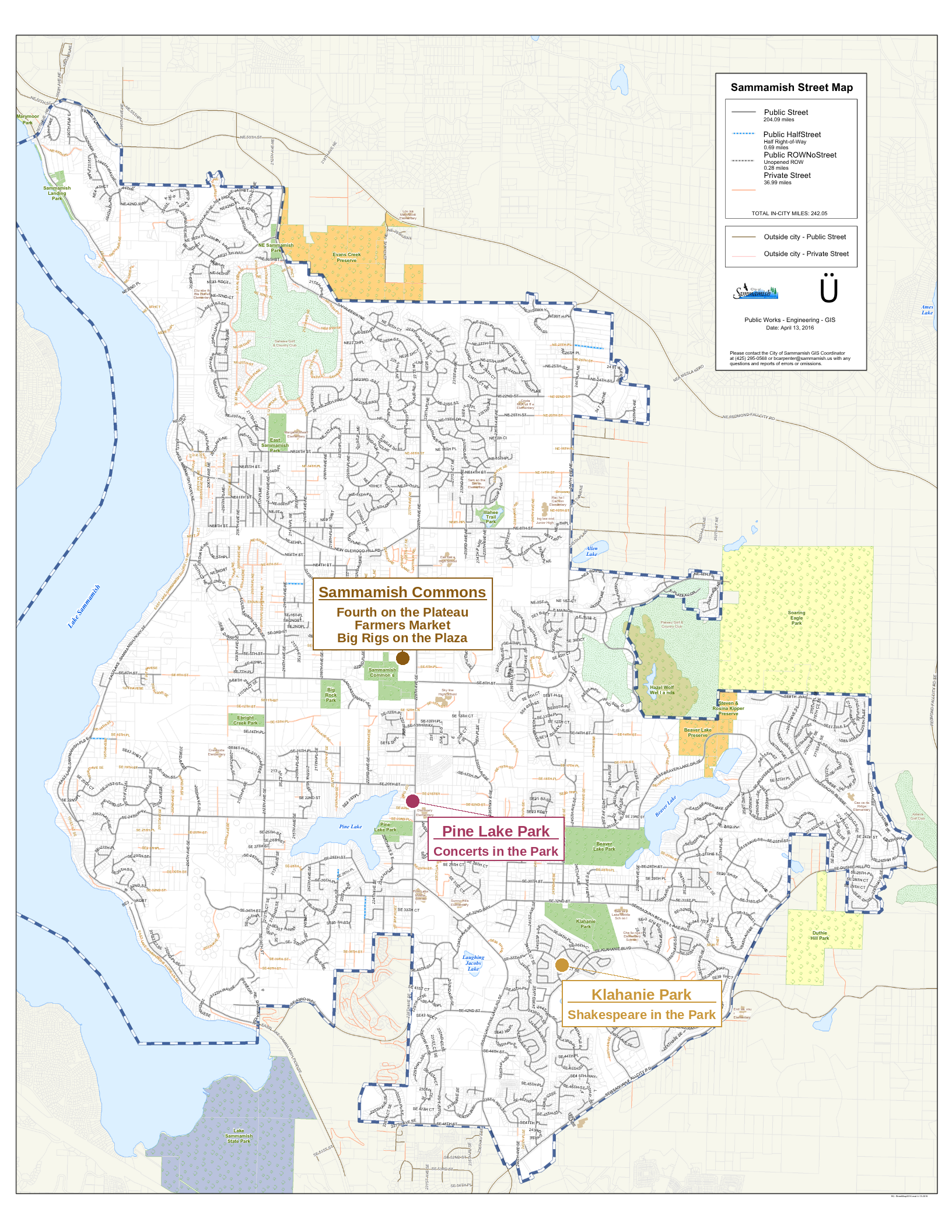
Base map: City of Sammamish Public Works – Engineering – GIS,Sammamish Street Map (April 13, 2016). Callouts and markers added by us,plotted from real coordinates; not an official city product.
This is the sixth post in our Why Sammamish? series. Up next: thetop restaurants worth knowing on the plateau.
Kelly Azzarello Real Estate | Compass 📧 kelly@kellyazzarello.com 📞(425) 830-6457 🌐 kellyazzarello.com