

15: Lakes of Sammamish
Lake Sammamish, Pine Lake, Beaver Lake, Yellow Lake and a few you can’t see from the road: who can use each one, the rules in one line, and what it means if you want to live on the water.
Where to Swim, Fish, Paddle, and Live on the Water
The city is named for a lake, but Lake Sammamish is only part of the water story. Up on the plateau itself there are three smaller lakes, Pine Lake, Beaver Lake, and Yellow Lake, and each has a very different relationship with the people around it. Pine Lake has a city park and seasonal lifeguards. Beaver Lake has a lodge and a rack of free loaner life jackets. Yellow Lake sits inside Klahanie, where access is a homeowners’ association question.
That’s the real question with Sammamish’s lakes: not which one is prettiest, but who is allowed to use it. Some are public, some are resident-only, and a few are hard to spot from the road. Below is each lake, its rules in one line, and, at the end, what it means if you want to live on the water instead of just visiting.
Lake Sammamish
The big one. Lake Sammamish covers roughly 4,850 acres, with Sammamish along its eastern shore, Issaquah at the south end, and Redmond and Bellevue to the north and west. Most of the shoreline is private, so the handful of public access points matter:
• Sammamish Landing (Sammamish). An 8-acre park on the eastern shore with three small beaches, two docks, a picnic shelter, and a display on the railroad that once ran along today’s East Lake Sammamish Trail. It’s the only public property on the lake’s shoreline inside Sammamish city limits.
• Lake Sammamish State Park (Issaquah). The lake’s south end, and the main public boat launch. It also has swimming beaches (Tibbetts and Sunset), picnic shelters, and athletic fields.
• Idylwood Park (Redmond). Public access on the lake’s west shore.
At the north end, Marymoor Park in Redmond is where the 11-mile East Lake Sammamish Trail begins, a flat paved ride or walk along the water that comes up again and again in what people love about living here.
For anglers, wild coastal cutthroat, smallmouth bass, and yellow perch are the main draws. Kokanee, the lake’s landlocked sockeye, spawn in creeks like Laughing Jacobs, Tibbetts, and Issaquah Creek, and are closed to fishing.
The rules, in one line: swim only at designated beaches (Sammamish Landing or the state park), launch boats at the state park (fees apply), and check WDFW’s current rules before fishing, since kokanee, steelhead, and some salmon are closed.
Pine Lake
Pine Lake is Sammamish’s most neighborhood-scale lake: a small lake with a city park on its shore and homes around it. Pine Lake Park has sandy beaches, a designated swimming area, and calm water for kayaks and paddleboards, and it’s a good example of what the plateau’s lake parks do well. We introduced the Pine Lake neighborhood in 8 Sammamish Neighborhoods Worth Knowing.
The rules, in one line: swim only in the designated area (lifeguards are on duty only during specific summer weeks), and fishing season runs from the fourth Saturday in April through October 31, with a license.
Beaver Lake
Beaver Lake is actually a chain of three lakes, and the main lake is where the recreation happens. Beaver Lake Park covers 83 acres, with a swimming area, forested trails, a big meadow, and the historic Beaver Lake Lodge, which began as a private resort in the 1930s. In summer the park lends out life jackets for free, and the lake hosts the swim leg of the annual Beaver Lake Triathlon. One quirk: the public boat ramp isn’t in the park, it’s a state Fish & Wildlife access site on the lake’s southeast side. We covered the park in more detail in Getting Outside in Sammamish.
The rules, in one line: swim in designated areas, borrow the free life jackets in summer, fish year-round with a license, and use electric motors only, since gas motors aren’t allowed on the lake.
Yellow Lake
Yellow Lake is tucked into Klahanie beside Klahanie Park. It’s small, about 10 acres, and named for its yellow water lilies. A forested buffer surrounds it and a walking trail circles it, so it functions more as urban wildlife habitat than a swimming hole. It’s shallow and edged with lily pads, so don’t picture a beach.
Ownership and access are worth confirming rather than assuming. Reports describe the lake as owned by the Klahanie HOA, and the trail’s status isn’t as clear-cut. The Klahanie HOA can tell you what’s open to non-residents: klahanie.com.
The rules, in one line: treat it as resident-only unless the HOA says otherwise, and don’t assume any swimming, fishing, or boating access.
The lakes you’ll hear about but rarely see
• Laughing Jacobs Lake. It’s the source of Laughing Jacobs Creek, which runs through Sammamish and Issaquah to Lake Sammamish. Below the creek’s falls is a primary spawning ground for the big lake’s kokanee. The lake itself is reportedly private, so this one is a story rather than a destination.
• Ames Lake. It sits north of the city in unincorporated King County, near Union Hill-Novelty Hill. It shows up on regional maps, but we couldn’t confirm public access details, so if you’re house hunting up north, ask about it by address.
• Ebright Creek Park. It’s not a lake, but this neighborhood park has trails and a creek, and it’s a good stop for water without a beach.
If you want to live on the water
“Lake living” in Sammamish can mean three different things, and the price, permits, and day-to-day experience differ a lot between them.
• True waterfront. The property touches the shoreline, usually with a dock. You’ll find these on Lake Sammamish’s east shore, Pine Lake, and Beaver Lake. Frontage and views command a premium, and docks, lifts, and shoreline improvements add both lifestyle and regulatory complexity. It isn’t unusual to see a Beaver Lake listing where the frontage is tied to a shoreline variance.
• Deeded or HOA lake access. The home isn’t on the water, but the owners get access through an easement or a community-owned park or beach. Several developments around Lake Sammamish own small private parks for residents. This can be the most affordable way to have a dock or beach, but the details live in the legal documents, so read them.
• Lake-adjacent. You live near the water and use the public parks: Pine Lake Park, Beaver Lake Park, Sammamish Landing, or the state park. Because most of the shoreline is private, these public access points are the whole story for many households.
Before you buy on or near a lake, ask about:
• The dock’s permit history, and whether it’s allowed to stay as is.
• The exact wording of any water-access easement or HOA beach rights.
• Whether the lot sits in a mapped flood area, and whether flood insurance will be required.
• Shoreline rules that could limit a remodel, addition, or new dock.
• The lake’s own rules: Beaver Lake, for example, allows electric motors only.
Not sure which of the three fits? Tell us how you’d use the water, and we’ll search accordingly.
Helpful links
• City of Sammamish Parks & Trails, for current hours, lifeguard weeks, and swimming rules
• Beaver Lake Park & Lodge, including the life jacket program
• WDFW: Lake Sammamish and Beaver Lake, for fishing rules and access
Where they sit
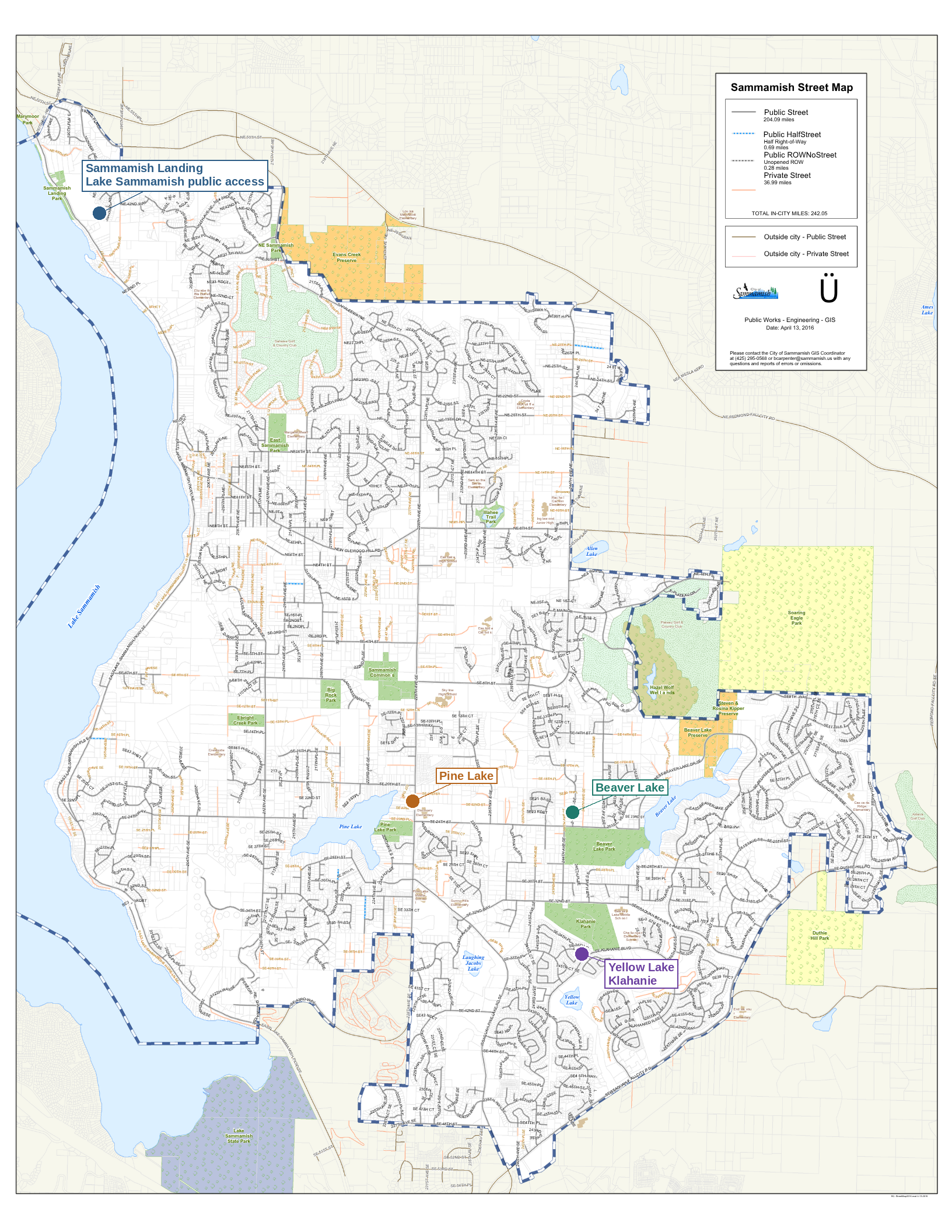
Official City of Sammamish street map annotated with callouts for Sammamish Landing on Lake Sammamish, Pine Lake, Beaver Lake, and Yellow Lake in Klahanie
This is a supplementary post in our Why Sammamish? series.

Kelly Azzarello Real Estate | Compass 📧 kelly@kellyazzarello.com 📞 (425) 830-6457 🌐 kellyazzarello.com