


Because Living Outside City Utilities Means Understanding Septic and Wells
Part of the Why Issaquah? series: Because Living Outside City Utilities Means Understanding Septic and Wells
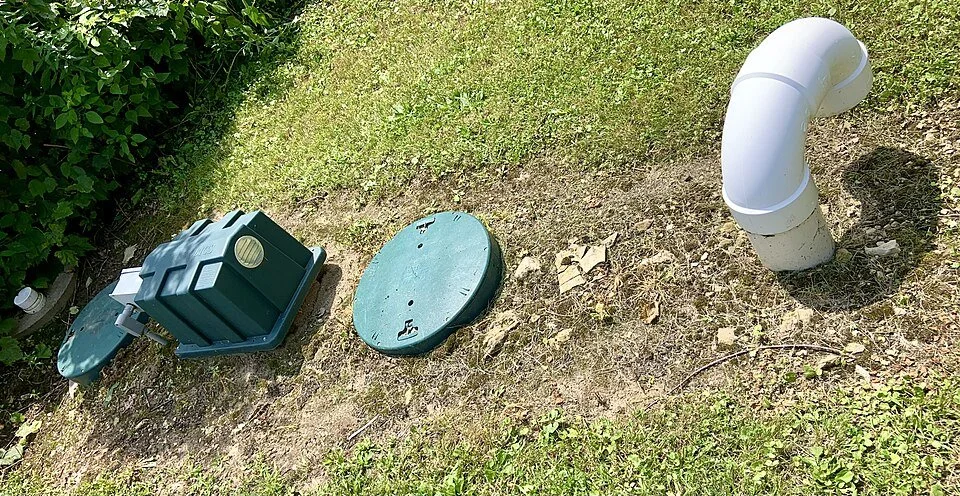
Septic system access
Anywhere outside a city's water and sewer lines, two systems take over: a private well for water, and an on-site septic system for wastewater. Neither is an upgrade or a downgrade. They're simply what a property runs on when there's no municipal main to connect to, and they come with their own rules, their own maintenance, and their own ways a deal can go sideways if nobody checks the details early.
Why These Systems Exist at All
A private well pulls groundwater up from below the property. A septic system treats and disperses wastewater on-site instead of piping it to a treatment plant. Both are standard, well-understood technology, not a compromise. The difference that actually matters for a buyer is that both systems live entirely on the property itself, which means both their capacity and their condition are fixed by whatever was designed, permitted, and installed there, not something a utility company manages on your behalf.
Septic Systems: Sized by Bedrooms, Not Bathrooms
Here's the detail that surprises almost everyone the first time they hear it: septic systems are sized by bedroom count, not bathroom count, and not square footage.
The logic is occupancy, not fixtures. More bedrooms generally means more people living in the home, and more people means more daily wastewater. So King County (and most Washington counties) size the tank and drainfield based on how many bedrooms the house has, or could have, using standard design-flow tables.
A 1-bedroom home is typically designed around a 1,000-gallon tank and 150 gallons per day of flow.
A 3-bedroom home moves up to roughly 450 gallons per day.
A 5-bedroom home requires roughly 750 gallons per day and a larger tank.
This is exactly why you'll sometimes see a home with what looks like ten bathrooms and only four official bedrooms, or the reverse: a home with several bonus rooms, offices, and dens but a surprisingly low bedroom count on paper. Bathrooms don't factor into septic sizing at all. And King County's own guidance is blunt about the bedroom count itself: a den, office, study, loft, bonus room, or any other room with a closet counts as a potential bedroom for septic purposes, regardless of what it's labeled on the floor plan or the listing. Renaming a bedroom doesn't change how the system is sized.
The real-world consequence: if a home is marketed with more bedrooms than its septic system was actually permitted for, that discrepancy can surface during a lender's appraisal and stall or renegotiate a deal. The number that matters is whatever is on file with the county health department as the system's approved design capacity, not what the listing says.
Why a Great Home Site Can Still Be Unbuildable
This is the part that catches buyers off guard on raw land or a teardown: the flat, buildable-looking spot for the house is only half the equation.
Every septic system also needs a reserve drainfield, a second area held in reserve in case the primary drainfield ever fails, plus setbacks from wells, property lines, water bodies, and steep slopes. How much space that actually requires depends on the soil's percolation rate. Poor-draining soil needs a much bigger footprint to handle the same amount of wastewater than good-draining soil does.
Put those together and a parcel can have a perfectly flat, perfectly legal home site, and still fail to qualify for a septic permit, because once every setback and the reserve area are accounted for, there's nowhere left on the lot to put the drainfield. This is exactly what a percolation test and a septic feasibility study are for, and exactly why skipping one on a rural or undeveloped lot is one of the more expensive mistakes a buyer can make.
Wells and Water Rights
In Washington, a private well serving a single home generally doesn't need its own state water-right permit; this is the "exempt well" provision under state law. It comes with real limits, though: exempt wells are capped at 5,000 gallons a day, and wells drilled after January 2018 carry a tighter 950-gallon annual average limit. Separate, uncapped exemptions cover livestock use and watering a lawn or garden under a half acre.
Some properties don't have their own dedicated well at all. A Group B water system is a shared water system serving multiple connections, and it requires its own county approval and a Certificate of Water Availability, separate from a standard private well.
Shared Wells: What to Check Before You're Committed
It's genuinely common in rural subdivisions for two or more properties to share a single well. When that's the case, the well needs a recorded agreement that runs with the land, meaning it binds future owners, not just whoever signed it originally. A real shared-well agreement should cover:
An easement actually granting access to the well and its equipment, recorded against the deed.
How maintenance and repair costs are split among the properties.
Each property's water allocation.
What happens if the well fails and a replacement has to be drilled.
If a property shares a well and there's no recorded agreement, or the deed doesn't actually grant an easement for it, that's a real problem to catch before closing, not after.
Maintenance, Lifespan, and Real Costs
None of this is a one-time cost. Rough, general ranges worth setting expectations around:
Drilling a new well typically runs $3,000 to $15,000, depending mostly on depth.
Installing a new septic system runs roughly $5,000 to $25,000 depending on the type, conventional gravity systems on the lower end, mound or aerobic treatment systems on the higher end for lots with poor soil or high groundwater.
Routine septic pumping is needed every 2 to 5 years, typically $300 to $600 a visit.
A full drainfield replacement, when one eventually fails, can run $20,000 or more.
A well and septic system in good condition, properly sized and properly maintained, can serve a home reliably for decades. The costs above aren't a reason to avoid a property with these systems; they're the numbers to budget for the way you'd budget for a roof or a furnace.
For Buyers & Sellers
Before writing an offer on any property outside city utilities: pull the septic permit and as-built record to confirm the approved bedroom count matches the listing, ask directly whether the well is private or shared and request any recorded agreement if it's shared, and if the lot is raw or undeveloped, get a percolation test and septic feasibility study before assuming the site is buildable at the size you're picturing.
Sellers benefit from having this documentation ready before listing; it answers the first questions a serious buyer's agent will ask, and its absence is one of the most common reasons a rural sale stalls partway through.
Buying or selling a property that runs on well and septic, anywhere in our coverage area? Reach out to Kelly Azzarello Real Estate. We can walk you through exactly what to check before you're under contract.
Kelly Azzarello Real Estate | Compass
📧 kelly@kellyazzarello.com | 📞 (425) 830-6457 | 🌐 kellyazzarello.com
Notes:
General cost ranges are national/regional estimates, not King County-specific quotes; get local contractor estimates before including exact figures in a public-facing version of this post.