


Because the Highlands Is Basically Its Own City
Part of the Why Issaquah? series: Because the Highlands Is Basically Its Own City
Why Issaquah? Because the Highlands Is Basically Its Own City
Climb out of the valley onto the Sammamish Plateau and something shifts.
The Issaquah Highlands doesn't feel like a neighborhood tacked onto an older city. It feels like a place that was planned from scratch, because it was.
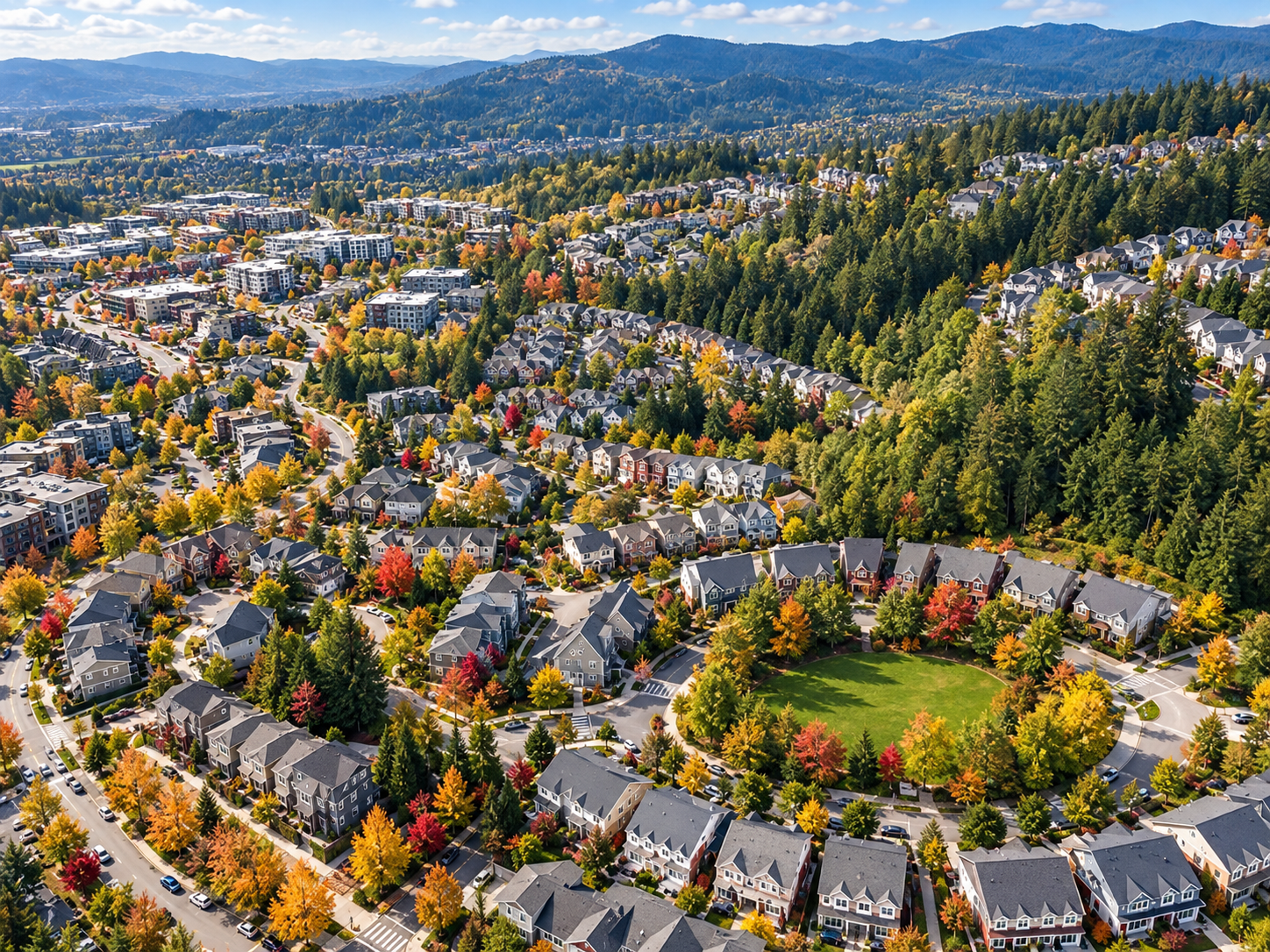
Overhead view of the Issaquah Highlands facing Southwest
Built From Scratch on an Old Coal Mine
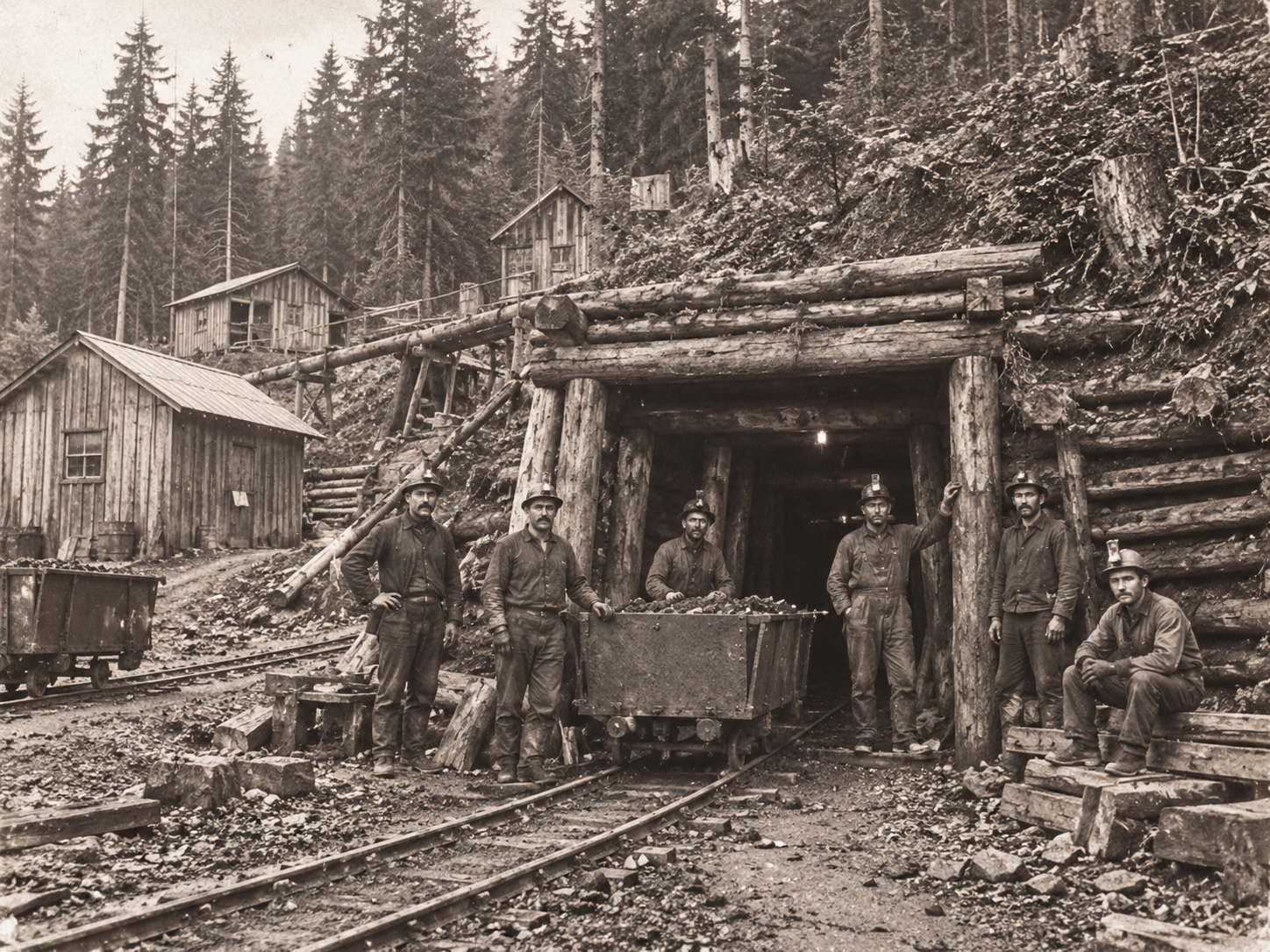
The land under the Highlands wasn't always residential. The Grand Ridge Mine operated here from 1909 into the 1950s, part of the same coal-mining economy that shaped so much of Issaquah's early history.
Development on the Highlands as a master-planned community began in the late 1990s. Unlike the valley floor's organic, decades-by-decades growth, the Highlands was designed as a single, coordinated community from day one: street grid, parks, retail, and housing planned together rather than built up piecemeal.
A Different Kind of Issaquah
That planning shows up in how the neighborhood actually feels:
Newer construction, generally built from the late 1990s onward rather than a mix of eras.
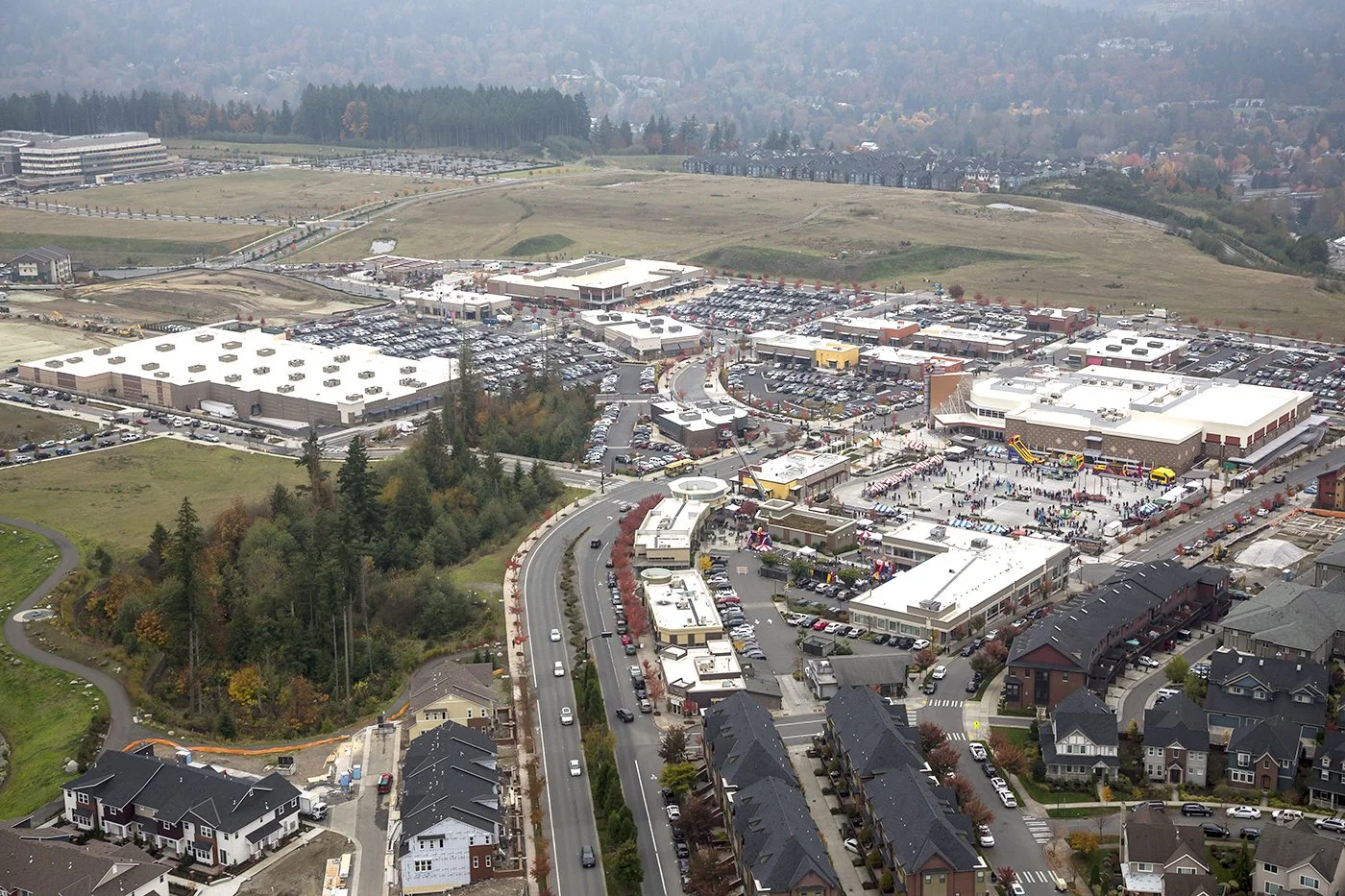
Its own retail hub at Grand Ridge Plaza, covered in more depth in our everyday-shopping post, so residents don't need to head down to the valley for groceries or errands.
Walkable streets built around parks and trails, rather than a historic Main Street grid.
A noticeably more contemporary architectural feel than downtown.
For a lot of buyers, the Highlands is less a part of Issaquah and more a whole different answer to the same question: where should I live on the Eastside?
Who Chooses the Highlands
The Highlands tends to draw a specific kind of buyer:
Families who want newer construction and modern floor plans over character and upkeep.
Commuters who want quick access to I-90 and SR-900 without living downtown.
Buyers who want walkability, just in a newer, park-centered form rather than a historic one.
It's worth comparing directly against the valley floor and the specific neighborhoods covered in our neighborhoods post, since “the Highlands” covers a range of price points and housing types on its own.
For Buyers & Sellers
Buyers comparing the Highlands to downtown are often really asking about trade-offs: newer construction versus character, a planned community versus an organic one. Naming that trade-off directly, rather than assuming buyers already know it, tends to move the conversation forward faster.
Want the honest comparison between the Highlands and the rest of Issaquah for your specific priorities? Reach out to Kelly Azzarello Real Estate.