


Logistics and Planning: What Sellers Overlook Before Listing
Timing and planning decide how smoothly the sale goes. These five items are easy to overlook until they cause a problem.
Timing and planning decide how smoothly the sale goes. These five items are easy to overlook until they cause a problem.
Show-readiness and access
Why it matters: Showings come with little notice. A home that takes hours to get ready, or that is hard to enter, gets fewer showings, which shrinks the pool of buyers.
What to do:
- Decide how quickly the home can be ready to show, and plan for pets, children and work-from-home schedules.
- Find the cause of any access problem, such as tenants, locked rooms, gates or alarm codes, and settle it with your agent: lockbox access, notice periods, and how access works if there are tenants or other occupants. Set showing windows with your agent.
What not to do:
- Do not limit showing times so much that buyers cannot see the home.
- Do not stay home during showings.
- Do not leave pets loose, or valuables and medications out.
- With tenants, follow the lease and the law.
- Ask your agent about anything else that applies.
Where you will live and store things
Why it matters: A sale takes weeks to months, and living in a home that is being shown is hard. Planning avoids a rush that leads to clutter, damage or extra costs.
What to do:
- Decide whether you will stay or move out first, and when.
- Sort belongings before packing and choose storage (a rented unit, a portable container or a family garage).
- Pack and label off-season and nonessential items first.
- Keep essentials within reach.
- Plan where you will go if the timing of your sale or your purchase shifts.
What not to do:
- Do not crowd the garage, attic or crawl space with storage while the home is listed, since buyers and inspectors need to see and access them.
- Do not leave the decision about where to live until after you have an offer.
- Do not leave a home vacant without checking your insurance coverage.
Contractor lead times
Tradespeople are not always available on short notice, and repairs found late can delay your sale. Lead times vary, so allow for them when you plan your timeline, and get written estimates, licenses and receipts for any work.
An outside opinion
Why it matters: You stop seeing problems you live with. An outside view shows what buyers will notice and in what order to address it.
What to do:
- Ask an agent for a walk-through before you start any work, and ask a friend with fresh eyes as well.
- Ask what is most likely to come up at the inspection and what to fix first, and take notes.
- Consider a pre-listing inspection to find the causes of problems before a buyer's inspector does.
What not to do:
- Do not take comments personally; the goal is to see what a buyer will see.
- Do not start projects before the walk-through.
- Do not rely only on people who are used to the home.
Avoiding over-improving
Some updates cost more than they return, and the money comes out of your proceeds. Start with condition, then appeal, ask your agent what comparable homes sold for before any large project, and do not start a kitchen or bath remodel just before listing without that input: [link: return on investment post].
See the full guide: What Do Sellers Overlook Before Listing? A Short Guide
If something turns up, we can help
As agents we work with contractors and other vendors regularly, and we can share names from our experience and help you compare bids. You always choose who to hire. A broker should not require you to use their vendor, and should not be paid by a vendor you hire.
From Our Own Experience
As agents for buyers and sellers, we see both sides of transactions. Here are a few issues we’ve encountered that could easily have been avoided.
- As we were about to go to market, we had a final walkthrough with the seller. They did a great job of cleaning out the home, but put all of the boxes in the garage. This wasn’t the problem though: About 20 of those boxes were stacked in front of the furnace, water heater, and electric panel making it nearly impossible for the inspector to access them without a lot of work. An inspector who goes to that much trouble to access those items will probably make sure to find something to note in the report.
- The vendor who installed new carpet covered the crawl space access. Five minutes with a carpet knife during installation would have saved a lot of time searching for the access panel.
- A secondary electric panel that was hidden behind loose boards. The inspector knew there was a secondary panel when inspecting the primary, but could not find it.
- An older home that had a newer electrical panel, but two sets of outlets close to each other. The expectation was that one set was the original and decommissioned (but not removed/capped), and the other was the newer service. However, the buyer’s inspector had to test all of the outlets and report that some did not work or were ungrounded, raising inspection items and additional questions during the inspection response period.
A list of changes or improvements with the dates and locations if necessary, and permits or information about the licensed vendor come in handy when questions arise.
Thinking about buying or selling in the Seattle Area?
Kelly Azzarello Real Estate | Compass
Email: kelly@kellyazzarello.com
Phone: (425) 830-6457
Web: www.kellyazzarello.com
Instagram: instagram.com/kellyazzarello
YouTube: youtube.com/kellyazzarellorealestate
This post is general information about real estate topics. It is not legal, tax or financial advice, and it does not replace a professional inspection. Rules and practices differ by situation and change over time. Check current requirements and talk with a licensed professional, such as an inspector, contractor, attorney or CPA, about your own property.

Out of Sight, Out of Mind, Out of Pocket
Have you ever been surprised by a hidden issue in your house? Maybe on that cost you thousands of dollars?
The hidden home problems worth knowing about now, so selling your home later doesn't come with a surprise bill
Here's something we hear a lot: "Everything works, so we're good."
But a toilet that flushes tells you very little about the sewer line underground, and a light that turns on tells you nothing about the panel behind the wall.
The most expensive surprises in a home are usually the ones nobody can see.
And they rarely pick a convenient time. A problem that surfaces in the middle of a sale usually costs more, takes more time, and leaves you with fewer choices than one you found and handled on your own schedule. A buyer's inspector will find it either way. The only question is whether you find it first.
This series walks through the hidden problems one at a time, short and plain, so you can find out what's there, what it might cost, and what to do about it. Whether you plan to sell soon, someday, or never, a little attention now keeps small things small.

How to use this guide
Pick the topic that matches what you're wondering about and jump in. Each post takes only a few minutes to read. Not sure where to start? Begin with the first section below. Those are the hardest problems to see, which is why they tend to surprise people most.
Hidden underground and behind the walls
• Sewer lines and older plumbing (including CPVC): Why a working toilet doesn't mean a healthy pipe, and what to know about CPVC.
• Electrical panel and wiring: Older panels and wiring can worry buyers, lenders, and insurers.
• Buried oil tanks: A tank left in the yard can complicate financing and cost real money to deal with.
• Asbestos (popcorn ceilings and more): What it is, where it hides, and why you shouldn't scrape to find out.
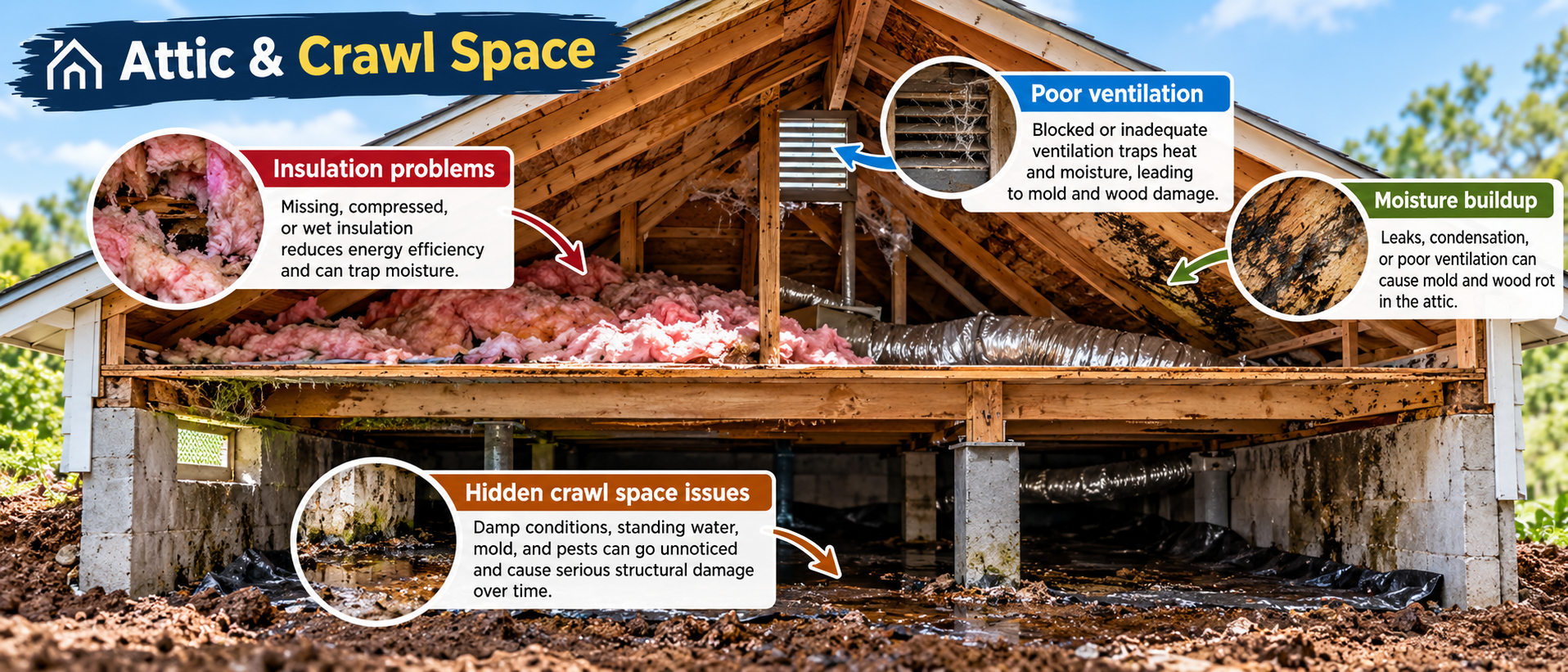
• The crawl space and attic nobody has checked in years: Moisture, pests, and insulation problems that build quietly.
• Pests and wood rot: Damage inside walls and beams that shows up on an inspection report.
Big-ticket items that age out
• Roof age and condition: What an aging roof tells a buyer's inspector, and what it tells you.
• Water heater age: A five-minute check that can save you a flooded utility room.
• Broken windows and failed seals: Fogging, condensation, and windows that won't open or close.
• Deferred exterior maintenance: Small things that invite bigger problems.
What buyers notice the moment they walk in
• Odors: Pet, smoke, and cooking smells that settle into carpet, ducts, and insulation.
• Highly stylized paint or decor: Bold choices that can narrow your buyer pool.
The paperwork side
• Unpermitted work: The paperwork problem that can stall a closing.
• Should you inspect before you sell? Pre-sale inspections and disclosure basics.
• Which add-on inspections are worth ordering? Sewer scope, pest, chimney, and more, and when each makes sense.
Why finding out early matters
When a hidden problem shows up at the last minute, everyone is learning about it at the same time, and that's when it gets stressful. Problems found early, with real estimates in hand, are much easier to work through. You choose the contractor, the timing, and the budget, instead of being backed into a corner.
If something turns up, we can help
Most homeowners deal with a problem like these once in a lifetime, if ever. Hopefully you'll never need to reline a sewer line, replace a panel, or dig up a buried tank. If you do, it helps to have someone who has been through it before.
As agents, we work with contractors, suppliers, and vendors all the time, and we've helped clients through situations like these. We can't recommend specific companies, but we can help you work out what kind of professional you need, what questions to ask, and how to compare bids, so you find the right fit for your situation.
Whether you're selling soon, someday, or not at all, we're glad to be a resource.
Kelly Azzarello Real Estate | Compass
kelly@kellyazzarello.com | (425) 830-6457 | www.kellyazzarello.com
This series is general information, not legal or financial advice. Disclosure rules and licensing requirements differ by state.

Out of Sight series banner.

Because Gilman Village Turned Old Barns Into a Shopping District
Part of the Why Issaquah? series: Because Gilman Village Turned Old Barns Into a Shopping District
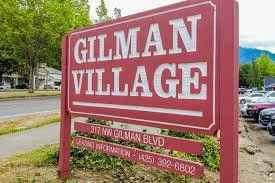
In 1972, Safeway announced plans to demolish three old buildings on Front Street to build a new grocery store. One of them held The Country Mouse, an arts-and-crafts shop run by Betty Konarski and Marilyn Gray. Konarski suggested an alternative to local developer Marvin Mohl: move the buildings rather than lose them. Mohl, who owned nearby land, did exactly that, relocating the structures onto seven wooded acres just east of downtown.
Today, that idea has grown into Gilman Village: more than 40 independent shops and restaurants tucked into a maze of boardwalks, pergolas, and century-old structures that feel nothing like a standard shopping center, because they aren't one. The Country Mouse itself closed in the late 1980s, but its role in saving the buildings is still the reason Gilman Village exists at all.
Two Downtowns, One Walkable City
Gilman Village sits alongside historic Olde Town Issaquah, the city's original downtown core along Front Street, where brewpubs, boutiques, and long-standing local restaurants line a genuinely walkable street grid. Between the two, Issaquah offers something a lot of Eastside cities are still trying to build from scratch: an authentic, pedestrian-scaled downtown with real history behind it, not a recently-built "lifestyle center" designed to look old.
For buyers who want newer, more conventional retail, Issaquah has that too. Issaquah Commons brings Trader Joe's, Target, and REI under one roof, and Grand Ridge Plaza up on the Highlands adds a movie theater and 50-plus businesses. But it's the older, quirkier core that tends to show up in a buyer's "why we picked Issaquah" story.
The Selling Point Buyers Don't Always Say Out Loud
Walkable, character-driven downtowns are in short supply on the Eastside, and buyers coming from cities, or from more spread-out, drive-everywhere suburbs, notice immediately when a place has one. Gilman Village and Olde Town give Issaquah a genuine sense of "there's somewhere to walk to," which matters just as much for weekday errands as it does for a Saturday afternoon.
For Buyers & Sellers
If a listing sits within an easy walk of Gilman Village or Front Street, that walkability is worth featuring prominently. It's one of the more differentiating features you can offer versus comparable homes in Sammamish or the Issaquah Highlands. Buyers relocating from walkable cities in particular respond to "stroll to dinner" language.
Want to see which streets put you within strolling distance of Gilman Village and downtown Issaquah? We know this stretch of town block by block. Reach out to Kelly Azzarello Real Estate and we'll show you around.