


Because Three Mountains Come With the Address
Part of the Why Issaquah? series: Because Three Mountains Come With the Address
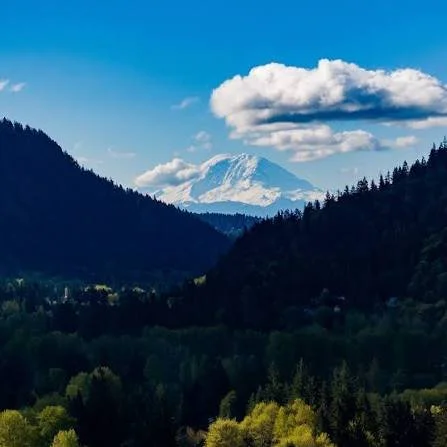
Photo of mountains facing south from Issaquah, WA
Cougar, Squak, and Tiger, the three peaks locals call the "Issaquah Alps," wrap around the city on three sides, and together they hold well over 100 miles of trail. That's not a stat you find attached to most suburban addresses. It means that depending on which neighborhood you're in, a genuine mountain trailhead might be a five-minute drive, or in some cases a walk, from your front door.
A Different Trail for a Different Mood
Cougar Mountain Regional Wildland Park, on the city's western edge, is the largest of the three and feels the most remote: old-growth remnants, abandoned coal mine sites, and enough mileage that you can genuinely get turned around if you're not paying attention. Squak Mountain State Park, tucked between Cougar and Tiger, is the quieter middle child, popular with trail runners who want climbs without crowds. And Tiger Mountain State Forest, home to Poo Poo Point and dozens of other named trails, is the workhorse of the three, with options ranging from a stroller-friendly loop to a genuine all-day mountain hike.
Down in the valley, Lake Sammamish State Park adds the water side of the equation: nearly two miles of shoreline, swimming beaches, picnic areas, and boat and paddleboard launches, all inside a ten-minute drive of most Issaquah neighborhoods.
Why Buyers Keep Bringing This Up
For a lot of relocating families, this is the single biggest lifestyle upgrade Issaquah offers over a more built-out Eastside city: the outdoors isn't something you plan a trip toward, it's something you're already inside of. Dog owners, trail runners, and parents of active kids tend to name this specifically when asked why they chose Issaquah over Bellevue or Redmond, not because those cities lack parks, but because Issaquah's access is bigger, wilder, and closer, all at once.
For Buyers & Sellers
Distance to a named trailhead, Cougar, Squak, or Tiger Mountain, is a detail worth pulling out explicitly in listing copy, the same way you'd note a school boundary or a commute time. Buyers relocating for lifestyle reasons are often searching by trail name, not just neighborhood name.
If getting a mountain trailhead within walking or short driving distance is a priority for your next home, let's build your search around it. Reach out to Kelly Azzarello Real Estate and we'll map out which Issaquah neighborhoods put the Alps closest to your door.


Because Lake Sammamish State Park Is the Backyard Everyone Shares
Part of the Why Issaquah? series: Because Lake Sammamish State Park Is the Backyard Everyone Shares
Why Issaquah? Because Lake Sammamish State Park Is the Backyard Everyone Shares
Category: Parks & Recreation | Suggested length: 750–850 words | Target reader: families, boaters, youth-sports parents
📷 PHOTO PLACEHOLDER: Tibbetts or Sunset Beach at Lake Sammamish State Park, and the ISC soccer fields in use.
If the Issaquah Alps are the vertical side of outdoor life here, Lake Sammamish State Park is the horizontal one: 512 acres of beach, ballfields, trails, and open water sitting right at the north edge of town, where Issaquah Creek empties into the lake. Established in 1950 and run by Washington State Parks, it's one of the most heavily used state parks in the system, and it's easy to see why once you've spent an afternoon there: there's genuinely something for almost everyone within a few hundred yards of the parking lot.
Two Beaches, a Boat Ramp, and Real Waterfront
The park holds nearly 7,000 feet of Lake Sammamish shoreline, split between Tibbetts Beach and Sunset Beach, both with swimming areas, and both an easy walk from parking. On the far side of Issaquah Creek, a separate area holds the boat launch, the only public boat ramp access to Lake Sammamish, along with trails through quieter wetland and forest habitat where great blue herons nest. Between the beaches and the launch, the park covers pretty much every way people actually use a lake: swimming, paddleboarding and kayaking, waterskiing and motorized boating, or just a picnic table with a view.
The Fields Where Half the Neighborhood's Kids Grew Up Playing
West of the creek, the park's athletic complex is where a huge share of Issaquah's youth sports actually happen. By field type:
Soccer fields: 9, under a long-term lease held by the Issaquah Soccer Club (ISC Gunners), among the finest grass playing surfaces in the region. ISC funds a dedicated maintenance crew to keep them that way.
Baseball/softball fields: present at the complex, though we couldn't pin down an exact current count from any source; confirm with the park or the city before publishing a specific number.
This is home turf, literally, for ISC. From spring through early fall, these fields are where a huge share of Issaquah's youth soccer actually happens, before the club moves to turf fields around town for the wetter months. If you've ever wondered where all those team photos in soccer uniforms around Issaquah get taken, there's a good chance it's right here.
More Than a Sports Complex
The park is also where the town shows up for its bigger community moments: the Issaquah Rotary Club's "Run With the Fishes" 5K and 10K follows the shoreline and parallels Issaquah Creek each fall, timed to the salmon run, and ongoing habitat restoration work along the creek (a partnership between State Parks and the Mountains to Sound Greenway Trust) has been steadily improving both water quality and the salmon spawning grounds within the park itself. Add in an accessible playground near Sunset Beach, reservable picnic shelters, and an ADA-compliant trail network, and it's easy to understand why a park this size, this close to downtown, functions as a genuine backyard for the whole city rather than just a weekend destination.
For Buyers & Sellers
For families with kids in club or rec soccer, proximity to Lake Sammamish State Park's fields can meaningfully shape weekly logistics for a big chunk of the year. It's worth asking buyers directly whether that's a priority. For boat owners, being minutes from the only public launch on the lake is a genuine amenity, not just a nice-to-have, and should be called out specifically in listings near the NW Sammamish Road corridor.
Curious which Issaquah streets put you closest to the beaches, the boat ramp, or the soccer fields your family actually uses? Reach out to Kelly Azzarello Real Estate and we'll map it out.
Kelly Azzarello Real Estate | Compass
📧 kelly@kellyazzarello.com | 📞 (425) 830-6457 | 🌐 kellyazzarello.com
Note: Soccer field count (9) sourced directly from the Issaquah Soccer Club's own site (iscgunners.org/fields), more current than the previously cited Wikipedia figure. Softball field count not confirmed from any source; get the exact number from WA State Parks or the city before publishing.










Because Living Outside City Utilities Means Understanding Septic and Wells
Part of the Why Issaquah? series: Because Living Outside City Utilities Means Understanding Septic and Wells
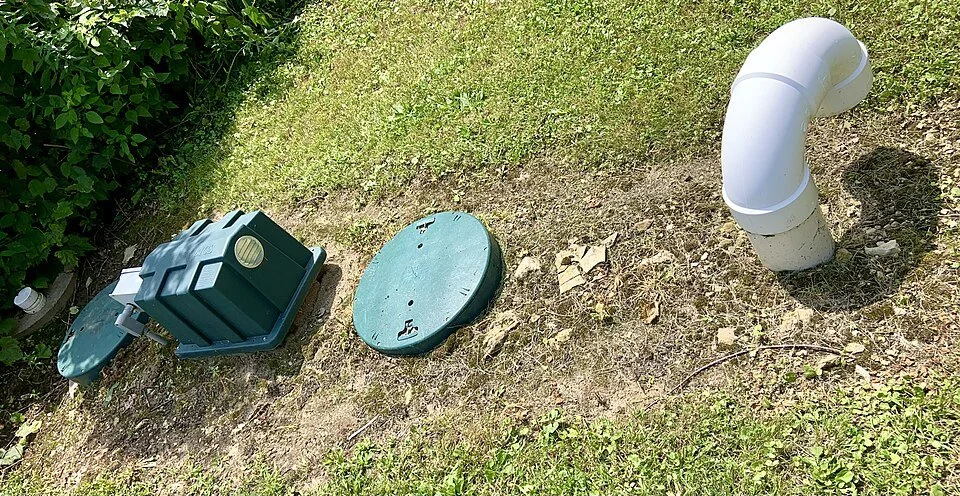
Septic system access
Anywhere outside a city's water and sewer lines, two systems take over: a private well for water, and an on-site septic system for wastewater. Neither is an upgrade or a downgrade. They're simply what a property runs on when there's no municipal main to connect to, and they come with their own rules, their own maintenance, and their own ways a deal can go sideways if nobody checks the details early.
Why These Systems Exist at All
A private well pulls groundwater up from below the property. A septic system treats and disperses wastewater on-site instead of piping it to a treatment plant. Both are standard, well-understood technology, not a compromise. The difference that actually matters for a buyer is that both systems live entirely on the property itself, which means both their capacity and their condition are fixed by whatever was designed, permitted, and installed there, not something a utility company manages on your behalf.
Septic Systems: Sized by Bedrooms, Not Bathrooms
Here's the detail that surprises almost everyone the first time they hear it: septic systems are sized by bedroom count, not bathroom count, and not square footage.
The logic is occupancy, not fixtures. More bedrooms generally means more people living in the home, and more people means more daily wastewater. So King County (and most Washington counties) size the tank and drainfield based on how many bedrooms the house has, or could have, using standard design-flow tables.
A 1-bedroom home is typically designed around a 1,000-gallon tank and 150 gallons per day of flow.
A 3-bedroom home moves up to roughly 450 gallons per day.
A 5-bedroom home requires roughly 750 gallons per day and a larger tank.
This is exactly why you'll sometimes see a home with what looks like ten bathrooms and only four official bedrooms, or the reverse: a home with several bonus rooms, offices, and dens but a surprisingly low bedroom count on paper. Bathrooms don't factor into septic sizing at all. And King County's own guidance is blunt about the bedroom count itself: a den, office, study, loft, bonus room, or any other room with a closet counts as a potential bedroom for septic purposes, regardless of what it's labeled on the floor plan or the listing. Renaming a bedroom doesn't change how the system is sized.
The real-world consequence: if a home is marketed with more bedrooms than its septic system was actually permitted for, that discrepancy can surface during a lender's appraisal and stall or renegotiate a deal. The number that matters is whatever is on file with the county health department as the system's approved design capacity, not what the listing says.
Why a Great Home Site Can Still Be Unbuildable
This is the part that catches buyers off guard on raw land or a teardown: the flat, buildable-looking spot for the house is only half the equation.
Every septic system also needs a reserve drainfield, a second area held in reserve in case the primary drainfield ever fails, plus setbacks from wells, property lines, water bodies, and steep slopes. How much space that actually requires depends on the soil's percolation rate. Poor-draining soil needs a much bigger footprint to handle the same amount of wastewater than good-draining soil does.
Put those together and a parcel can have a perfectly flat, perfectly legal home site, and still fail to qualify for a septic permit, because once every setback and the reserve area are accounted for, there's nowhere left on the lot to put the drainfield. This is exactly what a percolation test and a septic feasibility study are for, and exactly why skipping one on a rural or undeveloped lot is one of the more expensive mistakes a buyer can make.
Wells and Water Rights
In Washington, a private well serving a single home generally doesn't need its own state water-right permit; this is the "exempt well" provision under state law. It comes with real limits, though: exempt wells are capped at 5,000 gallons a day, and wells drilled after January 2018 carry a tighter 950-gallon annual average limit. Separate, uncapped exemptions cover livestock use and watering a lawn or garden under a half acre.
Some properties don't have their own dedicated well at all. A Group B water system is a shared water system serving multiple connections, and it requires its own county approval and a Certificate of Water Availability, separate from a standard private well.
Shared Wells: What to Check Before You're Committed
It's genuinely common in rural subdivisions for two or more properties to share a single well. When that's the case, the well needs a recorded agreement that runs with the land, meaning it binds future owners, not just whoever signed it originally. A real shared-well agreement should cover:
An easement actually granting access to the well and its equipment, recorded against the deed.
How maintenance and repair costs are split among the properties.
Each property's water allocation.
What happens if the well fails and a replacement has to be drilled.
If a property shares a well and there's no recorded agreement, or the deed doesn't actually grant an easement for it, that's a real problem to catch before closing, not after.
Maintenance, Lifespan, and Real Costs
None of this is a one-time cost. Rough, general ranges worth setting expectations around:
Drilling a new well typically runs $3,000 to $15,000, depending mostly on depth.
Installing a new septic system runs roughly $5,000 to $25,000 depending on the type, conventional gravity systems on the lower end, mound or aerobic treatment systems on the higher end for lots with poor soil or high groundwater.
Routine septic pumping is needed every 2 to 5 years, typically $300 to $600 a visit.
A full drainfield replacement, when one eventually fails, can run $20,000 or more.
A well and septic system in good condition, properly sized and properly maintained, can serve a home reliably for decades. The costs above aren't a reason to avoid a property with these systems; they're the numbers to budget for the way you'd budget for a roof or a furnace.
For Buyers & Sellers
Before writing an offer on any property outside city utilities: pull the septic permit and as-built record to confirm the approved bedroom count matches the listing, ask directly whether the well is private or shared and request any recorded agreement if it's shared, and if the lot is raw or undeveloped, get a percolation test and septic feasibility study before assuming the site is buildable at the size you're picturing.
Sellers benefit from having this documentation ready before listing; it answers the first questions a serious buyer's agent will ask, and its absence is one of the most common reasons a rural sale stalls partway through.
Buying or selling a property that runs on well and septic, anywhere in our coverage area? Reach out to Kelly Azzarello Real Estate. We can walk you through exactly what to check before you're under contract.
Kelly Azzarello Real Estate | Compass
📧 kelly@kellyazzarello.com | 📞 (425) 830-6457 | 🌐 kellyazzarello.com
Notes:
General cost ranges are national/regional estimates, not King County-specific quotes; get local contractor estimates before including exact figures in a public-facing version of this post.
Part of the Why Issaquah? series: Because Room to Roam Comes in Two Very Different Flavors