


10: Duthie Hill Mountain Bike Park
Duthie Hill isn’t a neighborhood park with a bike rack, it’s a genuinely world-class, purpose-built mountain bike park. Here’s what’s actually there, who can ride, and how to get in.
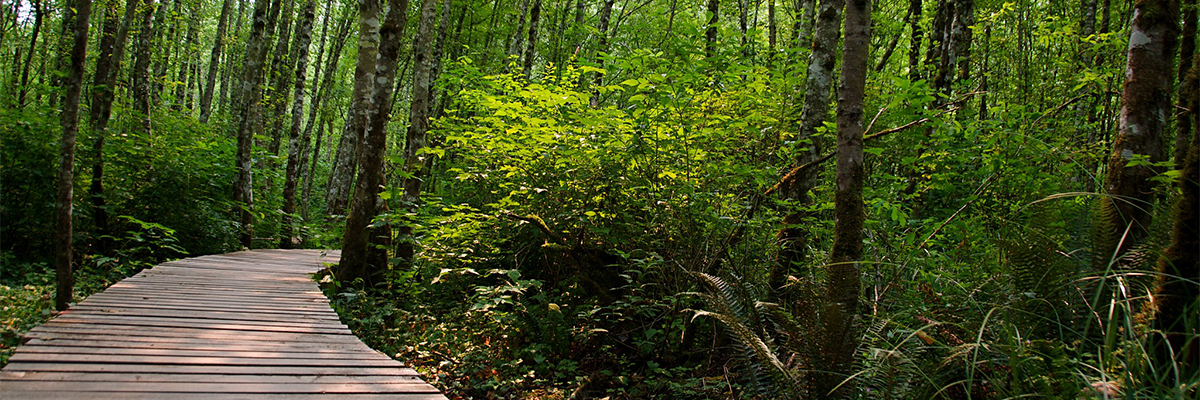
Duthie Hill Mountain Bike Park - King County Parks
A Plateau Amenity Worth Knowing
We’ve mentioned Duthie Hill a few times already in this series, in the outdoor life post and again in the Trossachs neighborhood spotlight, and it deserves its own closer look. This isn’t a neighborhood park with a bike rack. It’s a genuinely world-class, purpose-built mountain bike park that draws riders from across the region, and it sits close enough to Sammamish’s southeastern edge that it functions as a real amenity for the plateau even though it’s technically just outside city limits.
What’s actually there
Duthie Hill covers 120 acres of dense evergreen forest, Douglas fir and western hemlock, with well-draining soils that keep it rideable close to year-round. The trail layout is distinctive: a six-mile network of rolling singletrack forms a four-leaf clover shape around a 2.5-acre central clearing. That clearing is the social hub of the park, with informational kiosks, skill-building features, a picnic shelter, and an engraved donor bench.
Inside each of the four “cloverleaf” lobes, riders find downhill-only freeride trails loaded with berms, jumps, and drop-offs, each lobe has its own character and difficulty range. The outer, cross-country style trails ring the whole park and are shared, one-way, and open to hikers and trail runners as well as bikers.
[PHOTO PLACEHOLDER: a jump line or berm feature, to show the freeride side of the park]
Trail breakdown
A few of the named trails riders navigate by, with approximate length and difficulty:
• Braveheart — advanced, 0.39 miles. The only advanced-rated cross-country trail at Duthie, mostly fast and flowy with a rock garden entrance and an off-camber root roll that bumps up the difficulty.
• Step It Up — intermediate, 1.3 miles. One of the longer cross-country style trails, fast and flowy with optional skinnies and log rides along the way.
• Movin’ On — intermediate, 0.83 miles. More technical than Step It Up, with tight turns, ladders, bridges, and skinnies throughout, a good training trail.
• Ryans — intermediate, 0.29 miles. Short, fun, and flowy.
• The Great Space Coaster — advanced, a feature-rich trail branching off “Bootcamp” with North Shore-style ladder bridges and skinnies, a real test of balance.
Beyond the park boundary itself, Grand Ridge Park connects directly to the south with its own popular cross-country riding, and the trails at Soaring Eagle Regional Park are accessible less than 2 miles to the north.
[PHOTO PLACEHOLDER: a technical feature like a skinny, ladder bridge, or log ride from the central clearing skills area]
Who built it, and who takes care of it
Duthie Hill was designed and built by the Evergreen Mountain Bike Alliance in partnership with King County, funded through King County’s Community Partnerships and Grants program along with Youth Sports Facilities grants, roughly $225,000 in private donations, and thousands of hours of volunteer labor. Phase 1 opened in 2010; Phase 2 completed in May 2012. The park now sees an estimated 100,000 rider visits a year, and Evergreen continues to maintain the trails through ongoing volunteer stewardship.
The Evergreen Mountain Bike Festival is held at Duthie every June and draws riders from across the region for a full day of racing, demos, and community events.
Who can ride, and the rules that keep it working
Duthie Hill is genuinely built for every skill level, from kids on push bikes learning to balance in the clearing to expert riders chasing the advanced lines. A few rules worth knowing before a first visit:
• All trails are one-way. Signage at each trailhead marks direction, and the whole system depends on everyone riding the correct way.
• The cross-country and perimeter trails are shared with hikers and trail runners; the downhill freeride trails inside each cloverleaf are bike-only.
• No overnight parking. The lots are day-use only.
• Pack out your trash. Facilities are minimal beyond a single restroom near the main lot.
• Evergreen’s youth and teen dirt camps require full-face helmets for advanced sessions, a good baseline expectation for anyone riding the more technical freeride lines, even outside a formal class.
Evergreen also runs a full slate of classes and camps at Duthie, from beginner-level youth dirt camps (ages 8 to 13) through intermediate and advanced teen and adult sessions, plus skills clinics for riders looking to progress. Scholarships are available for camps based on financial need.
Accessibility and adaptive riding
Worth being upfront about what this is and isn’t: Duthie Hill is natural-surface singletrack throughout, not a paved trail, and it isn’t a standard wheelchair-accessible path the way sections of the Sammamish River Trail or Cedar River Trail are. That said, it’s become a genuine, well-documented destination for adaptive mountain biking, more so than most parks in the region.
Evergreen Mountain Bike Alliance launched an Adaptive Mountain Bike (aMTB) program a few years back in partnership with Outdoors for All, a Seattle-based nonprofit founded in 1979 that provides adaptive outdoor recreation for children and adults with disabilities. Outdoors for All runs a beginner mountain biking series at Duthie Hill specifically, using electric-assist adaptive mountain bikes, handcycles, prone cycles, and recumbent trikes, alongside standard two-wheeled bikes, for riders who are already comfortable on a bike but new to mountain biking. Registration is required and eligibility criteria apply; details are on the Outdoors for All website.
On the trail-building side, Evergreen’s crews have been physically modifying parts of Duthie, widening the Bootcamp trail in particular, using what they call “universal trail design”: removing pinch points and cutting brush wider, without changing the character or difficulty progression of the trail itself, so a broader range of equipment can actually ride it. New connector trails added in recent years also mean riders can get from the parking lot to the central clearing entirely on trail, without using the access road, which matters for anyone for whom the road shoulder isn’t a safe or practical option.
King County Parks has highlighted Duthie Hill directly in its own accessibility materials as a place where adaptive mountain biking is demonstrated in practice, which is a meaningful acknowledgment for a park that started out built purely for traditional two-wheeled riding.
Getting there
The park sits on the Sammamish Plateau at the Issaquah-Fall City Road entrance, with a roughly 74-vehicle parking lot on the north side of the road. King County Metro routes 269 and 554 stop on Issaquah-Pine Lake Road SE nearby, so it’s reachable without a car for riders coming from elsewhere on the plateau. On busy weekends, overflow parking has historically been available at nearby schools, though that’s worth confirming directly with Evergreen or King County before counting on it.
The layout, at a glance
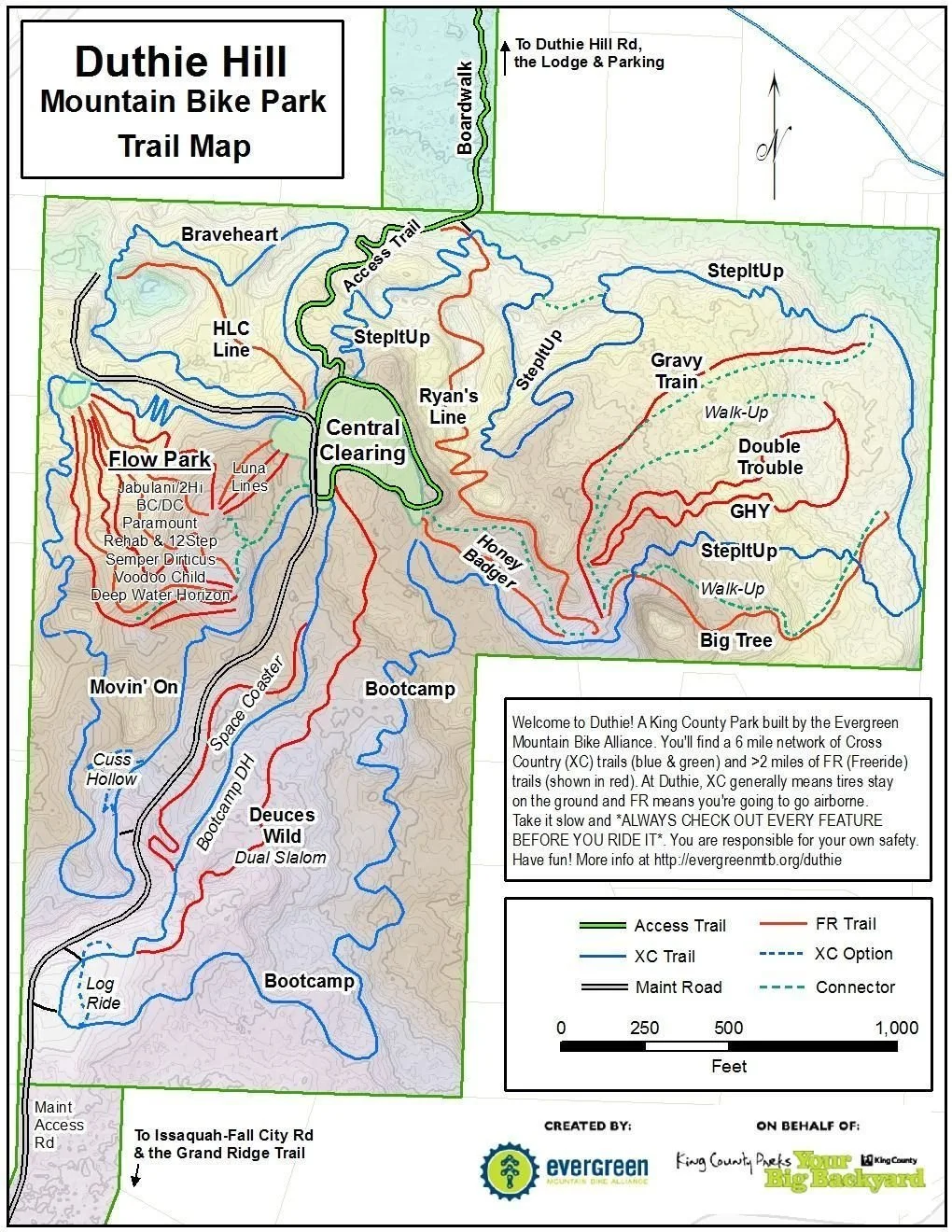
Map courtesy of King County Parks and Evergreen Mountain Bike Alliance.
This is a supplementary post in our Why Sammamish? series, expanding on a landmark first mentioned in our outdoor life post and our Trossachs neighborhood spotlight.
Kelly Azzarello Real Estate | Compass 📧 kelly@kellyazzarello.com 📞 (425) 830-6457 🌐 kellyazzarello.com

09: Neighborhood Spotlight: Trossachs
Trossachs is Sammamish’s answer to newer, larger, more private living, still on the plateau, still in the Issaquah schools. Here’s a full spotlight on the neighborhood and who it’s really for.
Trossachs sits on the eastern edge of the Sammamish Plateau, and it reads differently from Klahanie almost immediately: newer, larger homes, more deliberate planning, and a name borrowed from the Scottish Highlands rather than the local landscape. It’s one of the plateau’s more upscale addresses, and it’s worth understanding on its own terms.
A master-planned community, built later than most
Where Klahanie traces back to 1984, Trossachs came together mostly in the 1990s and 2000s, with some sections continuing to develop into the 2010s. It was planned from the outset as a cohesive, upscale community: integrated parks, extensive greenbelts, and large lots by plateau standards. The Scottish Highland theme shows up in the street names throughout, echoing the same naming convention Bellevue used for its Somerset neighborhood.
According to Census data, Trossachs is home to roughly 6,800 residents. Homes here are almost entirely single-family, typically running 3,000 to over 5,000 square feet, on lots larger than what you’ll find in the central plateau, with architecture ranging from traditional estate styles to contemporary Pacific Northwest design. Several sub-neighborhoods within Trossachs, including Glencoe, Preswick, and Blackstone, represent different size and price tiers within the broader community, and Sterling Square adds a condominium option within the same overall Trossachs footprint.
Schools right in the neighborhood
Cascade Ridge Elementary, on Trossachs Boulevard, sits inside the neighborhood itself, an all-walking school for the families around it, with a strong community feel that comes from that proximity. It’s also the north campus for the Issaquah School District’s Science Technology magnet program for 4th and 5th graders, and it consistently ranks among the top elementary schools in Washington State. From there, Trossachs feeds into Beaver Lake Middle School and on to Skyline High School, the same Issaquah School District pathway covered in our schools post.
Parks, trails, and what’s just outside the door
Trossachs Community Park, on Trossachs Boulevard, is the neighborhood’s own recreational anchor: tennis courts, a basketball court, a playground, and genuinely notable mountain views on a clear day, plus a small community library where residents can take or leave a book. It’s technically reserved for Trossachs residents rather than open to the general public, which is part of what gives the neighborhood its more private, self-contained feel.
Beyond its own park, Trossachs backs directly up to some of the best outdoor recreation on the plateau. Duthie Hill Mountain Bike Park, the internationally recognized trail network we covered in our outdoor life post, sits essentially at the neighborhood’s edge. Beaver Lake Park is a short drive away as well. For a community built around larger, more private lots, that’s a meaningful trade: less of a shared civic commons than Klahanie, but arguably better direct access to the plateau’s best trails.
Who it’s for
Trossachs draws a specific kind of buyer: families who want newer construction, more space, and more privacy without leaving Sammamish, and who are willing to pay for it, inventory here is limited and the market stays competitive. It’s also become a popular choice among Microsoft employees given its relatively direct shot to the Redmond campus. If Klahanie is Sammamish’s largest and most self-contained neighborhood, Trossachs is its answer to a newer, larger, more move-up address, still on the plateau, still in the Issaquah schools, but a different lifestyle entirely.
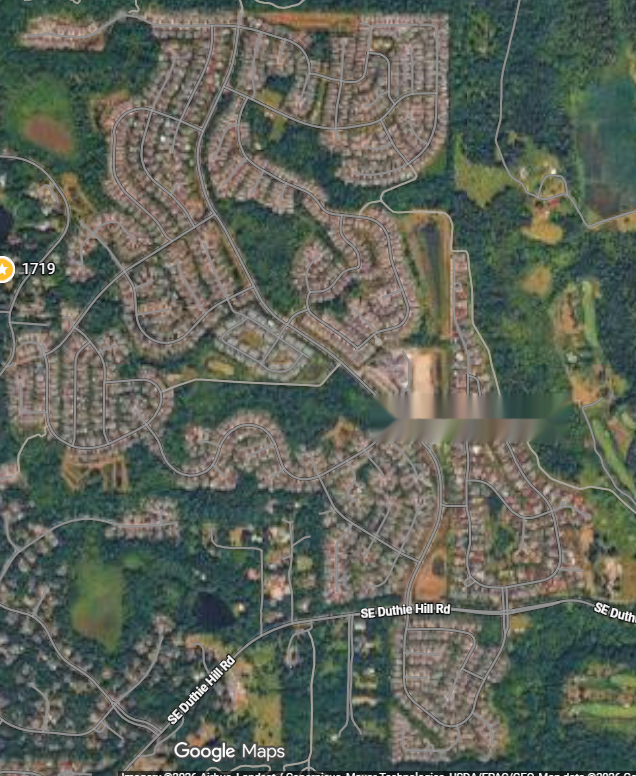
Where things sit

Kelly Azzarello Real Estate | Compass 📧 kelly@kellyazzarello.com 📞 (425) 830-6457 🌐 kellyazzarello.com
Kelly Azzarello Real Estate | Compass 📧 kelly@kellyazzarello.com 📞 (425) 830-6457 🌐 kellyazzarello.com

05: Getting Outside in Sammamish
Between city parks, county preserves, three lakes, and an internationally recognized mountain bike park, Sammamish’s outdoor life is baked into the geography. Here’s the full rundown.
Sammamish’s outdoor life isn’t an afterthought, it’s baked into the geography. The city sits on a plateau bounded by a lake on one side and a valley on the other, and between city parks, county preserves, and a genuinely world-class mountain bike park, there’s a lot to do without ever getting in the car.
Sammamish Commons
Sammamish Commons is the closest thing this city has to a downtown, and it’s a natural place to start. City Hall, the library, sport courts, a splash pad open Memorial Day through Labor Day, a weekly farmers market, and the city’s Fourth on the Plateau celebration all happen on the same civic green space, with the Sammamish Community YMCA right there too.
Youth sports, well covered
Soccer and baseball are the best-served sports in Sammamish, with multiple organizations covering every level of commitment: Issaquah FC for soccer, Eastlake Little League for baseball, plus Eastlake Youth Football and Eastlake Youth Lacrosse. The Sammamish Community YMCA adds recreational leagues in basketball, volleyball, and more, alongside a full-size lap pool, gymnasium, and an outdoor water slide. The Boys & Girls Clubs of King County run additional year-round leagues in basketball, volleyball, flag football, track and field, and baseball, with summer sports camps. Sammamish itself doesn’t host many dedicated club teams, so families chasing a serious competitive club program, in swimming, soccer, basketball, and volleyball especially, typically end up in Issaquah’s or Redmond’s club systems instead, an easy enough drive, but worth knowing going in.
Cricket has a real, organized presence here too, at both the youth and adult level. Lake Sammamish State Park has two dedicated cricket fields used by adult leagues including the Northwest Cricket League and Washington Cricket League, and youth cricket runs through the Seattle Youth Cricket League, which uses grounds at Klahanie Park and Eastlake High School in addition to the state park fields. It’s a good example of how the city’s park system has grown to match the interests of its genuinely international community.
A trail network that actually connects
The backbone is the East Lake Sammamish Trail, an 11-mile paved, multi-use path running along the lake’s eastern shore from Marymoor Park in Redmond, through Sammamish, down to Issaquah. It’s flat, easy, and about as central to daily life here as a road, people use it to walk the dog, commute by bike, or just get outside for twenty minutes after work.
Beyond that paved spine, Sammamish backs up to a genuinely large amount of forested open space:
Soaring Eagle Regional Park, 600 acres with about 12 miles of trails through mature forest, land that’s been used as a travel corridor for thousands of years. It’s popular with both hikers and mountain bikers, and the trails range from a quarter-mile stroll to a 6-mile loop.
Evans Creek Preserve, a 179-acre former farm restored into meadow, wetland, and forested upland trails through more than 6,500 volunteer hours of restoration work. Boardwalks cross the wetter sections, and it’s an easy, family-friendly walk.
Big Rock Park, smaller and more tucked into a residential neighborhood, with a well-loved treehouse, garden, and a network of trails leading up to the namesake rock outcropping.
Three lakes built for summer
Lake Sammamish State Park, 500 acres at the south end of the lake, with two swimming beaches, picnic areas, a boat launch, and paddleboard and kayak rentals on site.
Pine Lake Park, smaller and more neighborhood-scaled, with a lifeguarded swimming area in summer, a fishing pier, and a soccer field and basketball court alongside the water.
Beaver Lake Park, covered in more depth in our neighborhoods post, rounds out the trio: 83 acres with year-round fishing, a free lifejacket loaner program in summer, a non-motorized boat launch, a large fenced off-leash dog area, and its own forested trail loop. The historic Beaver Lake Lodge, a holdover from the site’s resort era, still stands and is available for private event rentals.
A genuinely world-class mountain bike park
Duthie Hill Mountain Bike Park deserves its own mention. It’s 120 acres of purpose-built trails, roughly 9 miles worth, built and maintained by the Evergreen Mountain Bike Alliance through years of volunteer labor, and it has real international recognition as one of the best purpose-built trail networks in the Pacific Northwest. There’s a full progression here: smooth, flowy cross-country routes with bermed turns for beginners, all the way up to technical rock gardens, drops, and jump lines for advanced riders, plus regular skills clinics for kids. It sits just outside city limits on Issaquah-Fall City Road, close enough that it functions as a Sammamish amenity in every practical sense.
Golf, at three very different clubs
Sammamish has an unusual concentration of private golf for a city this size. Sahalee Country Club has hosted a PGA Championship and other major tournaments on its 27 holes of Ted Robinson-designed fairways. Aldarra Golf Club, on the site of the old Boeing family cattle farm, is a Tom Fazio design known for its condition and Cascade views. The Plateau Club rounds out the trio as a third private option on the plateau. None of these are public-access courses, but their presence shapes the character of the neighborhoods built around them, Sahalee and Aldarra both.
Where it all sits
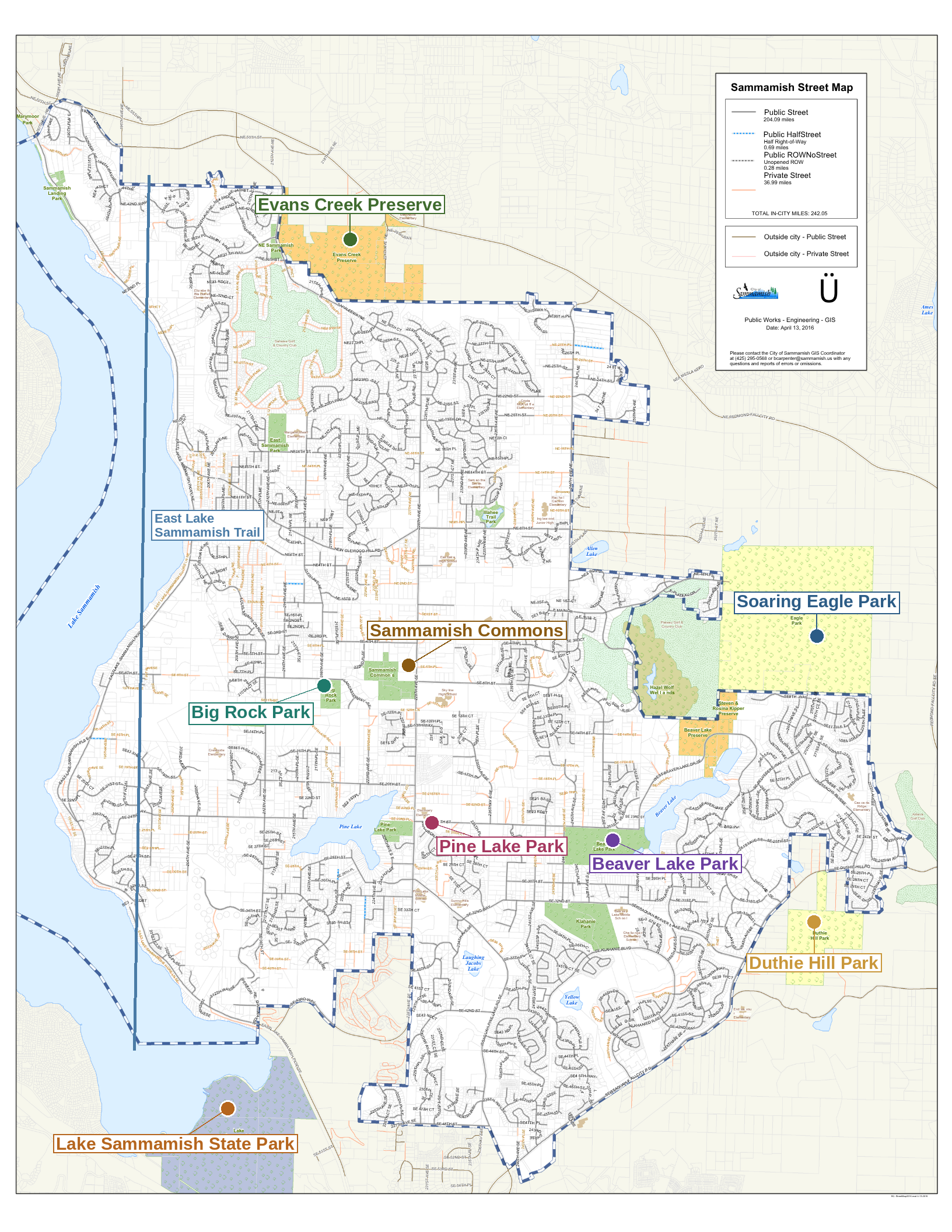
This is the fifth post in our Why Sammamish? series. Up next: the top community events that bring the plateau together each year.
Kelly Azzarello Real Estate | Compass 📧 kelly@kellyazzarello.com 📞 (425) 830-6457 🌐 kellyazzarello.com