
The History of Sammamish: From Plateau Farms to City
Sammamish is one of the youngest cities in Washington State, but the plateau it sits on has a much longer story, one that only became “Sammamish” in the last few decades. Understanding how a rural, unincorporated stretch of King County turned into a nationally ranked city helps explain a lot about how the place feels today: why it’s organized around neighborhoods rather than a historic Main Street, why parts of it still feel connected to Redmond or Issaquah, and why a community this young already has such a strong sense of identity.
Before it was Sammamish
The plateau between Lake Sammamish and the Snoqualmie Valley was Snoqualmie territory long before any non-Native settlers arrived. The name “Sammamish” itself comes from the Snoqualmie language: according to members of the Snoqualmie Tribe, it’s a corruption of “Sqawx,” the Snoqualmie name for Lake Sammamish, combined with “abs,” a suffix referring to the people of a particular area. In other words, the city’s name predates the city by generations, it originally described the people of the lake, not a municipality.
The first permanent non-Native settler on the plateau was Martin Monohon, who arrived in 1877. For the next decade or so, settlement was sparse. It wasn’t until the 1890s that people began arriving in meaningful numbers, and even then, growth stayed concentrated in the southern part of the plateau near Pine Lake, which developed faster than the north.
A mill town, then a farm town, then a resort town
The plateau’s first real economic engine arrived in 1889, when the Seattle, Lake Shore & Eastern Railroad completed a line along the eastern shore of Lake Sammamish. A lumber mill relocated to the shoreline settlement that became known as Monohon, and the Allen and Nelson Mill Company ran it starting in November 1889. For the next 36 years, that mill was the plateau’s anchor industry.
Outside the mill town, the plateau’s economy through the early 20th century was mostly logging, dairy farming, and chicken farming, the kind of land use that leaves almost no visible trace today but shaped where roads and property lines ended up. By the 1930s, a handful of resorts had sprung up along Lake Sammamish’s shores, drawing Seattle-area visitors out to the plateau for swimming and vacationing well before anyone lived there year-round in large numbers.
Redmond to the north, Issaquah to the south
For most of the 20th century, this was all unincorporated King County, and it stayed that way even as postwar development slowly crept onto the plateau starting in the 1960s. What’s interesting is how residents identified during that period: the plateau essentially split in two along SE 8th Street. Households north of that line had Redmond phone numbers and zip codes and thought of themselves as connected to Redmond. Households south of it had Issaquah phone numbers and zip codes and felt tied to Issaquah. There was no single “Sammamish” identity yet, just two halves of a plateau, each oriented toward a different neighboring city.
That split shaped the next 15 years of political wrangling. By the mid-1980s the plateau’s population had passed 10,000 and was tripling every decade and a half, and growth was arriving faster than infrastructure could keep up. Long-time residents debated three options: annex to Issaquah, annex to Redmond, or incorporate as an entirely new city.
In 1991, voters rejected a proposal to annex the southern half of the plateau to Issaquah. That same year, Redmond quietly included the northern half of the plateau in a long-range annexation plan of its own, but the idea was contested for more than a year and eventually abandoned. In 1992, plateau residents put incorporation to a vote for the first time, and it failed decisively, 58 percent to 42 percent. Opponents argued a new city with no real commercial tax base would end up costing residents more, not less.
The incorporation push cooled for a few years, but the underlying frustration with King County didn’t go away; residents felt neglected on roads, parks, and basic services, while development kept getting approved around them. By 1998, a renewed incorporation campaign put the question back on the ballot, and this time it passed.
Incorporation day
The City of Sammamish officially came into existence at midnight on August 31, 1999. The celebration, called “Sammamish Day,” was actually held three days earlier, on a Saturday at Bill Reams East Sammamish Park, where roughly 1,000 people turned out for a concert featuring members of three Seattle-area symphony companies, an antique car show, and the formal incorporation ceremony. Mayor Phil Dyer unveiled the new city’s flag, and Amy Sanders and Tom Burgess were announced as co-winners of the city’s logo design contest.
Even the name wasn’t a given. During the incorporation process, options on the table included Monohon (after the old mill town), Inglewood, Sahalee, and, memorably, Heaven. Sammamish ultimately won out, in part because it had already been used as a placeholder name during an earlier, failed 1992 incorporation attempt (state law required a name on the petition), and it stuck.
The new city started with about 28,000 residents and a fairly bare-bones setup: city hall operated out of a shopping center, there was no post office, and the plateau’s main road still looked much like the country lane it had been decades earlier.
The Klahanie question
Not every plateau neighborhood joined the city in 1999. Klahanie, now one of Sammamish’s largest and best-known neighborhoods, was deliberately left out of the original incorporation boundary because the area was seen as leaning toward eventual annexation by Issaquah instead. For a while, that looked like exactly where things were headed: in November 2005, Klahanie voted to annex into Issaquah, but also voted against taking on a share of Issaquah’s existing municipal debt as part of the deal. Issaquah shelved the annexation plan the following year rather than absorb roughly $17 million in road improvement costs on Issaquah-Fall City Road without the debt-sharing arrangement.
Klahanie stayed unincorporated for another decade before the City of Sammamish annexed it on January 1, 2016, folding in a large, already-built-out community and pushing the city’s population past 60,000 in a single step, up from roughly 45,780 at the 2010 Census. It’s a good reminder that “how Sammamish got its current shape” wasn’t settled all at once in 1999. It kept evolving for another 17 years.
Special things about Sammamish
For a city that’s barely a quarter-century old, Sammamish has picked up a disproportionate number of national accolades:
Money magazine ranked Sammamish among America’s best small towns twice in its “Best Places to Live” survey: 12th in 2009 and 15th in 2011.
In 2012, Forbes and Nextdoor named Sammamish the friendliest town in America.
NerdWallet ranked Sammamish 13th on its 2016 list of Best Small Cities for Families.
In 2018, Money magazine ranked Sammamish 9th nationally in its “50 Best Places to Live” survey, and it was the only city in Washington, and one of only three in the entire Pacific Northwest, to make that list.
In 2021, WalletHub named Sammamish the #1 Best Small City in America, out of more than 1,300 cities evaluated, with especially high marks for economic health and safety.
The city’s official motto, adopted along the way, is fittingly understated: “Building Community Together.”
The plateau, at a glancE
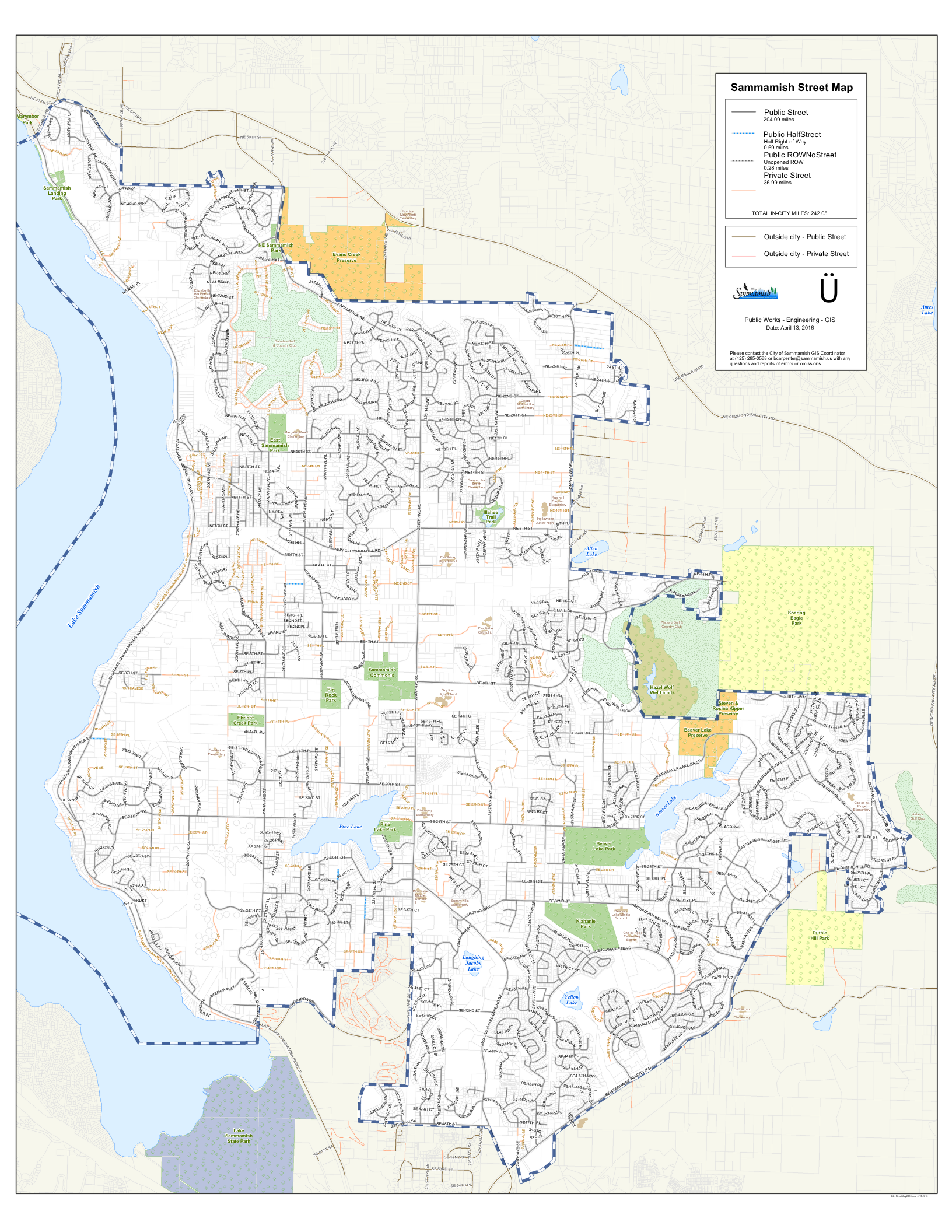
If this map doesn’t render wherever this post ends up, here’s a direct link:
This is the second post in our Why Sammamish? series. Up next: why Sammamish’s schools are such a draw, and the two-district quirk that surprises so many newcomers.
Kelly Azzarello Real Estate | Compass 📧 kelly@kellyazzarello.com 📞 (425) 830-6457 🌐 kellyazzarello.com