

05: Getting Outside in Sammamish
Between city parks, county preserves, three lakes, and an internationally recognized mountain bike park, Sammamish’s outdoor life is baked into the geography. Here’s the full rundown.
Sammamish’s outdoor life isn’t an afterthought, it’s baked into the geography. The city sits on a plateau bounded by a lake on one side and a valley on the other, and between city parks, county preserves, and a genuinely world-class mountain bike park, there’s a lot to do without ever getting in the car.
Sammamish Commons
Sammamish Commons is the closest thing this city has to a downtown, and it’s a natural place to start. City Hall, the library, sport courts, a splash pad open Memorial Day through Labor Day, a weekly farmers market, and the city’s Fourth on the Plateau celebration all happen on the same civic green space, with the Sammamish Community YMCA right there too.
Youth sports, well covered
Soccer and baseball are the best-served sports in Sammamish, with multiple organizations covering every level of commitment: Issaquah FC for soccer, Eastlake Little League for baseball, plus Eastlake Youth Football and Eastlake Youth Lacrosse. The Sammamish Community YMCA adds recreational leagues in basketball, volleyball, and more, alongside a full-size lap pool, gymnasium, and an outdoor water slide. The Boys & Girls Clubs of King County run additional year-round leagues in basketball, volleyball, flag football, track and field, and baseball, with summer sports camps. Sammamish itself doesn’t host many dedicated club teams, so families chasing a serious competitive club program, in swimming, soccer, basketball, and volleyball especially, typically end up in Issaquah’s or Redmond’s club systems instead, an easy enough drive, but worth knowing going in.
Cricket has a real, organized presence here too, at both the youth and adult level. Lake Sammamish State Park has two dedicated cricket fields used by adult leagues including the Northwest Cricket League and Washington Cricket League, and youth cricket runs through the Seattle Youth Cricket League, which uses grounds at Klahanie Park and Eastlake High School in addition to the state park fields. It’s a good example of how the city’s park system has grown to match the interests of its genuinely international community.
A trail network that actually connects
The backbone is the East Lake Sammamish Trail, an 11-mile paved, multi-use path running along the lake’s eastern shore from Marymoor Park in Redmond, through Sammamish, down to Issaquah. It’s flat, easy, and about as central to daily life here as a road, people use it to walk the dog, commute by bike, or just get outside for twenty minutes after work.
Beyond that paved spine, Sammamish backs up to a genuinely large amount of forested open space:
Soaring Eagle Regional Park, 600 acres with about 12 miles of trails through mature forest, land that’s been used as a travel corridor for thousands of years. It’s popular with both hikers and mountain bikers, and the trails range from a quarter-mile stroll to a 6-mile loop.
Evans Creek Preserve, a 179-acre former farm restored into meadow, wetland, and forested upland trails through more than 6,500 volunteer hours of restoration work. Boardwalks cross the wetter sections, and it’s an easy, family-friendly walk.
Big Rock Park, smaller and more tucked into a residential neighborhood, with a well-loved treehouse, garden, and a network of trails leading up to the namesake rock outcropping.
Three lakes built for summer
Lake Sammamish State Park, 500 acres at the south end of the lake, with two swimming beaches, picnic areas, a boat launch, and paddleboard and kayak rentals on site.
Pine Lake Park, smaller and more neighborhood-scaled, with a lifeguarded swimming area in summer, a fishing pier, and a soccer field and basketball court alongside the water.
Beaver Lake Park, covered in more depth in our neighborhoods post, rounds out the trio: 83 acres with year-round fishing, a free lifejacket loaner program in summer, a non-motorized boat launch, a large fenced off-leash dog area, and its own forested trail loop. The historic Beaver Lake Lodge, a holdover from the site’s resort era, still stands and is available for private event rentals.
A genuinely world-class mountain bike park
Duthie Hill Mountain Bike Park deserves its own mention. It’s 120 acres of purpose-built trails, roughly 9 miles worth, built and maintained by the Evergreen Mountain Bike Alliance through years of volunteer labor, and it has real international recognition as one of the best purpose-built trail networks in the Pacific Northwest. There’s a full progression here: smooth, flowy cross-country routes with bermed turns for beginners, all the way up to technical rock gardens, drops, and jump lines for advanced riders, plus regular skills clinics for kids. It sits just outside city limits on Issaquah-Fall City Road, close enough that it functions as a Sammamish amenity in every practical sense.
Golf, at three very different clubs
Sammamish has an unusual concentration of private golf for a city this size. Sahalee Country Club has hosted a PGA Championship and other major tournaments on its 27 holes of Ted Robinson-designed fairways. Aldarra Golf Club, on the site of the old Boeing family cattle farm, is a Tom Fazio design known for its condition and Cascade views. The Plateau Club rounds out the trio as a third private option on the plateau. None of these are public-access courses, but their presence shapes the character of the neighborhoods built around them, Sahalee and Aldarra both.
Where it all sits
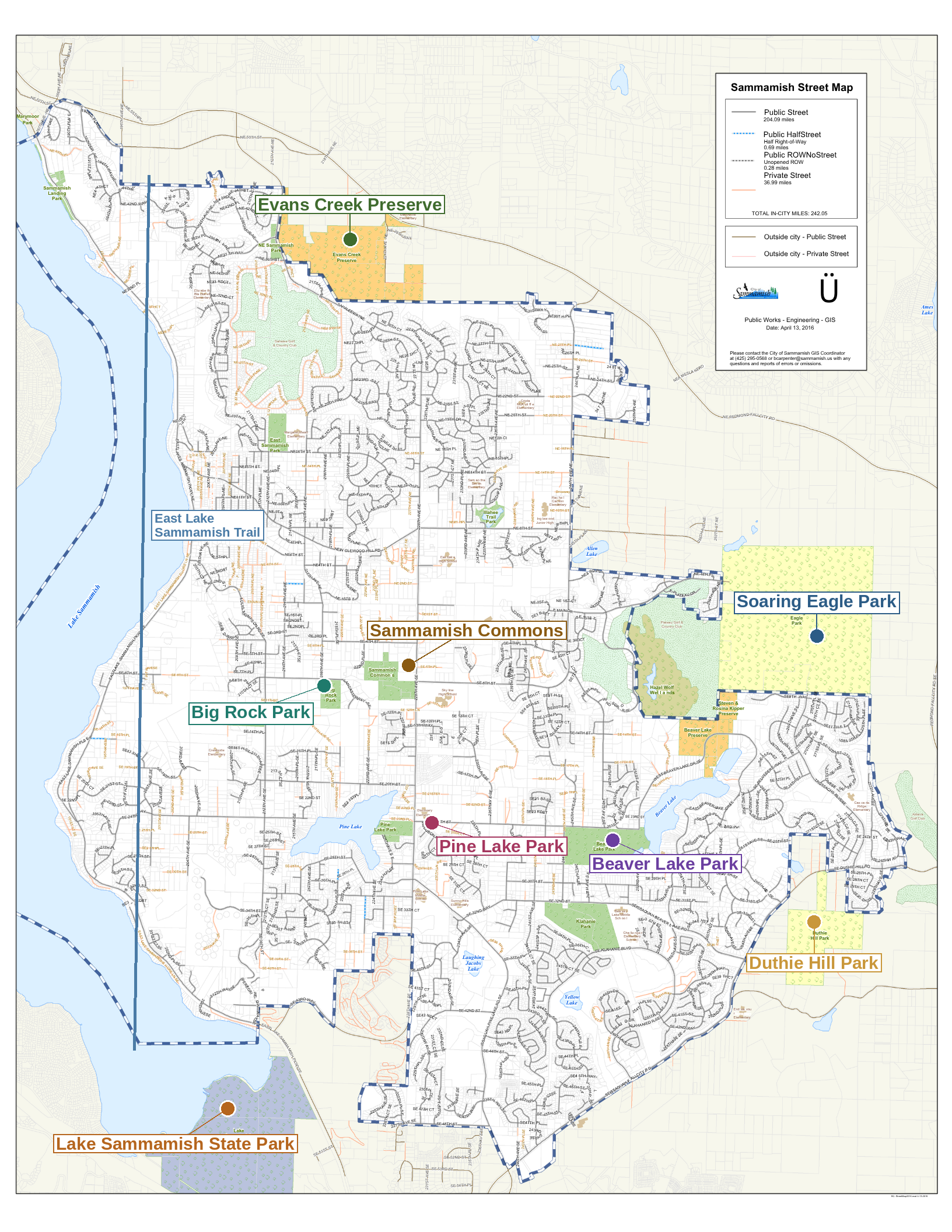
This is the fifth post in our Why Sammamish? series. Up next: the top community events that bring the plateau together each year.
Kelly Azzarello Real Estate | Compass 📧 kelly@kellyazzarello.com 📞 (425) 830-6457 🌐 kellyazzarello.com
01: Why Sammamish?
Top-ranked schools, a lake five minutes away, trails outside your door, and a strong job market: ten reasons people keep choosing Sammamish, from an agent who's lived here nearly 30 years
10 Reasons People Keep Choosing Sammamish
Ask someone who moved to Sammamish in the last few years why they picked it, and you’ll rarely get a one-word answer. It’s usually a combination: the schools, the trails right outside the door, more ways to get to work than you’d expect for a suburb this size, a lake five minutes away, a neighborhood that still feels like a neighborhood.
Sammamish sits about 20 miles east of Seattle and roughly 10 miles from Bellevue and 7 miles from Redmond, close enough for an easy commute, far enough to feel like its own place. Geographically, it sits east of Lake Sammamish itself. It’s part of the Eastside, but it has its own identity: relatively young (the city incorporated in 1999) and still coming into its own. Here’s what keeps landing it on “best places to live” lists, and what keeps drawing people here in the first place.
1. It keeps showing up on national “best places” and safety lists
This isn’t just local pride. In U.S. News & World Report’s 2025–2026 Best Places to Live rankings, Sammamish placed 11th nationally out of 250 cities evaluated, the highest ranking of any Eastside city that year. It also landed 6th on U.S. News’ list of best small cities in the U.S., and was the only West Coast city to make that particular list. Just as notably, Sammamish ranked 8th nationally for safety in the same analysis. For a lot of families, that’s not a nice-to-have line item, it’s close to the top of the list of reasons they’re looking here in the first place. The rankings weigh value, economy, quality of life, safety, and desirability, and Sammamish’s combination of high household income, low crime, and strong job market is what pushes it up the list.
2. A genuinely diverse community, spread across a lot of distinct neighborhoods
Roughly 37% of Sammamish’s population is Asian, and more than a third of residents were born outside the U.S. That makes for a meaningfully international community for a suburb of this size, and it shows up in everything from the restaurant scene to the school district’s language programs.
That diversity isn’t spread evenly across one uniform city, it’s organized into a genuinely large number of distinct neighborhoods, each with its own character: Klahanie, Trossachs, Pine Lake, Sahalee, Beaver Lake, Timberline, Inglewood, Heritage Hills, Sammamish Highlands, and more, each worth knowing on its own terms, something we cover in dedicated posts throughout this series. Few suburbs this size have this many recognizably different communities inside one city limit.
3. Two school districts, both highly regarded
This is a quirk that surprises a lot of newcomers: Sammamish isn’t served by a single school district. The northern half falls in the Lake Washington School District, and the southern half in the Issaquah School District (a small pocket in the northeast corner is actually part of Snoqualmie Valley School District, a legacy of how the city’s boundaries were annexed after incorporation). Both LWSD and ISD are consistently rated among the strongest public school systems on the Eastside, which means where you land in Sammamish can matter almost as much as landing in Sammamish at all, something we’ve covered in a dedicated post in this series.
4. Still Eastside-connected, without being Eastside-generic
Part of what makes Sammamish work is what’s just outside it. Issaquah’s downtown and its trailheads are minutes away. Redmond’s tech campuses and Bellevue’s shopping and dining are a short drive. Sammamish gets the benefit of all of that proximity while keeping its own lower-density, more residential character: no light rail line running through it, no high-rise skyline, just a plateau full of neighborhoods with a lake on one side and a valley on the other.
5. Life actually organized around a lake
Lake Sammamish isn’t a backdrop here, it’s a destination. The East Lake Sammamish Trail, an 11-mile paved rail-trail running from Marymoor Park in Redmond, through Sammamish, to Issaquah, gives residents a flat, easy corridor for walking, running, and biking right along the water. Lake Sammamish State Park adds swimming beaches, picnic areas, and boat launch access. For a suburb this size, having a full lake as a recreational front yard is not something every Eastside city can claim.
Sammamish also has a handful of smaller lakes tucked into its own neighborhoods, each with its own park and its own following: Pine Lake, Beaver Lake, and Yellow Lake in Klahanie. We have given each of these its own closer look later in this series.
6. An outsized trail and park network for a city this size
Beyond the lake, Sammamish backs up to some genuinely excellent open space. Soaring Eagle Regional Park alone has 12 miles of multi-use trails through forest that’s been used as a travel corridor for thousands of years. Add Beaver Lake Park, Duthie Hill Mountain Bike Park (a destination for mountain bikers well beyond the city), Big Rock Park, and the Evans Creek Preserve, and there’s a genuinely wide range of terrain, flat paved paths for a stroller, technical singletrack for mountain bikers, wetland boardwalks for birdwatching, all inside city limits or a few minutes past them.
7. A young city that still feels like a collection of neighborhoods
Sammamish didn’t incorporate until 1999, which is late by Eastside standards. Bellevue, Issaquah, and Redmond were all established cities decades earlier. Before that, this was unincorporated King County, growing up neighborhood by neighborhood (Klahanie, Trossachs, Pine Lake, and others) rather than around a single historic downtown (as Issaquah was). That history is part of why Sammamish still feels less like one city and more like a set of distinct communities that happen to share a city government, something we have covered in more depth in the history post in this series.
8. A real town center, not just a highway exit
Sammamish Commons brings together City Hall, the library, a YMCA, sport courts, and open green space in one walkable area, a deliberate attempt to give a young, sprawling city something like a center of gravity. It’s not a historic Main Street, but it functions as one.
9. A genuinely strong local job market
Sammamish ranked 3rd in the nation for job market strength in the same U.S. News analysis, largely on the strength of its Eastside location. Microsoft, Amazon, Google, and Meta all have a major presence in nearby Redmond, Bellevue, and Seattle, which means a lot of Sammamish residents get a tech-hub paycheck with a commute that’s shorter, and a lot quieter, than living closer to the urban core.
10. Getting in and out of Sammamish
Sammamish’s location on the plateau means most trips out involve some driving no matter what. There’s no light rail line running through the city itself. But between private employer shuttles, nearby park-and-rides, and light rail access a short drive away, residents have more options than the “everyone drives everywhere” reputation suburbs like this often get.
Private company transportation. Several of the region’s largest employers run their own commuter shuttle programs for staff, with stops that reach into Sammamish and neighboring Issaquah. Microsoft and Amazon are the two most established examples: both operate free commuter bus service for employees between residential areas on the Eastside and their campuses in Redmond and Seattle, as an alternative to driving.
Light rail, via Bellevue or Redmond. Sound Transit’s 2 Line now connects downtown Redmond, the Bellevue area, Mercer Island, and Seattle, with the full line completing its cross-lake connection in early 2026. It doesn’t run through Sammamish, but driving into Redmond or Bellevue and parking at or near a station is a realistic option for residents who want to swap the car for the train partway through their commute.
Park-and-ride options in and around Sammamish. King County Metro and Sound Transit operate several park-and-ride lots serving Sammamish directly, plus the Issaquah Highlands Park & Ride just over the city line, which connects to express bus routes reaching downtown Bellevue in as little as 20 minutes and links out to the broader Link light rail network. A dedicated North Sammamish park-and-ride, built for future connections to Link service, is also part of Sound Transit’s longer-range regional plans.
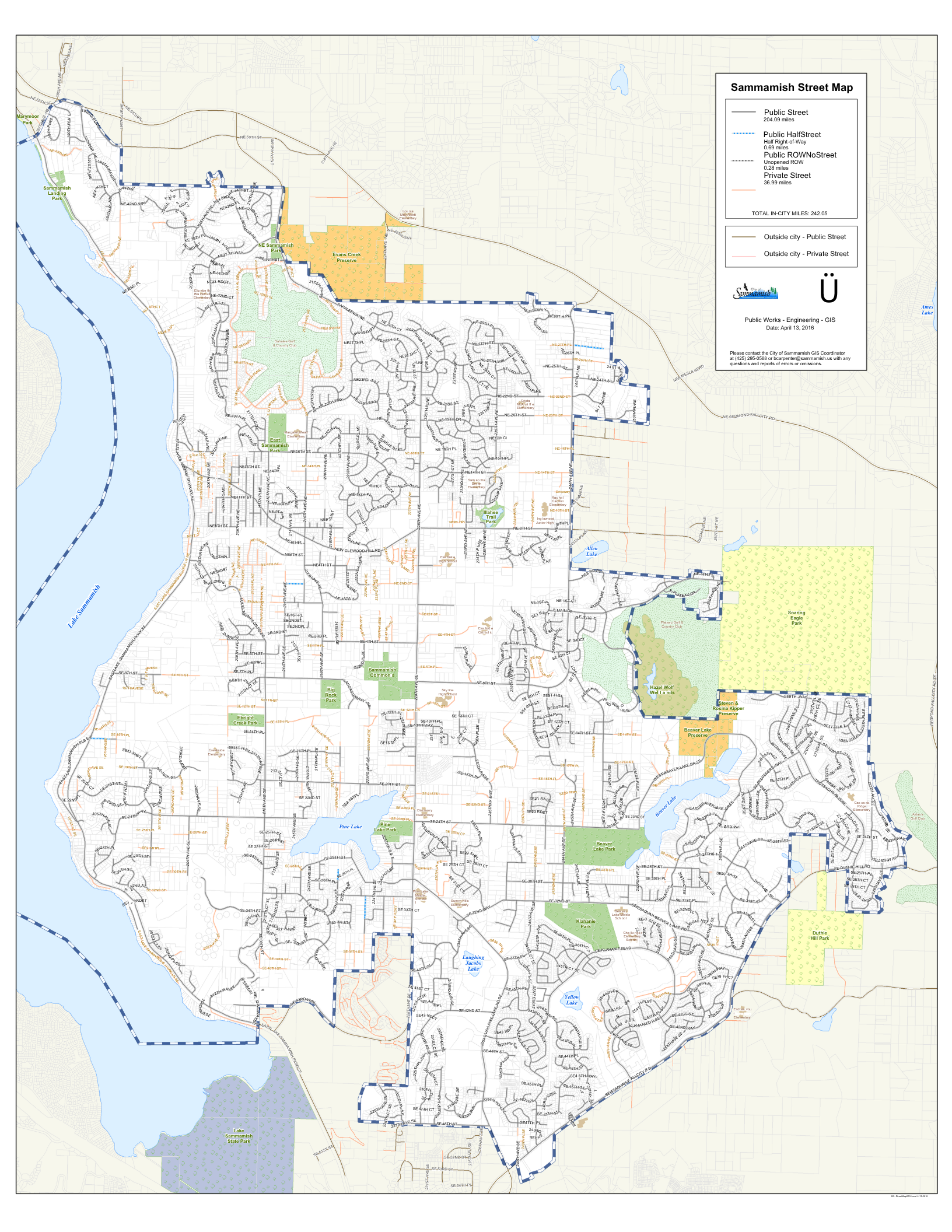
A note on the plateau itself. When people say “the Sammamish Plateau,” they’re mostly talking about the City of Sammamish, but the plateau is a geographic feature, not just a city boundary, and it extends a bit further than city limits do. Areas like Union Hill-Novelty Hill to the north and small pockets like Ames Lake remain unincorporated King County rather than part of the city, which means different governance, permitting, and services even though they can feel like part of the same plateau community. Worth keeping straight if you’re comparing addresses that look close together on a map.
We’ve watched this city become what it is
By January 2027, our family will have called Sammamish home for 30 years, long enough to have watched it grow from a loose collection of plateau neighborhoods into an incorporated city with a national reputation. We raised our own kids here, all the way through the public school system, so a lot of what’s in this post isn’t secondhand research, it’s what we lived.
One thing that doesn’t always come through in the rankings: how easy it is to actually get involved here. Between youth sports leagues, school PTAs, HOA boards, trail and park volunteer days, and city committees, Sammamish is a place where showing up tends to matter more than knowing the right people. That’s part of why it still feels like a community and not just a good place to buy a house.
If you’re thinking about a move to Sammamish, or trying to figure out where on the plateau actually fits your family, we’d be glad to talk through it with you.
This is the first post in our Why Sammamish? series, where we’re digging into what actually makes this city tick, its history, its schools, its outdoor life, its neighborhoods, and more. Next up: the history of Sammamish, from unincorporated plateau to one of the fastest-growing cities in the state.

Kelly Azzarello Real Estate | Compass 📧 kelly@kellyazzarello.com 📞 (425) 830-6457 🌐 kellyazzarello.com
.