


A Party for Fish! Salmon Days!

Every town has a festival. Very few have one that grew out of the creek running through the middle of downtown. On the first full weekend of every October, roughly 150,000 to 200,000 people pour into Issaquah for Salmon Days, the 57th edition of which lands on October 3 and 4, 2026. They come for the parade, the food, and the hundreds of artist booths. But the real guests of honor are the chinook and coho salmon finishing a journey from the Pacific Ocean, through the Ballard Locks, across Lake Washington and Lake Sammamish, and up Issaquah Creek to the exact place they were born.
We gave the festival a quick introduction earlier in this series. This bonus post is the deep dive: where Salmon Days came from, the 90-year-old hatchery that makes it possible, what there is to do over the weekend, and what it all says about living here.
Before the Salmon, There Was Labor Day
Salmon Days wasn't Issaquah's first big town party. Starting in 1936, the town threw a Labor Day festival that was hugely popular for decades. By the 1960s, though, interest was fading, and the last one was held in 1968.
That left the Greater Issaquah Chamber of Commerce looking for a replacement. Chamber president Earl Robertson, working alongside the local Kiwanis Club, noticed something that was already happening on its own: every fall, people were driving into town to watch salmon return to Issaquah Creek and the hatchery. Why not build a celebration around the thing people were already coming to see?
1970: The First "Salmon Festival"
The first event, then called the Salmon Festival, was held on Saturday, October 3, 1970. The Chamber hoped for 10,000 visitors. Around 20,000 showed up.
The lineup was pure small-town 1970:
● A Kiwanis salmon barbecue, which became one of the festival's longest-running traditions.
● Puppet shows, art displays, and educational exhibits from the hatchery.
● A children's parade, led by Seattle TV favorite J.P. Patches and his sidekick Gertrude.
● Political speeches, square dancing, and, on Sunday, a water fight between seven district fire stations.
The name changed to Salmon Days the following year. For most of the 1970s it stayed a relaxed, local affair, the kind of festival where, as one history puts it, wildlife sometimes wandered through the crowd.
The 1980s: Seafair, Floats, and Six-Figure Crowds
The turning point came in 1980, when Salmon Days became a Seafair-sanctioned event. Seafair clowns, pirates, and floats came with it, and so did the adult parade that became today's Grande Parade. Seattle restaurateur and waterfront legend Ivar Haglund led that first 1980 procession, which feels exactly right for a festival about fish.
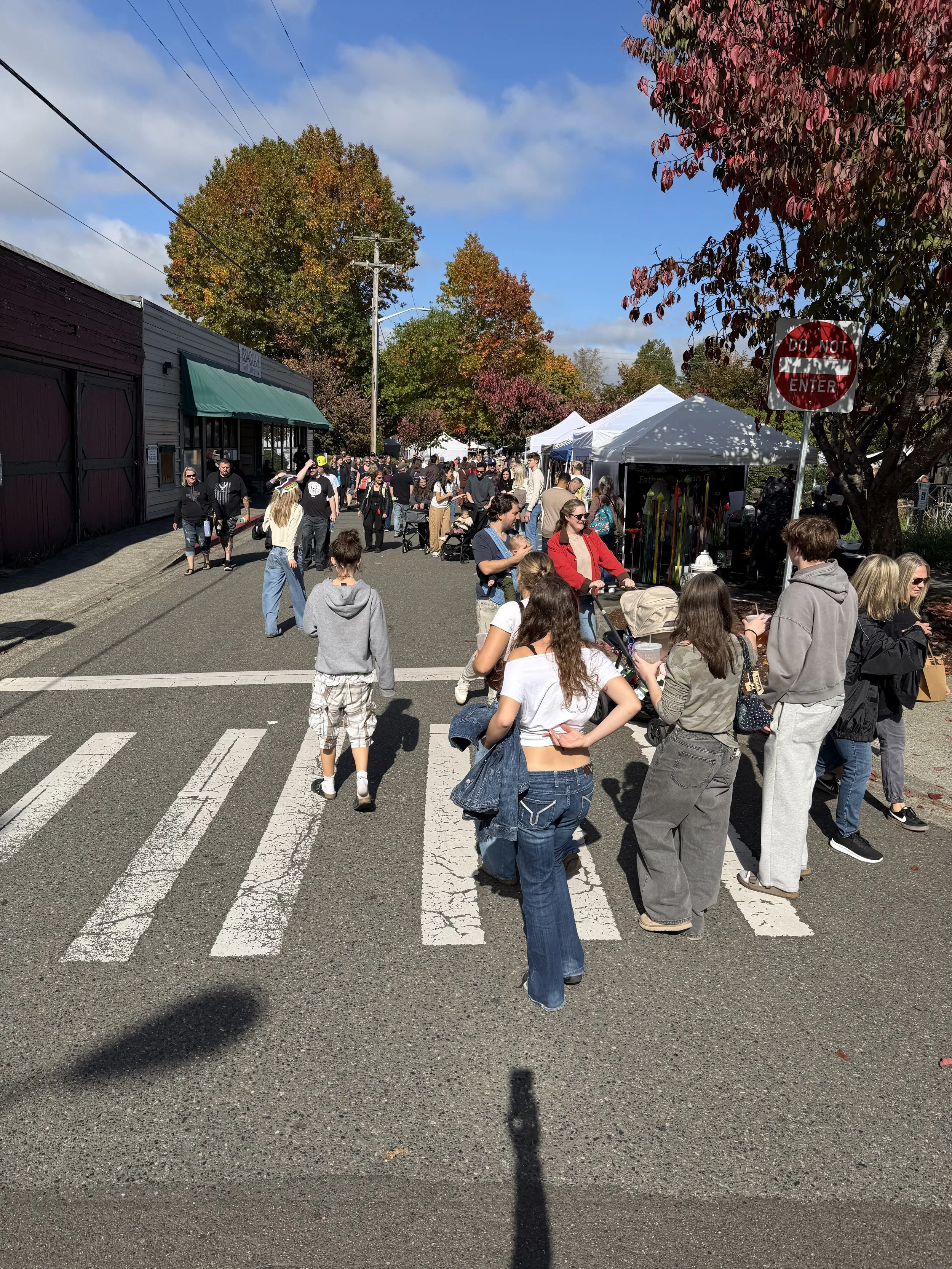
Growth was fast from there. Attendance jumped from about 65,000 in 1980 to roughly 150,000 by 1988. The festival ran entirely on volunteers for its first 15 years, joined the Northwest Festivals Association in 1985, and hired its first paid director in 1987.
Our favorite story from this era: a balloon released at the 1987 festival floated halfway across the country and landed, fully intact, in a field near Newman Grove, Nebraska. The family who found it contacted the Chamber, and the next year they were flown out to serve as grand marshals of the 1988 Grande Parade.
The Modern Festival
Since the 1990s, good-weather years have drawn somewhere between 150,000 and 200,000 people, and the Chamber now bills Salmon Days as the largest two-day festival in Washington. It's still a volunteer-powered event at heart: in 2006, organizers counted more than 2,000 volunteers donating over 12,000 hours. Even 2020 and 2021 didn't break the streak; the festival shifted to virtual and limited in-person formats, with online contests and hatchery webcams keeping the tradition going.
The Real Star: The Issaquah Salmon Hatchery
None of this happens without the hatchery on Sunset Way. It was built in 1936, the same year that first Labor Day festival began, by the Depression-era Works Progress Administration. Its job was to restore salmon runs in Issaquah Creek that had been badly damaged by decades of coal mining and logging. Its first salmon stock came from the nearby Green River.
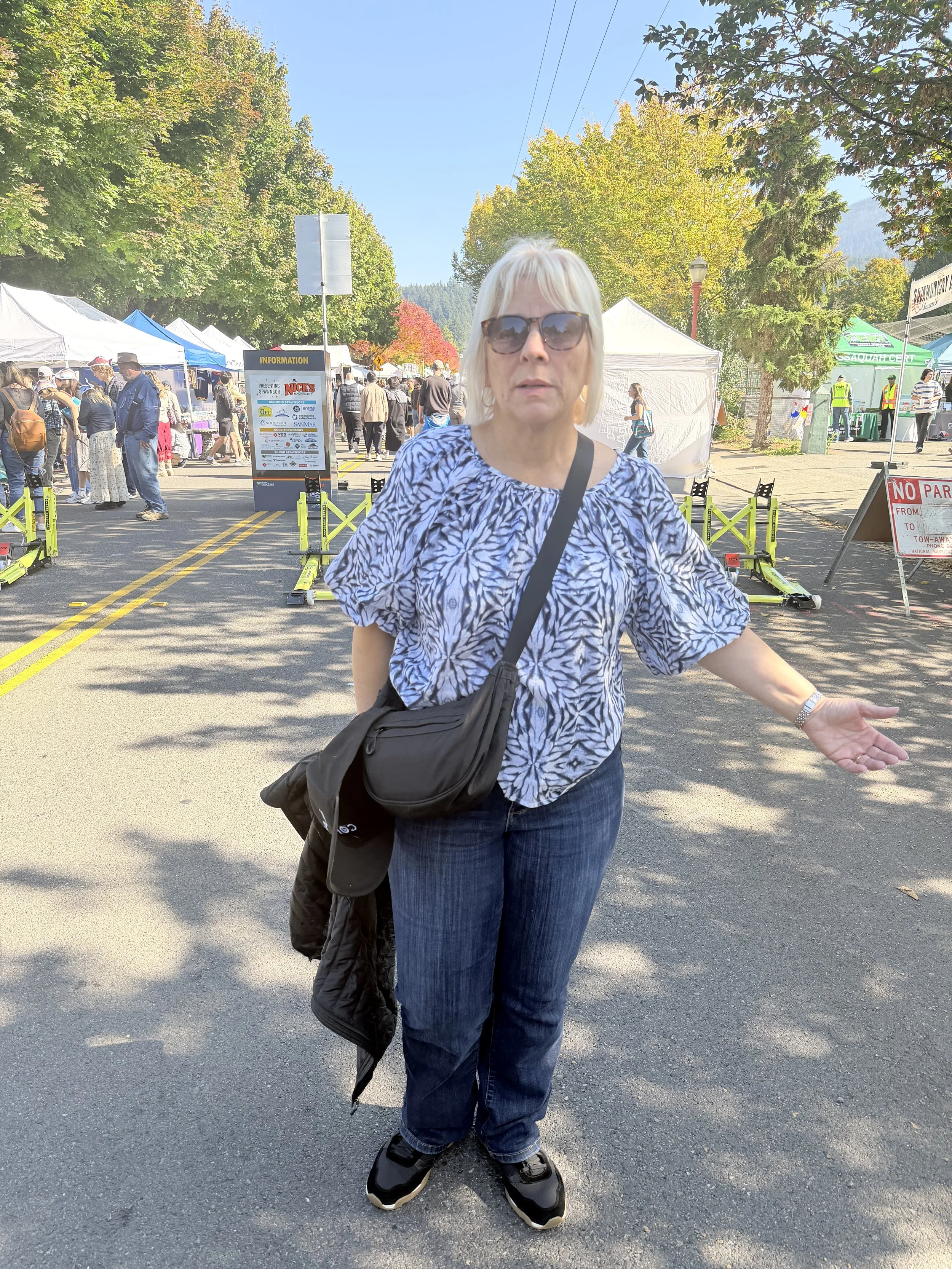
Today, operated by the Washington Department of Fish and Wildlife, it's the most-visited salmon hatchery in the state, drawing an estimated 250,000 visitors a year. Its fish ladder has underwater viewing windows, so you can watch adult salmon push upstream at eye level. The hatchery is also one of the relatively few in Washington that opens its grounds to the public and offers education programs.
Much of that public-facing work comes from the Friends of the Issaquah Salmon Hatchery (FISH), a nonprofit that formed in the mid-1990s and recently marked its 30th anniversary. FISH volunteer docents staff the hatchery during Salmon Days, answering questions for the thousands of people leaning over the railings. If you only have time for one thing all weekend, make it this.
A tip for newcomers: you don't need the festival to see the fish. The run typically builds from September through October, and the hatchery grounds are open to visitors well beyond festival weekend. A quiet weekday visit is a completely different, and surprisingly peaceful, experience.
What to Do at Salmon Days 2026
Admission is free, and the festival runs roughly 10 a.m. to 6 p.m. both days along Sunset Way and the downtown core. Here's how the weekend breaks down:
● The Grande Parade: Saturday, October 3, at 10 a.m. It's the parade's 47th year, the 2026 theme is "Stars, Stripes & Salmon," honoring those who have served in the Armed Forces, and the grand marshal is Nick of Nick's Magnificent Indoor Playground. The route starts at Confluence Park, runs down Rainier Blvd N, turns onto NW Dogwood St, heads north on Front Street, and finishes along NE Gilman Blvd.
● The hatchery and the creek bridge: salmon viewing from the Issaquah Creek bridge and the fish ladder windows, with FISH docents on hand.
● Field of Fun: the kids' zone at Veterans Memorial Field, with bounce houses, inflatable slides, face painting, an animal petting area, sports games, and zorbing (yes, rolling around inside a giant clear ball).
● DockDogs: dogs sprinting off a dock and launching into a pool after a toy, one of the most crowd-pleasing things at the festival.
● Foods of the World: dozens of food vendors clustered near the train depot, plus a 21-and-over beer garden near the community stage.
● Artists and makers: more than 200 artisan booths lining downtown streets, with jewelry, pottery, art, and clothing.
● Live music on multiple stages throughout both days.
Tips From People Who Go Every Year
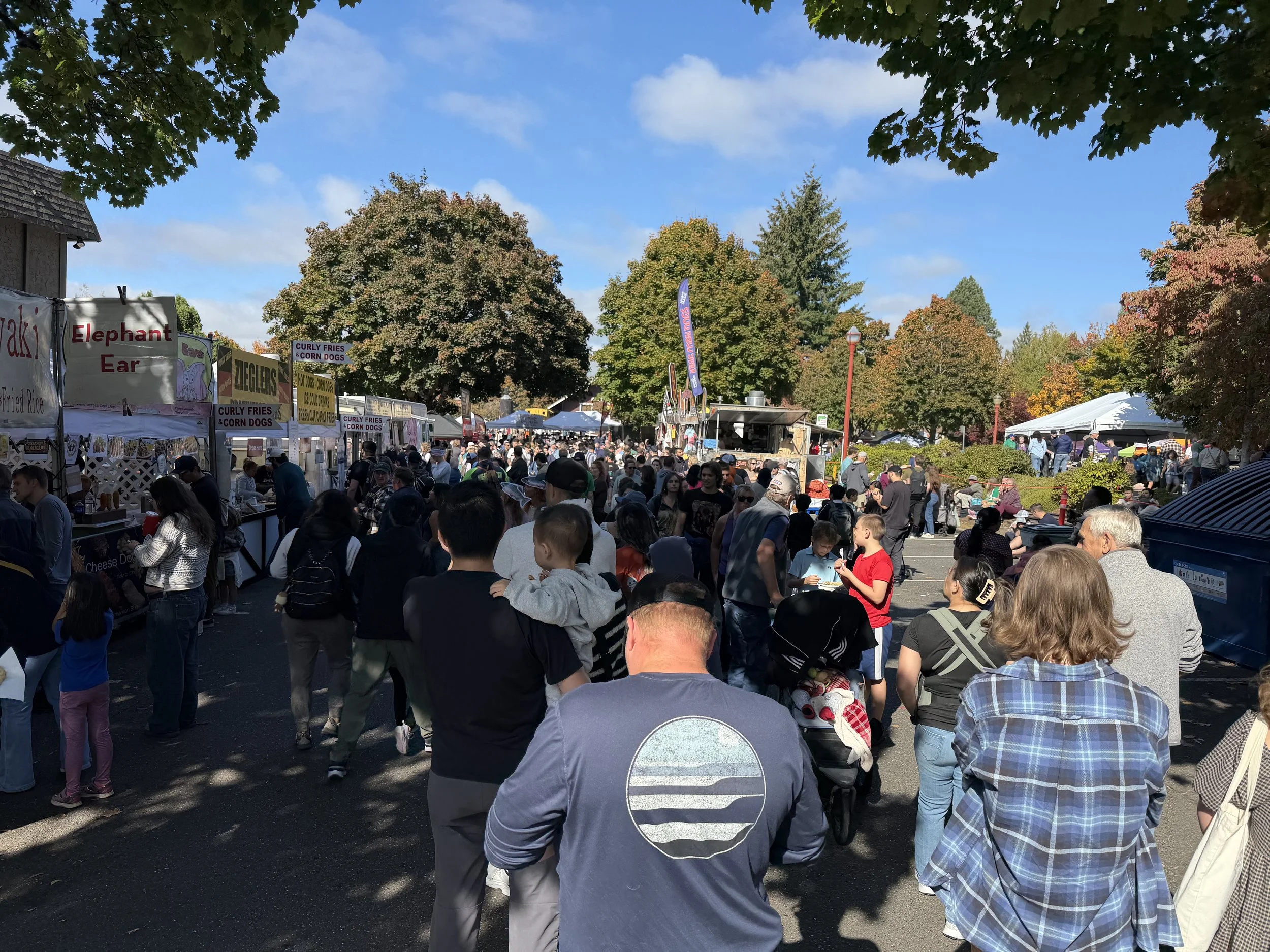
● Go early for the parade, or late for everything else. Saturday morning is the busiest stretch of the whole weekend. Crowds tend to thin out after about 3 p.m.
● Skip the downtown parking hunt. Look for festival shuttle service from outlying lots such as the Issaquah Transit Center, and check salmondays.org for this year's parking and shuttle details before you leave home.
● Dress for October in the Northwest. Layers, a rain shell, and comfortable walking shoes. It's rain or shine.
● See the fish first. The hatchery gets crowded by midday. Head there early, then work your way through the booths.
● Live nearby? Check the resident information page on salmondays.org for road closures and access details for the weekend.
Why This Matters When You're House-Hunting
Salmon Days is a good test of what a town actually is. Plenty of Eastside communities have great schools and nice parks. Far fewer have a 57-year-old tradition, built by volunteers, around a natural event that happens right in the middle of downtown. When buyers ask us "Why Issaquah?", this is a big part of the answer: it's a place with a real identity, and its residents show up for it every single year.
For Buyers & Sellers
For buyers, homes within walking distance of downtown, the historic core, Olde Town, and the streets around Sunset Way and Front Street, offer a genuine "we walk to the parade" lifestyle. It's worth deciding early whether being in the middle of it is a highlight for you, or whether you'd rather be a short drive away with easier weekend traffic.
For sellers near downtown, plan around festival weekend. Street closures and crowds can make showings tricky on October 3 and 4, but the week or two before, when the salmon are running and the town is buzzing, can be a great time to photograph and show a home that sits close to the action.
If you want to know more…
Do your friends and family ask "Why Issaquah?" when you talk about where you live, or where you want to live? Send them this post, and the rest of our Why Issaquah? series. And if you have questions about which Issaquah neighborhoods put Salmon Days within walking distance, or about any home you're considering, reach out to Kelly Azzarello Real Estate. We're always happy to help.

Because Costco's Backyard Used to Be a Skydiving Strip
Part of the Why Issaquah? series: Because Costco's Backyard Used to Be a Skydiving Strip
Why Issaquah? Because Costco's Backyard Used to Be a Skydiving Strip
Category: Local History (Bonus Post) | Suggested length: 700-800 words | Target reader: history-curious buyers and longtime residents
Here's a piece of local history most newcomers never hear.
From the early 1940s until 1987, a chunk of the Pickering family's dairy farm just north of what's now I-90 operated as a recreational airfield.
A Farm Turned Airfield
The field went through several names over the decades:
The Seattle Sky Ranch
Issaquah Airport
Eventually, the Issaquah Skyport
It became genuinely woven into local identity. Weekly air shows, gliding, ballooning, and one of the region's best-known skydiving centers all operated from this one patch of farmland. Old Issaquah T-shirts showed parachutes floating over the valley, a small detail that tells you how central the Skyport was to how the town saw itself.
The Fight to Save It
The Skyport closed for good in 1987, after a long, emotional battle between residents who wanted to save it and developers who wanted to build on it.
The developers won.
THen and Now
Seven years later, in 1994, Costco moved its corporate headquarters onto land right next door.
Today, the nine-story Costco headquarters tower that's visible from the freeway sits almost exactly where skydivers once floated down onto a grass runway. It's a striking bit of then-and-now for a city whose skyline has changed more than most people realize, and a piece of history that rarely comes up unless someone who's been here long enough tells you about it.
For Buyers & Sellers
This kind of story is exactly what separates a generic relocation pitch from one that actually captures a place. It costs nothing to mention in a conversation with a buyer, and it tends to be the detail people remember.
Want more stories like this one? This is a bonus post in our Why Issaquah? series; the main series continues to cover the neighborhoods, outdoor life, and community that make the city worth choosing today. Reach out to Kelly Azzarello Real Estate any time.

Sewer Scope: Part III
The Sewer Scope Found a Problem.
Costs and Options
What to do first, what it can cost, and how to work through it whether you're selling or buying
The camera came out of the line, and the news isn't good. A crack, roots, a sag, a section that's partly collapsed. It's a stomach-drop moment, but it's also the moment the scope was for. You now know something you couldn't see, and you know it while you still have choices.
What to do first
• Get the video and the written report. You need both. The video shows exactly where the problem is, and a plumber can use it to bid.
• Don't panic and don't rush. A finding doesn't always mean a full replacement. Many problems are local and can be repaired in one section.
• Get a licensed plumber's written estimate. Ask them to watch the video and tell you what they would do and why.
• Get a second bid. Repair methods and prices vary a lot, and a second opinion can tell you whether the first bid is fair.
• Ask who is responsible for the line. In many places the homeowner owns the pipe from the house to the connection at the main, but rules differ. Check with your city or sewer district.
What does it cost to fix a sewer line problem?
This is where the surprises are. Repair prices vary a lot with pipe length and depth, access (driveways, landscaping, retaining walls), the repair method, and local permits and labor rates.
| Type of work | Commonly cited range |
|---|---|
| Spot repair of one damaged section | A few thousand dollars, roughly $1,500 to $7,500 |
| Trenchless lining or pipe bursting | Often $4,000 to $20,000+, depending on length |
| Full line replacement | Roughly $10,000 to $25,000+ in many markets |
National averages you'll see online are often much lower than what homeowners in higher-cost metro areas pay. In the Seattle area, for example, contractors publishing 2026 pricing put a full replacement anywhere from about $10,000 into the low $30,000s, and permits alone can add hundreds to a couple thousand dollars. Always get more than one written bid.
If you're selling
Sellers commonly take one of three paths:
• Repair before closing. You control the contractor and the timeline, and you can hand the buyer paperwork showing the work is done.
• Offer a credit at closing. The buyer takes over the contractor and the timeline. A written bid helps you set a number everyone can agree on.
• Adjust the price. Often used when the buyer would rather handle the repair themselves.
Disclosure rules vary by state and by type of seller, and a known defect generally needs to be disclosed where disclosure is required. "As is" doesn't stop a buyer from inspecting, asking for credits, or walking away. Ask your agent and, if needed, an attorney how the rules apply to you.
If you're buying
You typically have three options, and your inspection contingency is what makes them possible:
• Ask the seller to repair the line before closing
• Ask for a credit at closing
• Ask for a price reduction
If the problem is severe and the seller won't work with you, your contingency may let you walk away. Real bids from licensed plumbers turn an alarming report into a number you can negotiate with.
Why finding out early matters
Problems found early, with real repair estimates in hand, are much easier to work through, whether that means a repair, a credit, or a price adjustment. That's the real value of a sewer scope: not the report itself, but the time and options it gives you.
Earlier in this series
• Post 1: What Is a Sewer Scope Inspection?
• Post 2: Who Can Scope Your Sewer Line, an Inspector or a Plumber?
If something turns up, we can help
Hopefully you'll never need to reline or replace a sewer line. For most homeowners, it's a once-in-a-lifetime event. For us, as agents, it isn't. We see situations like this and have experience helping people through them.
We work with contractors, suppliers, and vendors regularly. We can't recommend specific companies, but we can help you work out what kind of professional you need, what questions to ask, and how to compare bids, so you find the right fit for your situation.
Whether you're selling soon or someday, we're glad to be a resource.
Kelly Azzarello Real Estate | Compass
kelly@kellyazzarello.com | (425) 830-6457 | www.kellyazzarello.com

Note:
Cost ranges are general estimates drawn from published 2026 cost guides and vary by property, region, and contractor. Get written bids from licensed professionals. This post is general information, not legal advice; disclosure rules differ by state.
Sewer Scope: Part II
Who Can Scope Your Sewer Line, an Inspector or a Plumber?
Booking a sewer scope sounds simple until you start making calls. Some inspectors say yes, some say no, and some say they can do it only if there's a cleanout. And the person who does it may or may not be the one you'd want to hire if the news is bad.
Here's how it works, who can do it, and what to ask before you book.
Not every inspector offers sewer scope Services
A sewer scope takes specialized camera equipment and training, so some inspectors offer it as an optional add-on and others don't. Those who don't will usually refer you to a plumber or a company that only does sewer cameras. When you book, ask:
• Do you perform sewer scopes?
• Will I get the video and a written report?
• What happens if there's no accessible cleanout?
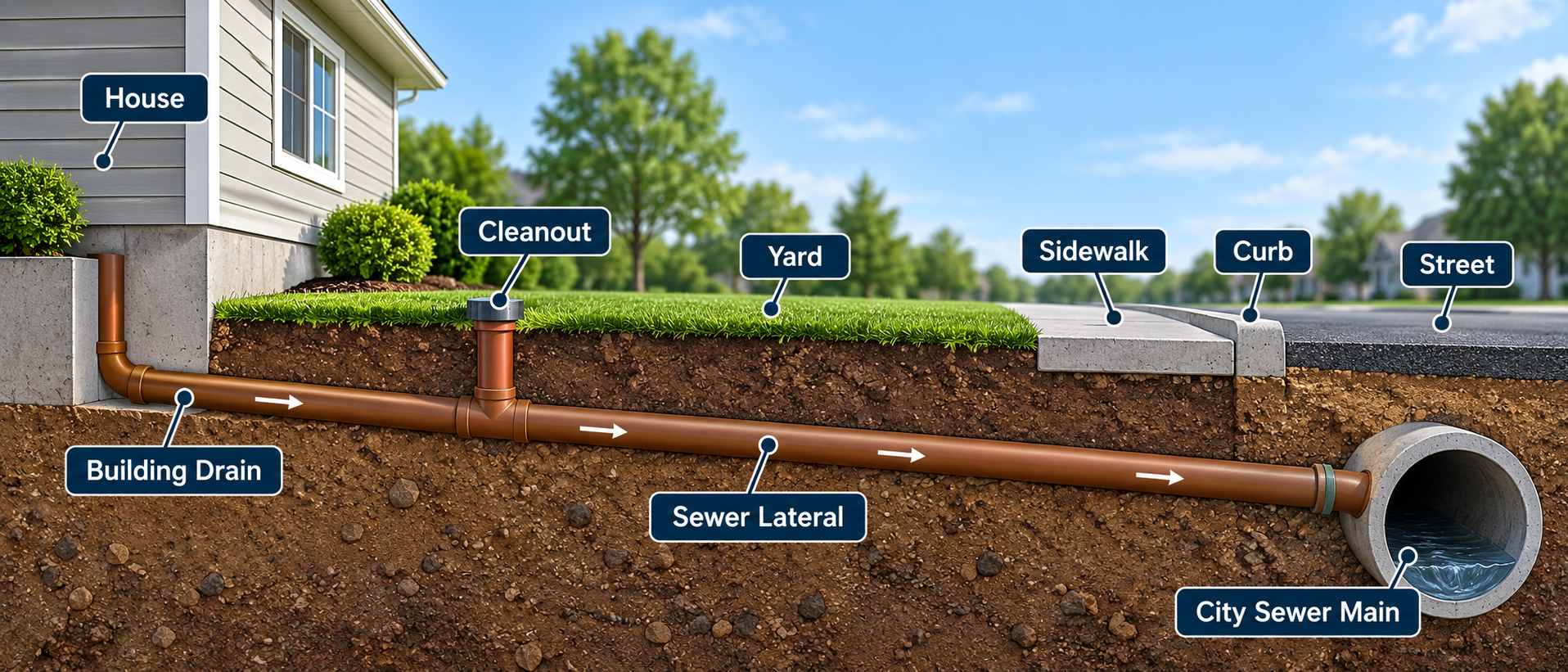
How does the camera get into the line?
The scope is more hands-on than the rest of an inspection, because the technician needs a way into the main sewer line. In order of how disruptive they are:
• An accessible cleanout. Outside the house, in a garage, or in a basement. This is the easiest route: the cap comes off, the camera goes in, and nothing else is disturbed.
• A roof vent. Some inspectors can feed the camera down a plumbing vent pipe. This only works if the roof is safe to access, and bends in the pipe can keep the camera from reaching the main line.
• Pulling a toilet. When there's no cleanout, the toilet may need to be removed to reach the drain, then reset. It works, but it's more invasive, and in some places only a licensed plumber is allowed to do it.
• Installing a cleanout. A plumber can add a permanent cleanout, often roughly $500 to $2,000. It's an added cost, but it makes this scope and future maintenance easier, and it can be a smart upgrade before you sell.
Should You Hire An Inspector or A plumber?
Plumbers can do sewer scopes too, and of course there are trade-offs:
| Home inspector | Plumber | |
|---|---|---|
| Typical Cost | Usually lower, especially as an add-on to the home inspection | Often higher than an add-on |
| Focus | Doesn't sell repairs, so there's no stake in the result | May also be the one who bids the repair |
| You Get | Video and a written report, then a recommendation to see a plumber | Video, a diagnosis, and often a repair price on the spot |
| Simple Fixes | Generally not done at the visit | Sometimes, such as a clog or minor root intrusion |
| Best When | You want the lowest-cost look, bundled with the inspection | You suspect a problem or want a price right away |
Does the person scoping need to be licensed?
It depends on where you live. In many places, a camera-only inspection doesn't require a plumber's license, but pulling toilets, installing cleanouts, and making repairs often do. Check with your state or local licensing board, and use a licensed contractor for any repair work.
Licensed, bonded, and insured mean three different things:
• Licensed: the state or local authority has approved the contractor to do the work.
• Bonded: the contractor has bought a surety bond that can compensate you if they fail to meet their obligations.
• Insured: the contractor carries liability and workers' comp insurance that covers accidents and property damage.
Ask for proof of all three, and verify the license through your state's database.
Next in this series
• Post 3: The Sewer Scope Found a Problem. Costs and Your Options
If something turns up, we can help
Hopefully you'll never need to reline or replace a sewer line. For most homeowners, it's a once-in-a-lifetime event. For us, as agents, it isn't. We see situations like this and have experience helping people through them.
We work with contractors, suppliers, and vendors regularly. We can't recommend specific companies, but we can help you work out what kind of professional you need, what questions to ask, and how to compare bids, so you find the right fit for your situation.
Whether you're selling soon or someday, we're glad to be a resource.
Kelly Azzarello Real Estate | Compass
kelly@kellyazzarello.com | (425) 830-6457 | www.kellyazzarello.com
This post is general information, not legal advice. Cost ranges are general estimates drawn from published 2026 cost guides and vary by property, region, and contractor. Licensing rules differ by state.