


Contingent vs. Pending
You found a home you love and the status says contingent or pending. Is it gone? Here is what the labels mean and what you can still do.
The quick take
Contingent means the seller accepted an offer, but a condition is still open. Pending means the conditions are mostly cleared and the sale is heading to closing. Neither means the door is shut, and the exact label matters more than the word on a portal.
Why this is so confusing
If you have browsed homes on a national website, you have probably seen "contingent" and "pending" used as if they mean the same thing. They do not, and the agent-side listing system shows even more detail than the public portals do. In our area, that system is the Northwest Multiple Listing Service (NWMLS).
NWMLS statuses are labels that agents use to describe where a listing stands. They do not tell you every term of the deal, and the portals that display them can show them differently or a little late. Your agent sees the official status, which is one reason to ask before you give up on a home.
What the labels generally mean
Active: The home is available for showings and offers.
Contingent: An offer has been accepted, but the deal still depends on something. In the NWMLS, this label is commonly described as meaning the buyer first needs to sell their own home. The property may stay on the market, and another buyer can sometimes step in.
Pending Inspection: The buyer is still in the inspection period. This is a stage where deals most often change, because inspection findings can lead to repairs, credits, or a buyer backing out.
Pending: The buyer and seller have a signed agreement and the main conditions have been cleared. The sale is moving toward closing, although it can still fall apart.
Pending Feasibility: Similar to Pending Inspection, but used mostly for land or properties that need studies before anything can be built.
Back on market: A prior sale did not close and the home is available again.
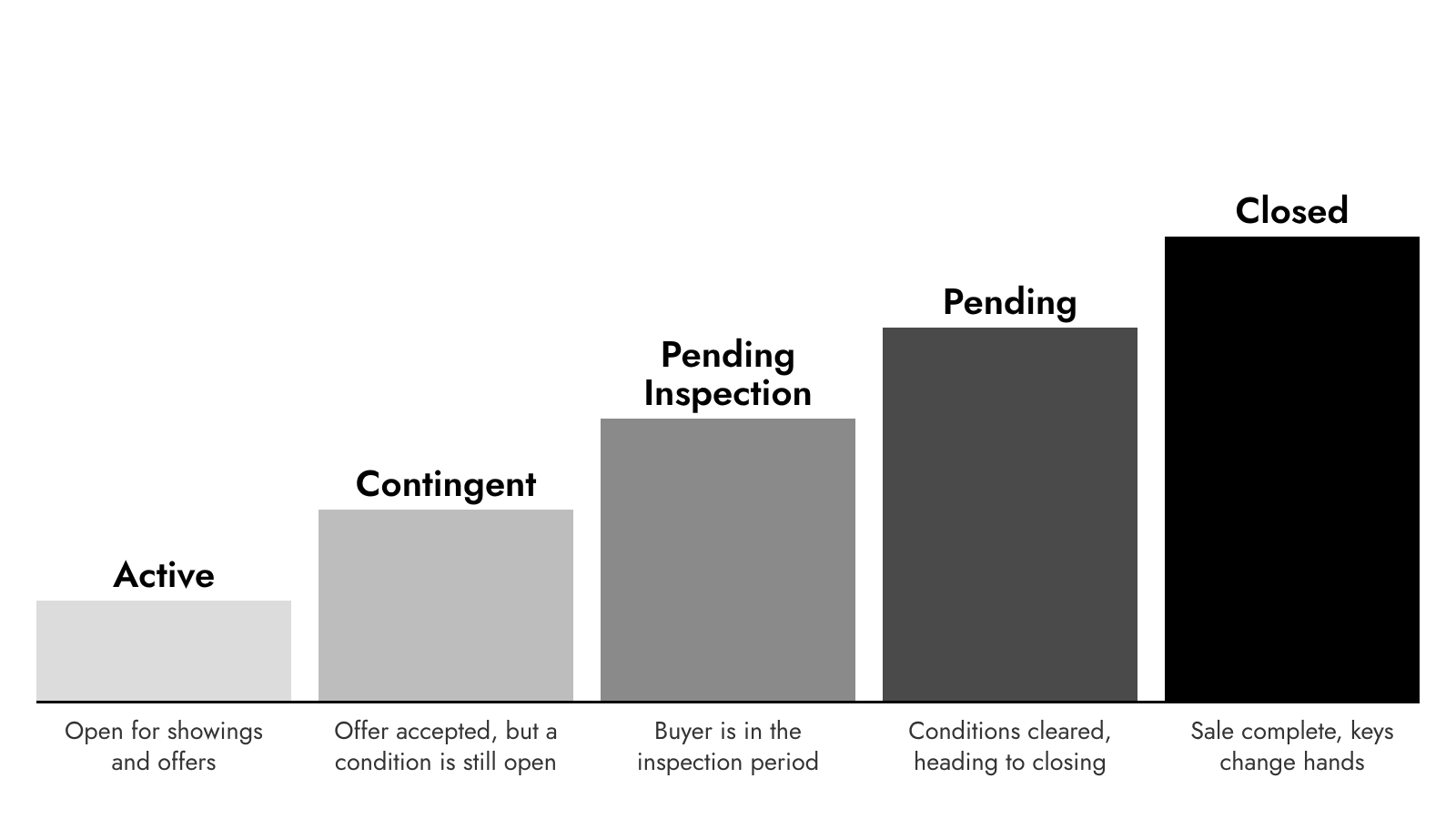
Graphic of the activity ladder. Note that not all steps are included in all transactions.
Because definitions vary a bit from one source to the next, treat this list as a guide and confirm the exact status and terms with your agent.
Can you still make an offer?
Sometimes, yes. Here are the three most common ways:
• A back-up offer. Some sellers will accept offers behind the first buyer. If the first deal fails, the back-up moves up.
• A bump clause. If the first buyer’s offer depends on selling their own home, the seller may keep marketing and give that buyer a deadline to remove the condition or step aside when a better offer arrives.
• Waiting. Deals do fall through, and a home that went contingent or pending can return to active within days.
From our experience
We have watched homes go to pending inspection on a Friday and back to active the following week after the buyer and seller could not agree on repairs. Buyers who stayed in touch with their agent, and who were ready with a pre-approval, were able to move quickly.
What this means if you are buying
• Do not write off a home because of its status. Ask your agent what the status really means for that listing.
• If you want to be in line, ask whether the seller is taking back-up offers and what that would look like.
• Keep your financing pre-approved and current. If a home reopens, you want to be able to move the same day.
What this means if you are selling
Your listing status is part of your marketing. A "pending" label tells other buyers to look elsewhere, while "contingent" can leave the door open to back-up interest. Talk with your agent about which choice fits your goals, and make sure the status is updated promptly when anything changes.
Questions to ask your agent
• What exactly does this status mean on this listing?
• Is the seller accepting back-up offers?
• What condition is still open, and when does it have to be cleared?
• Has this home been on and off the market before?
Want the full list of terms?
See our plain-English glossary of real estate terms: www.kellyazzarello.com/jargon
Questions? We are glad to help.
If any of this raises a question about your own situation, reach out. If you need an answer faster, call and we will talk it through.
Kelly Azzarello Real Estate | Compass
Email: kelly@kellyazzarello.com
Phone: (425) 830-6457
Sources and credits
We looked to NWMLS first and then Compass. Neither publishes a plain-language definition of this term, so the points above draw on the sources below, in our own words. General information only, not legal or financial advice. Confirm current details with your agent or lender, since forms and rules change.
Northwest Multiple Listing Service (NWMLS)
Findwell, Understanding Pending Status for Homes Listed in the Northwest MLS

Real Estate Speak, Decoded: Start Here
New to real estate language? Start here. Kelly Azzarello Real Estate explains the terms, the process and the risks in plain English.
Unless you’re part of the real estate industry, or your family is, chances are there is a lot of terminology that is not familiar.
A big part of the value we provide our clients is explaining the words, the process, and the risks and rewards available in the real estate arena.
This series will walk you through not only the terms, but some stories behind what we’ve learned from our experiences in the business.
If you have any questions or suggestions, let us know and we’ll figure it out.
But if you need an answer faster, reach out and we’ll have a conversation about it.
Is Bolting Your Foundation Worth It? Earthquake Retrofits for Eastside Homes
Some home upgrades you can see from the street. This one you can't. A foundation retrofit happens in the crawlspace, where almost nobody looks until a home inspector, or an earthquake, forces the question.
It's also one of the most cost-effective things the owner of an older Eastside home can do. Below, we walk through what a retrofit is, why it makes financial sense, and how to tell whether your home needs one. It's part of our series on hidden issues worth understanding before they get expensive, whether or not you plan to sell soon.
Why this matters on the Eastside
We live and work on top of active faults. The Seattle Fault runs east to west beneath downtown Seattle and Puget Sound, passes through or near Bellevue and Mercer Island, and reaches toward the foothills near Issaquah. It last ruptured about 1,100 years ago in a quake estimated at magnitude 7 or higher.
Offshore, the Cascadia Subduction Zone is capable of a magnitude 9 earthquake. The U.S. Geological Survey has put the chance of one striking within the next 50 years at about 14 percent. Nobody can predict the date, which is the whole point: the time to prepare is before there is one.
What actually fails in an older house
Most older homes in our area are a wood-frame house sitting on a concrete foundation. In many of them, the frame is held in place mostly by its own weight, with little or nothing fastening it to the concrete. Between the foundation and the first floor there is often a short framed wall called a cripple wall (also called a pony wall), and in older homes it is frequently open framing with no plywood bracing.
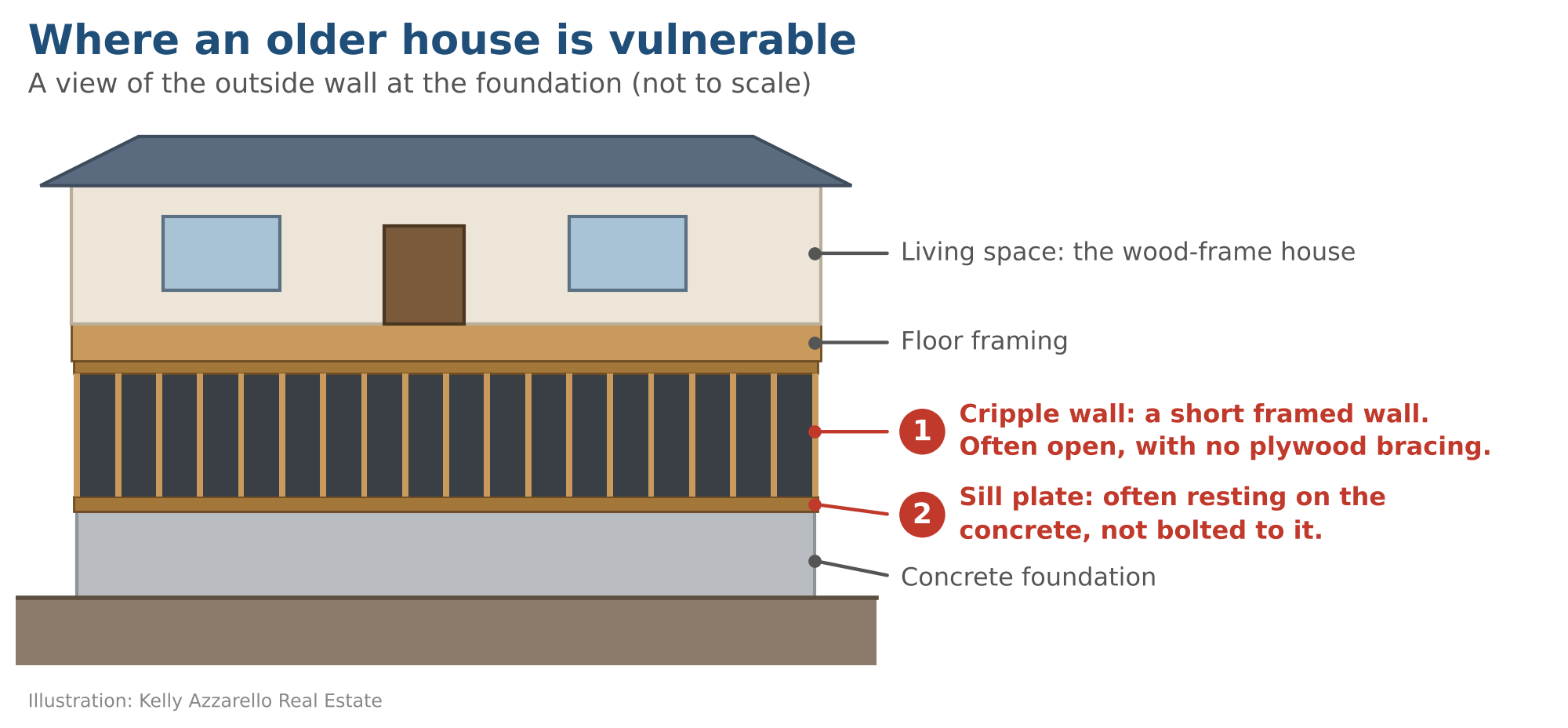
Figure 1. The two weak points in many older homes: the cripple wall and the sill plate.
According to the City of Seattle's retrofit guidance, most earthquake damage to single-family homes comes from one of two failures: the house jumping off its foundation, or a weak cripple wall collapsing. Either one can leave a home unlivable and very expensive to repair.
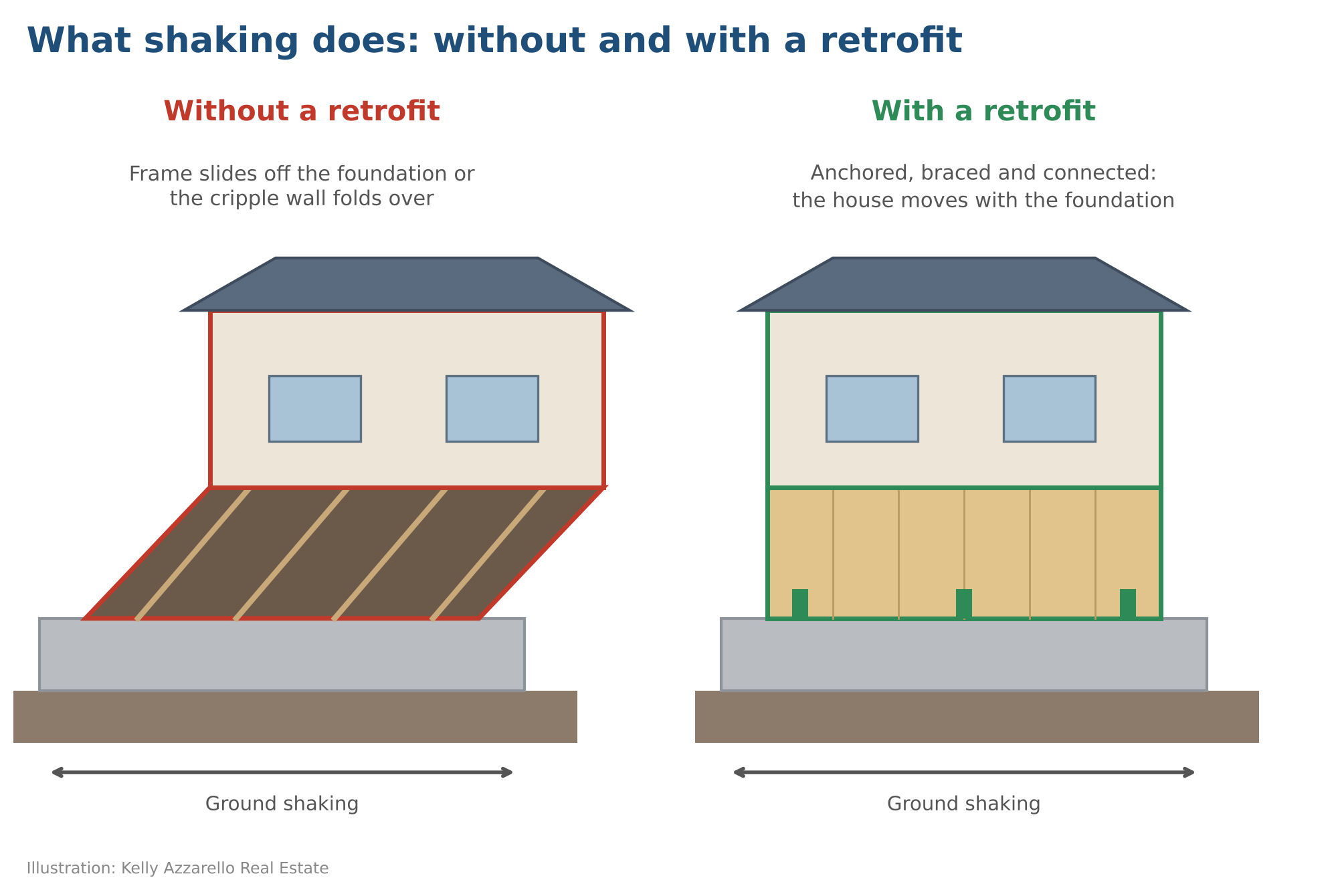
Figure 2. Without a retrofit, the frame can slide or the cripple wall can fold. With one, the house moves with the foundation.
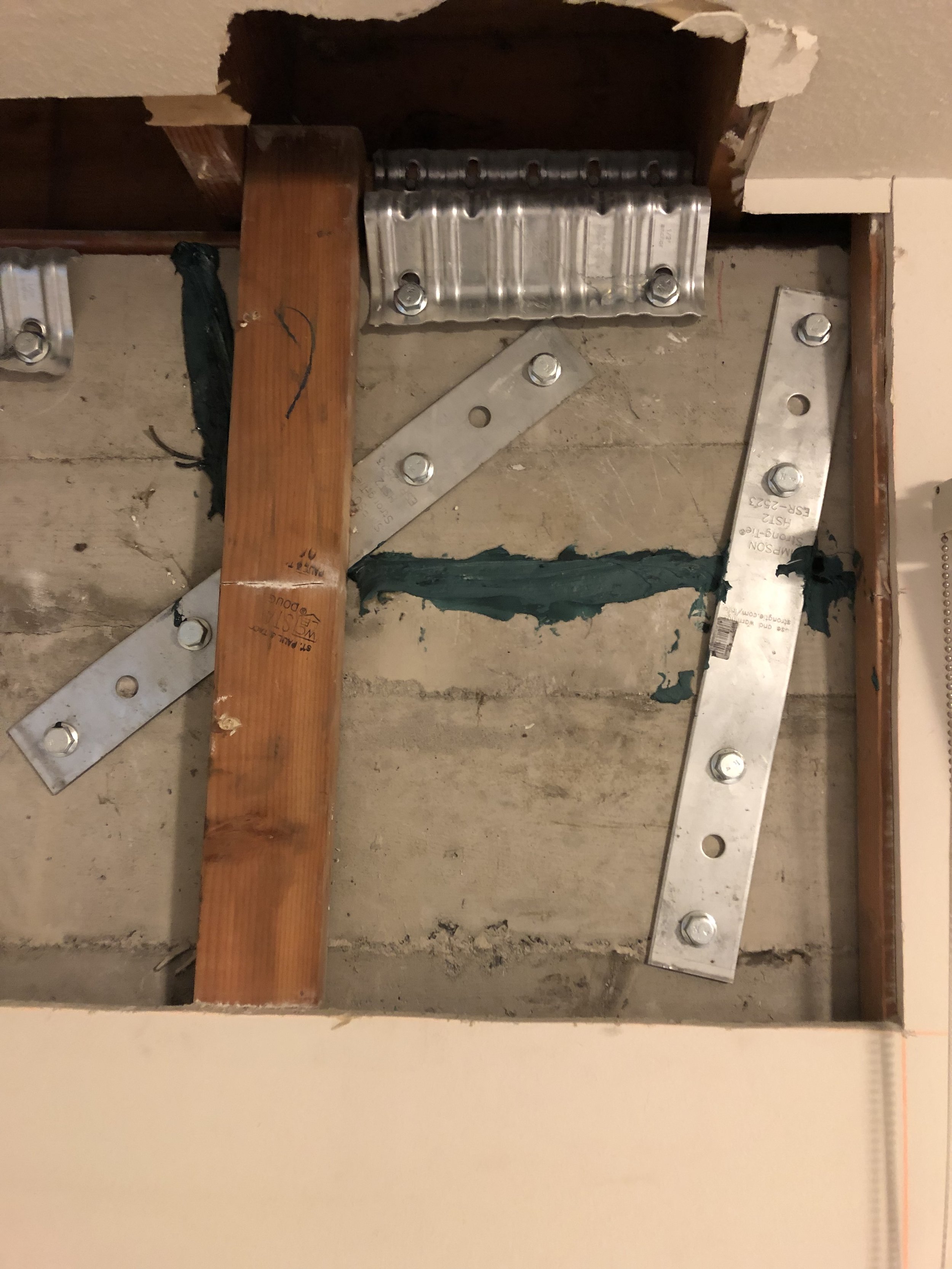
Strapping applied.
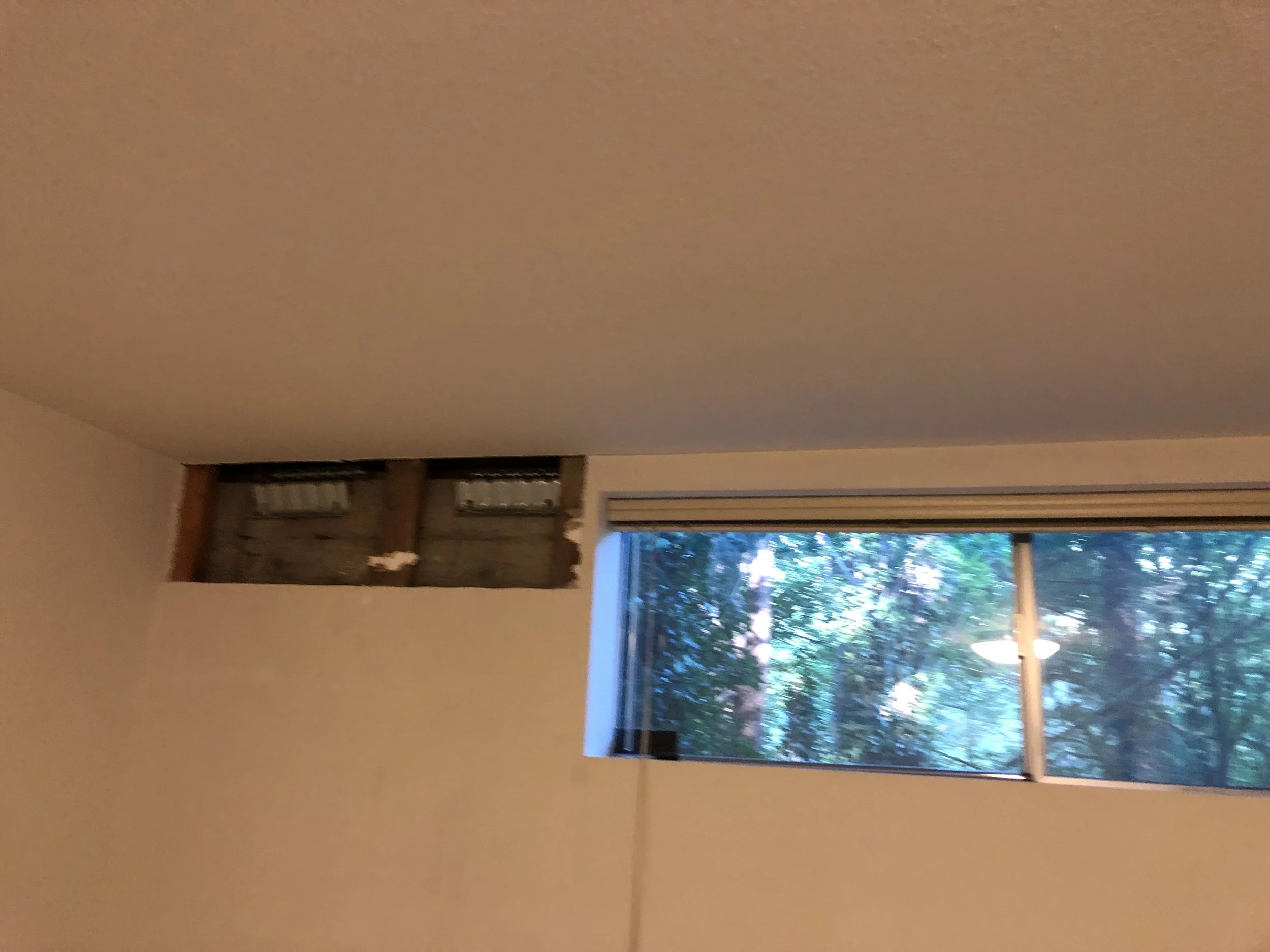
Drywall removed to facilie seismic retrofit.
Is your home a candidate?
Age is the quickest clue. Local retrofit contractors say homes built before about 1980 may not be properly secured, and homes built before about 1965 typically have no anchor bolts at all. A lot of the Eastside's older housing stock falls in that window, including pockets of Bellevue, Renton, Redmond and Issaquah.
Newer neighborhoods, like much of Sammamish and Klahanie, were built under more modern codes and are more likely to be anchored already. "More likely" isn't the same as confirmed, so it's worth a look. A quick check from the crawlspace access:
• Bolts: Look for bolt heads or nuts with square plate washers along the wood that sits on top of the concrete.
• Plywood: Look for plywood nailed to the short walls between the concrete and the floor. Open stud framing is a flag.
• Hardware: Look for metal connectors tying the floor framing to the wall below.
• Not sure? Ask a licensed contractor or structural engineer to take a look. Crawlspaces can hide moisture, wiring and pests, so we don't suggest crawling in alone if you're unsure.
Homes built on a slab, with no crawlspace, don't have this particular weakness. Homes with finished basements or unusual layouts may need an engineer's input.
What a retrofit involves: anchor, brace, connect
The City of Seattle sums the work up in three words, and the idea is simple: give the house a continuous path from the roof to the ground so it can't separate from its foundation.
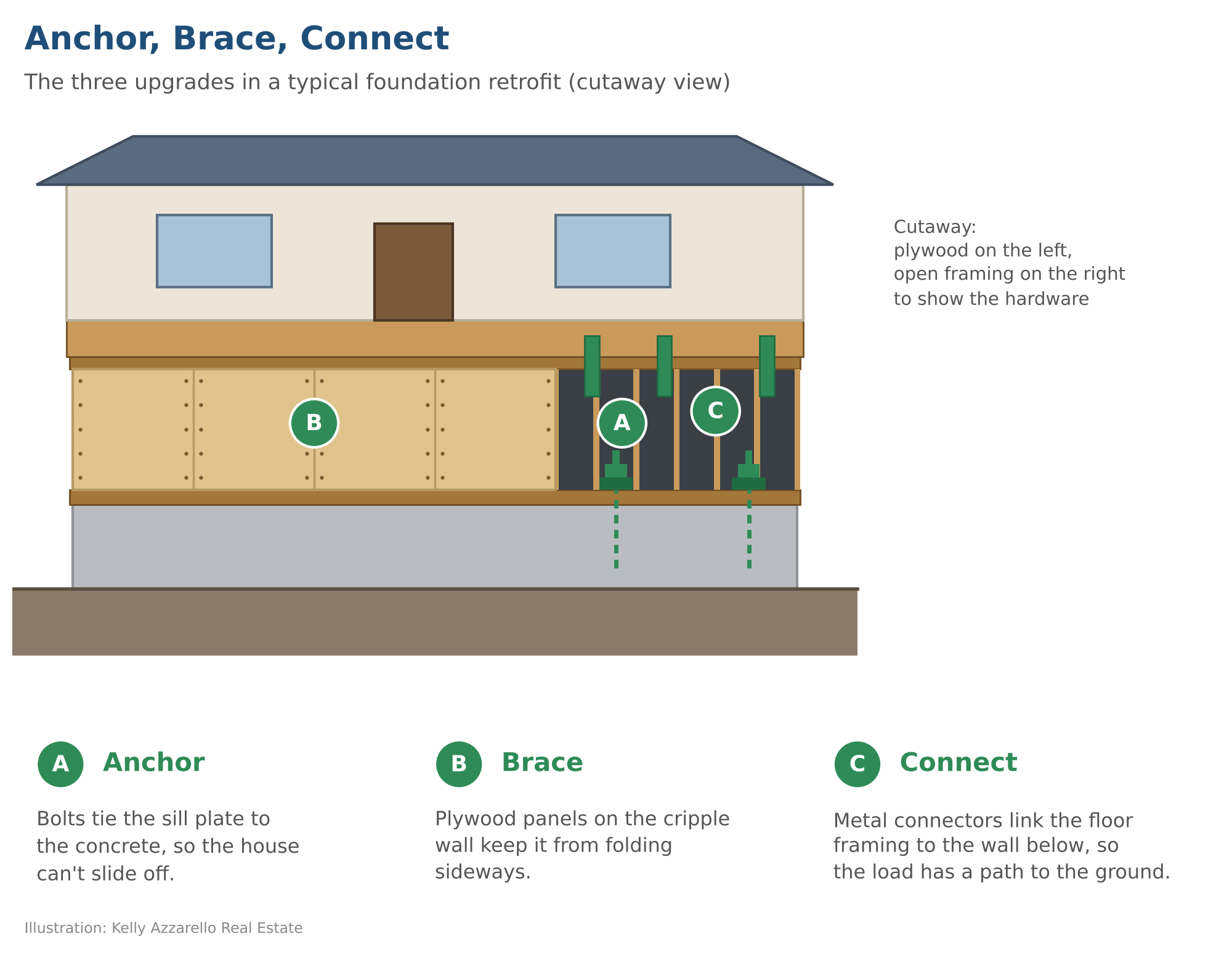
Figure 3. Anchor, brace, connect: the three parts of a typical foundation retrofit.
• Anchor: Bolts fasten the wood sill plate to the concrete foundation.
• Brace: Plywood panels on the cripple walls keep them from folding sideways.
• Connect: Metal framing hardware ties the floor framing to the walls below.
Most of the work happens in the crawlspace rather than inside your living space, which makes it a relatively low-disruption project.
Why it's a good investment
Think of it as a small premium against a large loss that, for most homeowners, isn't covered.
The cost is modest compared to the exposure. Seattle-area retrofit contractors put the average job at roughly $5,000 to $12,000, with higher figures for homes with finished basements. National cost guides list Seattle-area foundation bolting from about $1,100 to $5,600 and cripple wall bracing from about $1,100 to $3,300, so the size and access of your crawlspace matter a great deal.
Standard homeowners insurance doesn't cover earthquakes. That takes a separate policy, and those commonly carry deductibles of 10 to 25 percent. On a home with $600,000 of dwelling coverage, that is $60,000 to $150,000 out of your pocket before the policy pays anything. A retrofit lowers the odds of the most common kind of structural failure, which is damage you may have to absorb yourself.
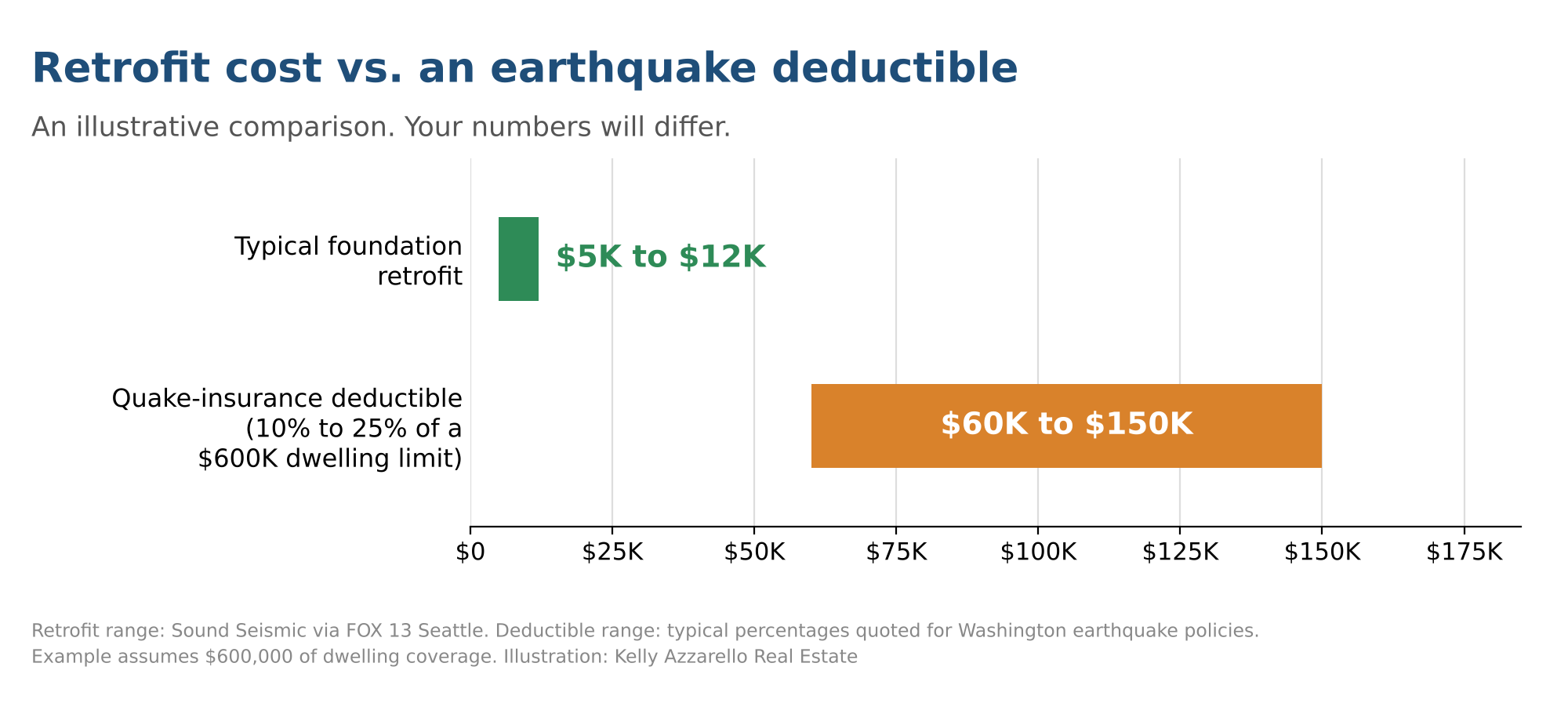
Figure 4. An illustrative comparison. Your coverage and costs will differ.
Some insurers reward it. Homes with foundation bolting or cripple wall bracing may qualify for earthquake premium discounts with some carriers. It's worth asking your insurance agent before and after the work.
It protects rentals and the people in them. For investment property, a retrofit protects both the asset and the safety of the tenants who live there.
It makes a house easier to sell. We can't promise a retrofit adds dollar-for-dollar value, and we wouldn't want you to count on that. What it does is remove an unknown. Inspectors typically note whether a foundation is anchored, and buyers in earthquake country can reasonably ask about it. A permitted, documented retrofit turns a possible negotiating point into a selling point.
What a retrofit won't do
A retrofit addresses the two most common failures. It doesn't make a home earthquake-proof. Unreinforced brick chimneys, heavy masonry veneer and some garage designs are separate issues and may need their own attention.
Permits are generally required. Seattle and most communities in the Northwest require one for this work, and each Eastside city has its own process, so check with yours before work begins. Get more than one bid, and ask each contractor to explain exactly what they'll anchor, brace and connect.
Thinking about selling?
If you may sell in the next few years and your home falls in the age range above, a retrofit can be one of the smarter projects to do first. Handling it on your own timeline, with permits and paperwork in hand, is far easier than negotiating a repair request against a closing date.
From Our Own Experience
A few years ago a good friend told me about this. I wasn’t aware of the underlying issues or the history of the home, but over lunch we had a long discussion. Especially if you’re buying an older home, you need to make certain that the
While our friend wasn’t ready to sell, he was very concerned about the safety of his family AND his eventual resale value of the home.
Wondering about your own foundation?
As agents, we work with contractors, suppliers and vendors regularly, and we've helped clients through big repairs. We can't recommend specific companies, but we can help you find the right fit and compare bids, whether you're buying, selling or just planning ahead.
Kelly Azzarello Real Estate | Compass
(425) 830-6457 | kelly@kellyazzarello.com | www.kellyazzarello.com
We're real estate professionals, not engineers or contractors. This post is general information, not structural, insurance or legal advice. A licensed structural engineer or contractor can assess your specific home, and your insurance agent can explain your coverage options.
Sources and further reading
• City of Seattle SDCI: Protect Your Home from Earthquake Damage (PDF)
• FOX 13 Seattle: Does your home need an earthquake retrofit? Here's how to check
• KOMO News: 14 percent chance of megaquake hitting Seattle, experts say
• Angi: How much does earthquake retrofitting cost in Seattle?
• Earthquake Tracker: Earthquake insurance in Washington State
• Earthquake Tracker: The Seattle Fault

A Party for Fish! Salmon Days!

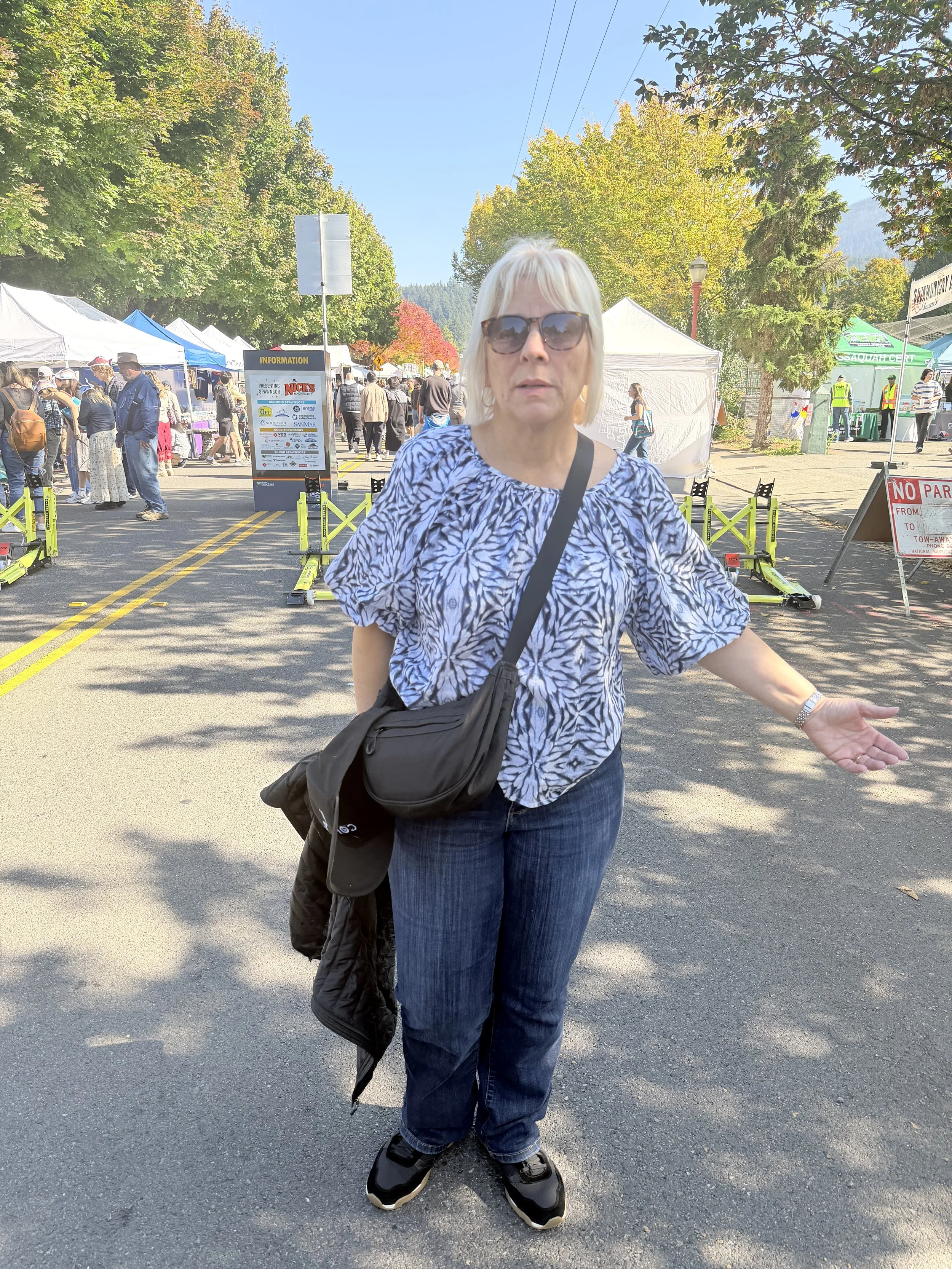
Every town has a festival. Very few have one that grew out of the creek running through the middle of downtown. On the first full weekend of every October, roughly 150,000 to 200,000 people pour into Issaquah for Salmon Days, the 57th edition of which lands on October 3 and 4, 2026. They come for the parade, the food, and the hundreds of artist booths. But the real guests of honor are the chinook and coho salmon finishing a journey from the Pacific Ocean, through the Ballard Locks, across Lake Washington and Lake Sammamish, and up Issaquah Creek to the exact place they were born.
We gave the festival a quick introduction earlier in this series. This bonus post is the deep dive: where Salmon Days came from, the 90-year-old hatchery that makes it possible, what there is to do over the weekend, and what it all says about living here.
Before the Salmon, There Was Labor Day
Salmon Days wasn't Issaquah's first big town party. Starting in 1936, the town threw a Labor Day festival that was hugely popular for decades. By the 1960s, though, interest was fading, and the last one was held in 1968.
That left the Greater Issaquah Chamber of Commerce looking for a replacement. Chamber president Earl Robertson, working alongside the local Kiwanis Club, noticed something that was already happening on its own: every fall, people were driving into town to watch salmon return to Issaquah Creek and the hatchery. Why not build a celebration around the thing people were already coming to see?
1970: The First "Salmon Festival"
The first event, then called the Salmon Festival, was held on Saturday, October 3, 1970. The Chamber hoped for 10,000 visitors. Around 20,000 showed up.
The lineup was pure small-town 1970:
● A Kiwanis salmon barbecue, which became one of the festival's longest-running traditions.
● Puppet shows, art displays, and educational exhibits from the hatchery.
● A children's parade, led by Seattle TV favorite J.P. Patches and his sidekick Gertrude.
● Political speeches, square dancing, and, on Sunday, a water fight between seven district fire stations.
The name changed to Salmon Days the following year. For most of the 1970s it stayed a relaxed, local affair, the kind of festival where, as one history puts it, wildlife sometimes wandered through the crowd.
The 1980s: Seafair, Floats, and Six-Figure Crowds
The turning point came in 1980, when Salmon Days became a Seafair-sanctioned event. Seafair clowns, pirates, and floats came with it, and so did the adult parade that became today's Grande Parade. Seattle restaurateur and waterfront legend Ivar Haglund led that first 1980 procession, which feels exactly right for a festival about fish.
Growth was fast from there. Attendance jumped from about 65,000 in 1980 to roughly 150,000 by 1988. The festival ran entirely on volunteers for its first 15 years, joined the Northwest Festivals Association in 1985, and hired its first paid director in 1987.
Our favorite story from this era: a balloon released at the 1987 festival floated halfway across the country and landed, fully intact, in a field near Newman Grove, Nebraska. The family who found it contacted the Chamber, and the next year they were flown out to serve as grand marshals of the 1988 Grande Parade.
The Modern Festival
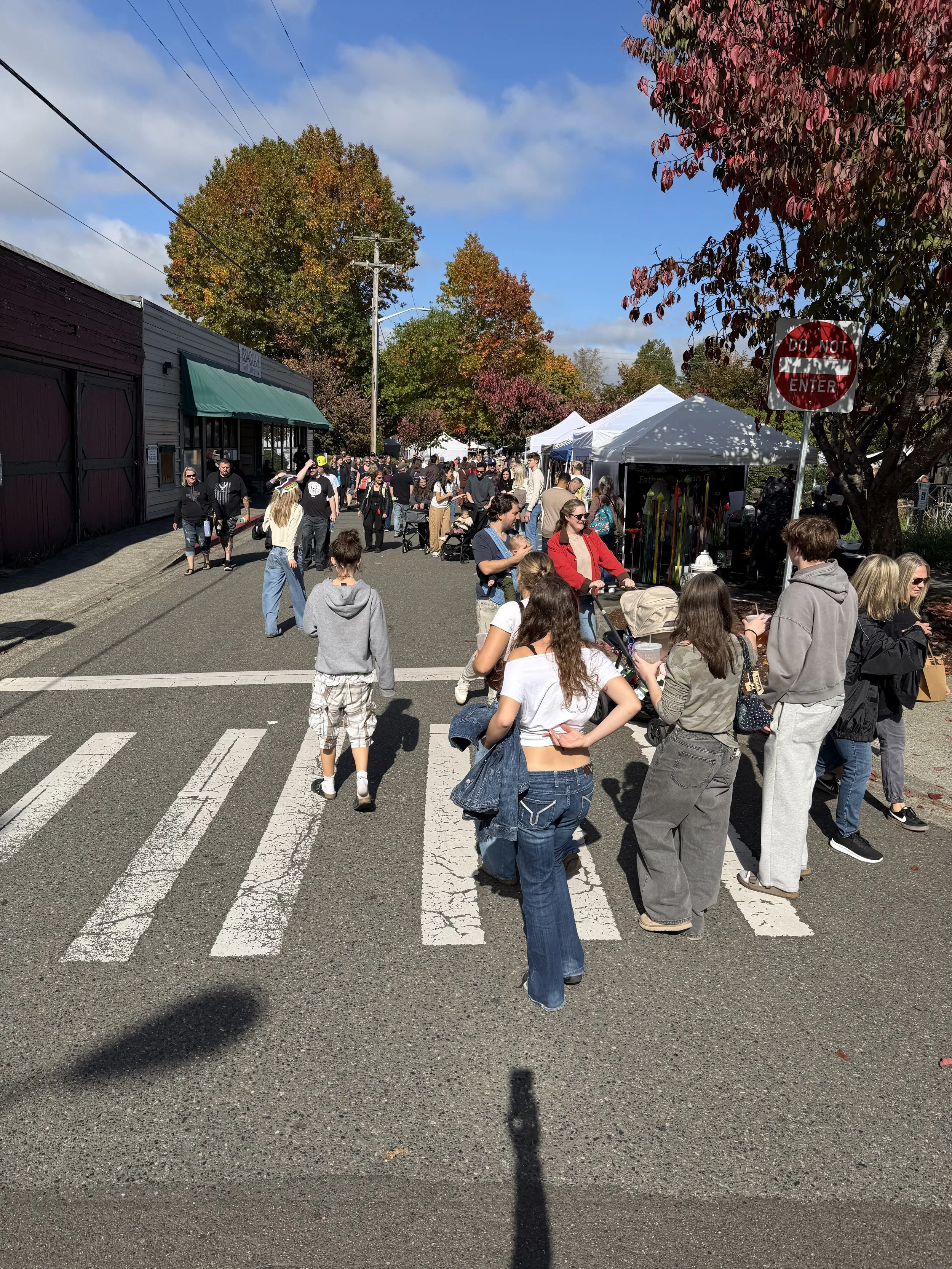
Since the 1990s, good-weather years have drawn somewhere between 150,000 and 200,000 people, and the Chamber now bills Salmon Days as the largest two-day festival in Washington. It's still a volunteer-powered event at heart: in 2006, organizers counted more than 2,000 volunteers donating over 12,000 hours. Even 2020 and 2021 didn't break the streak; the festival shifted to virtual and limited in-person formats, with online contests and hatchery webcams keeping the tradition going.
The Real Star: The Issaquah Salmon Hatchery
None of this happens without the hatchery on Sunset Way. It was built in 1936, the same year that first Labor Day festival began, by the Depression-era Works Progress Administration. Its job was to restore salmon runs in Issaquah Creek that had been badly damaged by decades of coal mining and logging. Its first salmon stock came from the nearby Green River.
Today, operated by the Washington Department of Fish and Wildlife, it's the most-visited salmon hatchery in the state, drawing an estimated 250,000 visitors a year. Its fish ladder has underwater viewing windows, so you can watch adult salmon push upstream at eye level. The hatchery is also one of the relatively few in Washington that opens its grounds to the public and offers education programs.
Much of that public-facing work comes from the Friends of the Issaquah Salmon Hatchery (FISH), a nonprofit that formed in the mid-1990s and recently marked its 30th anniversary. FISH volunteer docents staff the hatchery during Salmon Days, answering questions for the thousands of people leaning over the railings. If you only have time for one thing all weekend, make it this.
A tip for newcomers: you don't need the festival to see the fish. The run typically builds from September through October, and the hatchery grounds are open to visitors well beyond festival weekend. A quiet weekday visit is a completely different, and surprisingly peaceful, experience.
What to Do at Salmon Days 2026
Admission is free, and the festival runs roughly 10 a.m. to 6 p.m. both days along Sunset Way and the downtown core. Here's how the weekend breaks down:
● The Grande Parade: Saturday, October 3, at 10 a.m. It's the parade's 47th year, the 2026 theme is "Stars, Stripes & Salmon," honoring those who have served in the Armed Forces, and the grand marshal is Nick of Nick's Magnificent Indoor Playground. The route starts at Confluence Park, runs down Rainier Blvd N, turns onto NW Dogwood St, heads north on Front Street, and finishes along NE Gilman Blvd.
● The hatchery and the creek bridge: salmon viewing from the Issaquah Creek bridge and the fish ladder windows, with FISH docents on hand.
● Field of Fun: the kids' zone at Veterans Memorial Field, with bounce houses, inflatable slides, face painting, an animal petting area, sports games, and zorbing (yes, rolling around inside a giant clear ball).
● DockDogs: dogs sprinting off a dock and launching into a pool after a toy, one of the most crowd-pleasing things at the festival.
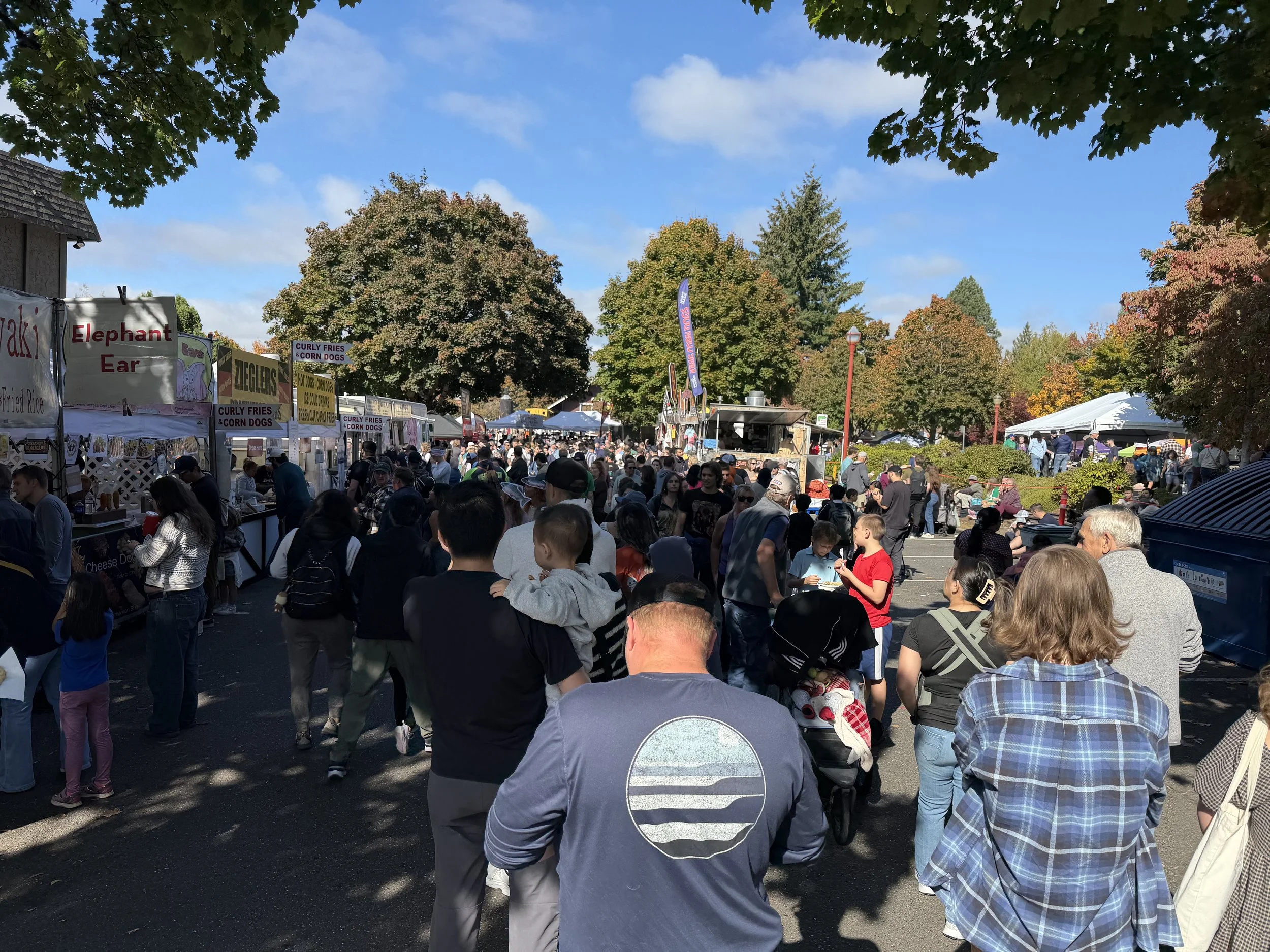
● Foods of the World: dozens of food vendors clustered near the train depot, plus a 21-and-over beer garden near the community stage.
● Artists and makers: more than 200 artisan booths lining downtown streets, with jewelry, pottery, art, and clothing.
● Live music on multiple stages throughout both days.
Tips From People Who Go Every Year
● Go early for the parade, or late for everything else. Saturday morning is the busiest stretch of the whole weekend. Crowds tend to thin out after about 3 p.m.
● Skip the downtown parking hunt. Look for festival shuttle service from outlying lots such as the Issaquah Transit Center, and check salmondays.org for this year's parking and shuttle details before you leave home.
● Dress for October in the Northwest. Layers, a rain shell, and comfortable walking shoes. It's rain or shine.
● See the fish first. The hatchery gets crowded by midday. Head there early, then work your way through the booths.
● Live nearby? Check the resident information page on salmondays.org for road closures and access details for the weekend.
Why This Matters When You're House-Hunting
Salmon Days is a good test of what a town actually is. Plenty of Eastside communities have great schools and nice parks. Far fewer have a 57-year-old tradition, built by volunteers, around a natural event that happens right in the middle of downtown. When buyers ask us "Why Issaquah?", this is a big part of the answer: it's a place with a real identity, and its residents show up for it every single year.
For Buyers & Sellers
For buyers, homes within walking distance of downtown, the historic core, Olde Town, and the streets around Sunset Way and Front Street, offer a genuine "we walk to the parade" lifestyle. It's worth deciding early whether being in the middle of it is a highlight for you, or whether you'd rather be a short drive away with easier weekend traffic.
For sellers near downtown, plan around festival weekend. Street closures and crowds can make showings tricky on October 3 and 4, but the week or two before, when the salmon are running and the town is buzzing, can be a great time to photograph and show a home that sits close to the action.
If you want to know more…
Do your friends and family ask "Why Issaquah?" when you talk about where you live, or where you want to live? Send them this post, and the rest of our Why Issaquah? series. And if you have questions about which Issaquah neighborhoods put Salmon Days within walking distance, or about any home you're considering, reach out to Kelly Azzarello Real Estate. We're always happy to help.