


02: The History of Sammamish: From Plateau Farms to City
Sammamish didn’t exist as a city until 1999, but the plateau’s story goes back to 1877. Here’s the real history: the mill town, the Redmond/Issaquah identity split, incorporation day, and the Klahanie annexation saga.
Sammamish is one of the youngest cities in Washington State, but the plateau it sits on has a much longer story, one that only became “Sammamish” in the last few decades. Understanding how a rural, unincorporated stretch of King County turned into a nationally ranked city helps explain a lot about how the place feels today: why it’s organized around neighborhoods rather than a historic Main Street, why parts of it still feel connected to Redmond or Issaquah, and why a community this young already has such a strong sense of identity.
Before it was Sammamish
The plateau between Lake Sammamish and the Snoqualmie Valley was Snoqualmie territory long before any non-Native settlers arrived. The name “Sammamish” itself comes from the Snoqualmie language: according to members of the Snoqualmie Tribe, it’s a corruption of “Sqawx,” the Snoqualmie name for Lake Sammamish, combined with “abs,” a suffix referring to the people of a particular area. In other words, the city’s name predates the city by generations, it originally described the people of the lake, not a municipality.
The first permanent non-Native settler on the plateau was Martin Monohon, who arrived in 1877. For the next decade or so, settlement was sparse. It wasn’t until the 1890s that people began arriving in meaningful numbers, and even then, growth stayed concentrated in the southern part of the plateau near Pine Lake, which developed faster than the north.
A mill town, then a farm town, then a resort town
The plateau’s first real economic engine arrived in 1889, when the Seattle, Lake Shore & Eastern Railroad completed a line along the eastern shore of Lake Sammamish. A lumber mill relocated to the shoreline settlement that became known as Monohon, and the Allen and Nelson Mill Company ran it starting in November 1889. For the next 36 years, that mill was the plateau’s anchor industry.
Outside the mill town, the plateau’s economy through the early 20th century was mostly logging, dairy farming, and chicken farming, the kind of land use that leaves almost no visible trace today but shaped where roads and property lines ended up. By the 1930s, a handful of resorts had sprung up along Lake Sammamish’s shores, drawing Seattle-area visitors out to the plateau for swimming and vacationing well before anyone lived there year-round in large numbers.
Redmond to the north, Issaquah to the south
For most of the 20th century, this was all unincorporated King County, and it stayed that way even as postwar development slowly crept onto the plateau starting in the 1960s. What’s interesting is how residents identified during that period: the plateau essentially split in two along SE 8th Street. Households north of that line had Redmond phone numbers and zip codes and thought of themselves as connected to Redmond. Households south of it had Issaquah phone numbers and zip codes and felt tied to Issaquah. There was no single “Sammamish” identity yet, just two halves of a plateau, each oriented toward a different neighboring city.
That split shaped the next 15 years of political wrangling. By the mid-1980s the plateau’s population had passed 10,000 and was tripling every decade and a half, and growth was arriving faster than infrastructure could keep up. Long-time residents debated three options: annex to Issaquah, annex to Redmond, or incorporate as an entirely new city.
In 1991, voters rejected a proposal to annex the southern half of the plateau to Issaquah. That same year, Redmond quietly included the northern half of the plateau in a long-range annexation plan of its own, but the idea was contested for more than a year and eventually abandoned. In 1992, plateau residents put incorporation to a vote for the first time, and it failed decisively, 58 percent to 42 percent. Opponents argued a new city with no real commercial tax base would end up costing residents more, not less.
The incorporation push cooled for a few years, but the underlying frustration with King County didn’t go away; residents felt neglected on roads, parks, and basic services, while development kept getting approved around them. By 1998, a renewed incorporation campaign put the question back on the ballot, and this time it passed.
Incorporation day
The City of Sammamish officially came into existence at midnight on August 31, 1999. The celebration, called “Sammamish Day,” was actually held three days earlier, on a Saturday at Bill Reams East Sammamish Park, where roughly 1,000 people turned out for a concert featuring members of three Seattle-area symphony companies, an antique car show, and the formal incorporation ceremony. Mayor Phil Dyer unveiled the new city’s flag, and Amy Sanders and Tom Burgess were announced as co-winners of the city’s logo design contest.
Even the name wasn’t a given. During the incorporation process, options on the table included Monohon (after the old mill town), Inglewood, Sahalee, and, memorably, Heaven. Sammamish ultimately won out, in part because it had already been used as a placeholder name during an earlier, failed 1992 incorporation attempt (state law required a name on the petition), and it stuck.
The new city started with about 28,000 residents and a fairly bare-bones setup: city hall operated out of a shopping center, there was no post office, and the plateau’s main road still looked much like the country lane it had been decades earlier.
The Klahanie question
Not every plateau neighborhood joined the city in 1999. Klahanie, now one of Sammamish’s largest and best-known neighborhoods, was deliberately left out of the original incorporation boundary because the area was seen as leaning toward eventual annexation by Issaquah instead. For a while, that looked like exactly where things were headed: in November 2005, Klahanie voted to annex into Issaquah, but also voted against taking on a share of Issaquah’s existing municipal debt as part of the deal. Issaquah shelved the annexation plan the following year rather than absorb roughly $17 million in road improvement costs on Issaquah-Fall City Road without the debt-sharing arrangement.
Klahanie stayed unincorporated for another decade before the City of Sammamish annexed it on January 1, 2016, folding in a large, already-built-out community and pushing the city’s population past 60,000 in a single step, up from roughly 45,780 at the 2010 Census. It’s a good reminder that “how Sammamish got its current shape” wasn’t settled all at once in 1999. It kept evolving for another 17 years.
Special things about Sammamish
For a city that’s barely a quarter-century old, Sammamish has picked up a disproportionate number of national accolades:
Money magazine ranked Sammamish among America’s best small towns twice in its “Best Places to Live” survey: 12th in 2009 and 15th in 2011.
In 2012, Forbes and Nextdoor named Sammamish the friendliest town in America.
NerdWallet ranked Sammamish 13th on its 2016 list of Best Small Cities for Families.
In 2018, Money magazine ranked Sammamish 9th nationally in its “50 Best Places to Live” survey, and it was the only city in Washington, and one of only three in the entire Pacific Northwest, to make that list.
In 2021, WalletHub named Sammamish the #1 Best Small City in America, out of more than 1,300 cities evaluated, with especially high marks for economic health and safety.
The city’s official motto, adopted along the way, is fittingly understated: “Building Community Together.”
The plateau, at a glancE
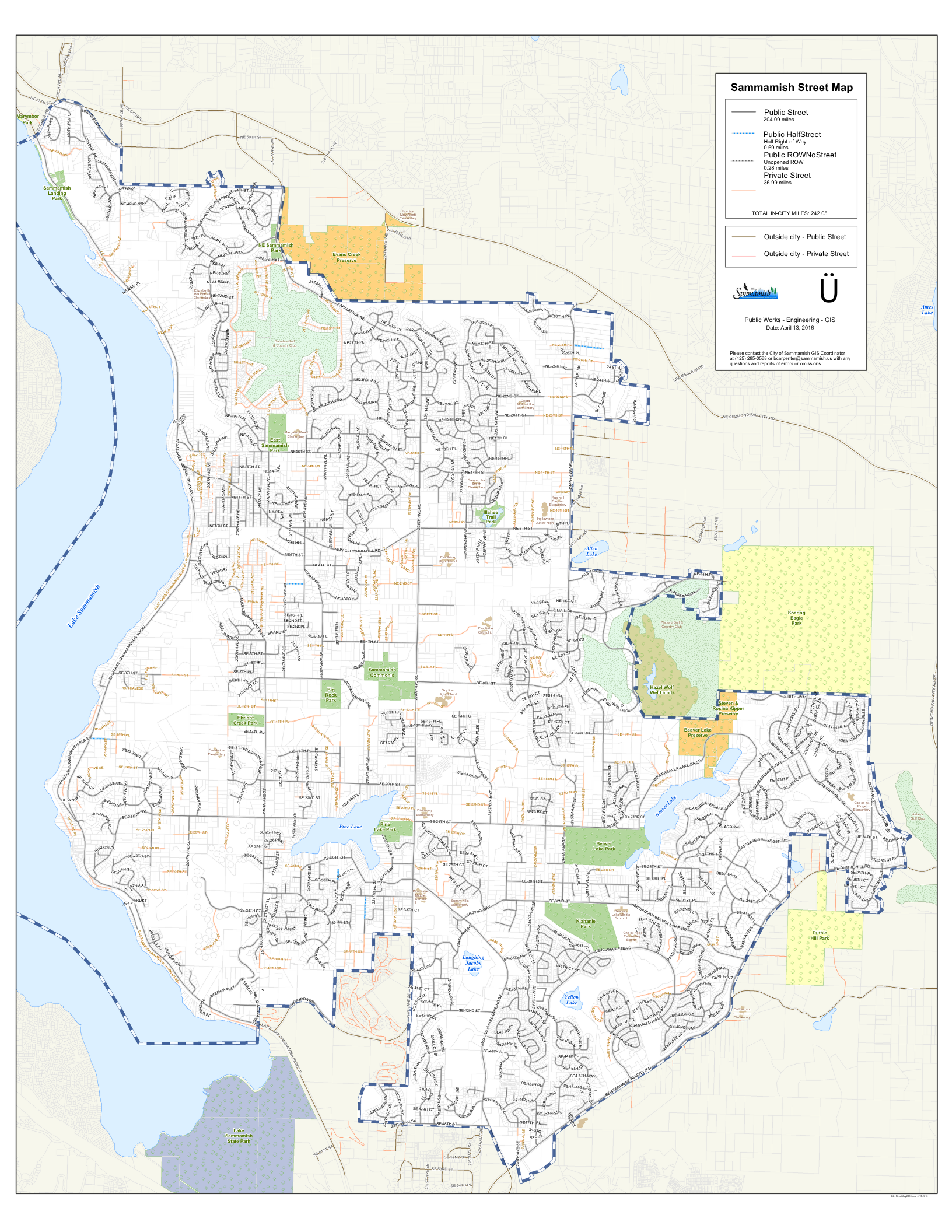
If this map doesn’t render wherever this post ends up, here’s a direct link:
This is the second post in our Why Sammamish? series. Up next: why Sammamish’s schools are such a draw, and the two-district quirk that surprises so many newcomers.
Kelly Azzarello Real Estate | Compass 📧 kelly@kellyazzarello.com 📞 (425) 830-6457 🌐 kellyazzarello.com

01: Why Sammamish?
Top-ranked schools, a lake five minutes away, trails outside your door, and a strong job market: ten reasons people keep choosing Sammamish, from an agent who's lived here nearly 30 years
10 Reasons People Keep Choosing Sammamish
Ask someone who moved to Sammamish in the last few years why they picked it, and you’ll rarely get a one-word answer. It’s usually a combination: the schools, the trails right outside the door, more ways to get to work than you’d expect for a suburb this size, a lake five minutes away, a neighborhood that still feels like a neighborhood.
Sammamish sits about 20 miles east of Seattle and roughly 10 miles from Bellevue and 7 miles from Redmond, close enough for an easy commute, far enough to feel like its own place. Geographically, it sits east of Lake Sammamish itself. It’s part of the Eastside, but it has its own identity: relatively young (the city incorporated in 1999) and still coming into its own. Here’s what keeps landing it on “best places to live” lists, and what keeps drawing people here in the first place.
1. It keeps showing up on national “best places” and safety lists
This isn’t just local pride. In U.S. News & World Report’s 2025–2026 Best Places to Live rankings, Sammamish placed 11th nationally out of 250 cities evaluated, the highest ranking of any Eastside city that year. It also landed 6th on U.S. News’ list of best small cities in the U.S., and was the only West Coast city to make that particular list. Just as notably, Sammamish ranked 8th nationally for safety in the same analysis. For a lot of families, that’s not a nice-to-have line item, it’s close to the top of the list of reasons they’re looking here in the first place. The rankings weigh value, economy, quality of life, safety, and desirability, and Sammamish’s combination of high household income, low crime, and strong job market is what pushes it up the list.
2. A genuinely diverse community, spread across a lot of distinct neighborhoods
Roughly 37% of Sammamish’s population is Asian, and more than a third of residents were born outside the U.S. That makes for a meaningfully international community for a suburb of this size, and it shows up in everything from the restaurant scene to the school district’s language programs.
That diversity isn’t spread evenly across one uniform city, it’s organized into a genuinely large number of distinct neighborhoods, each with its own character: Klahanie, Trossachs, Pine Lake, Sahalee, Beaver Lake, Timberline, Inglewood, Heritage Hills, Sammamish Highlands, and more, each worth knowing on its own terms, something we cover in dedicated posts throughout this series. Few suburbs this size have this many recognizably different communities inside one city limit.
3. Two school districts, both highly regarded
This is a quirk that surprises a lot of newcomers: Sammamish isn’t served by a single school district. The northern half falls in the Lake Washington School District, and the southern half in the Issaquah School District (a small pocket in the northeast corner is actually part of Snoqualmie Valley School District, a legacy of how the city’s boundaries were annexed after incorporation). Both LWSD and ISD are consistently rated among the strongest public school systems on the Eastside, which means where you land in Sammamish can matter almost as much as landing in Sammamish at all, something we’ve covered in a dedicated post in this series.
4. Still Eastside-connected, without being Eastside-generic
Part of what makes Sammamish work is what’s just outside it. Issaquah’s downtown and its trailheads are minutes away. Redmond’s tech campuses and Bellevue’s shopping and dining are a short drive. Sammamish gets the benefit of all of that proximity while keeping its own lower-density, more residential character: no light rail line running through it, no high-rise skyline, just a plateau full of neighborhoods with a lake on one side and a valley on the other.
5. Life actually organized around a lake
Lake Sammamish isn’t a backdrop here, it’s a destination. The East Lake Sammamish Trail, an 11-mile paved rail-trail running from Marymoor Park in Redmond, through Sammamish, to Issaquah, gives residents a flat, easy corridor for walking, running, and biking right along the water. Lake Sammamish State Park adds swimming beaches, picnic areas, and boat launch access. For a suburb this size, having a full lake as a recreational front yard is not something every Eastside city can claim.
Sammamish also has a handful of smaller lakes tucked into its own neighborhoods, each with its own park and its own following: Pine Lake, Beaver Lake, and Yellow Lake in Klahanie. We have given each of these its own closer look later in this series.
6. An outsized trail and park network for a city this size
Beyond the lake, Sammamish backs up to some genuinely excellent open space. Soaring Eagle Regional Park alone has 12 miles of multi-use trails through forest that’s been used as a travel corridor for thousands of years. Add Beaver Lake Park, Duthie Hill Mountain Bike Park (a destination for mountain bikers well beyond the city), Big Rock Park, and the Evans Creek Preserve, and there’s a genuinely wide range of terrain, flat paved paths for a stroller, technical singletrack for mountain bikers, wetland boardwalks for birdwatching, all inside city limits or a few minutes past them.
7. A young city that still feels like a collection of neighborhoods
Sammamish didn’t incorporate until 1999, which is late by Eastside standards. Bellevue, Issaquah, and Redmond were all established cities decades earlier. Before that, this was unincorporated King County, growing up neighborhood by neighborhood (Klahanie, Trossachs, Pine Lake, and others) rather than around a single historic downtown (as Issaquah was). That history is part of why Sammamish still feels less like one city and more like a set of distinct communities that happen to share a city government, something we have covered in more depth in the history post in this series.
8. A real town center, not just a highway exit
Sammamish Commons brings together City Hall, the library, a YMCA, sport courts, and open green space in one walkable area, a deliberate attempt to give a young, sprawling city something like a center of gravity. It’s not a historic Main Street, but it functions as one.
9. A genuinely strong local job market
Sammamish ranked 3rd in the nation for job market strength in the same U.S. News analysis, largely on the strength of its Eastside location. Microsoft, Amazon, Google, and Meta all have a major presence in nearby Redmond, Bellevue, and Seattle, which means a lot of Sammamish residents get a tech-hub paycheck with a commute that’s shorter, and a lot quieter, than living closer to the urban core.
10. Getting in and out of Sammamish
Sammamish’s location on the plateau means most trips out involve some driving no matter what. There’s no light rail line running through the city itself. But between private employer shuttles, nearby park-and-rides, and light rail access a short drive away, residents have more options than the “everyone drives everywhere” reputation suburbs like this often get.
Private company transportation. Several of the region’s largest employers run their own commuter shuttle programs for staff, with stops that reach into Sammamish and neighboring Issaquah. Microsoft and Amazon are the two most established examples: both operate free commuter bus service for employees between residential areas on the Eastside and their campuses in Redmond and Seattle, as an alternative to driving.
Light rail, via Bellevue or Redmond. Sound Transit’s 2 Line now connects downtown Redmond, the Bellevue area, Mercer Island, and Seattle, with the full line completing its cross-lake connection in early 2026. It doesn’t run through Sammamish, but driving into Redmond or Bellevue and parking at or near a station is a realistic option for residents who want to swap the car for the train partway through their commute.
Park-and-ride options in and around Sammamish. King County Metro and Sound Transit operate several park-and-ride lots serving Sammamish directly, plus the Issaquah Highlands Park & Ride just over the city line, which connects to express bus routes reaching downtown Bellevue in as little as 20 minutes and links out to the broader Link light rail network. A dedicated North Sammamish park-and-ride, built for future connections to Link service, is also part of Sound Transit’s longer-range regional plans.
A note on the plateau itself. When people say “the Sammamish Plateau,” they’re mostly talking about the City of Sammamish, but the plateau is a geographic feature, not just a city boundary, and it extends a bit further than city limits do. Areas like Union Hill-Novelty Hill to the north and small pockets like Ames Lake remain unincorporated King County rather than part of the city, which means different governance, permitting, and services even though they can feel like part of the same plateau community. Worth keeping straight if you’re comparing addresses that look close together on a map.
We’ve watched this city become what it is
By January 2027, our family will have called Sammamish home for 30 years, long enough to have watched it grow from a loose collection of plateau neighborhoods into an incorporated city with a national reputation. We raised our own kids here, all the way through the public school system, so a lot of what’s in this post isn’t secondhand research, it’s what we lived.
One thing that doesn’t always come through in the rankings: how easy it is to actually get involved here. Between youth sports leagues, school PTAs, HOA boards, trail and park volunteer days, and city committees, Sammamish is a place where showing up tends to matter more than knowing the right people. That’s part of why it still feels like a community and not just a good place to buy a house.
If you’re thinking about a move to Sammamish, or trying to figure out where on the plateau actually fits your family, we’d be glad to talk through it with you.
This is the first post in our Why Sammamish? series, where we’re digging into what actually makes this city tick, its history, its schools, its outdoor life, its neighborhoods, and more. Next up: the history of Sammamish, from unincorporated plateau to one of the fastest-growing cities in the state.

Kelly Azzarello Real Estate | Compass 📧 kelly@kellyazzarello.com 📞 (425) 830-6457 🌐 kellyazzarello.com
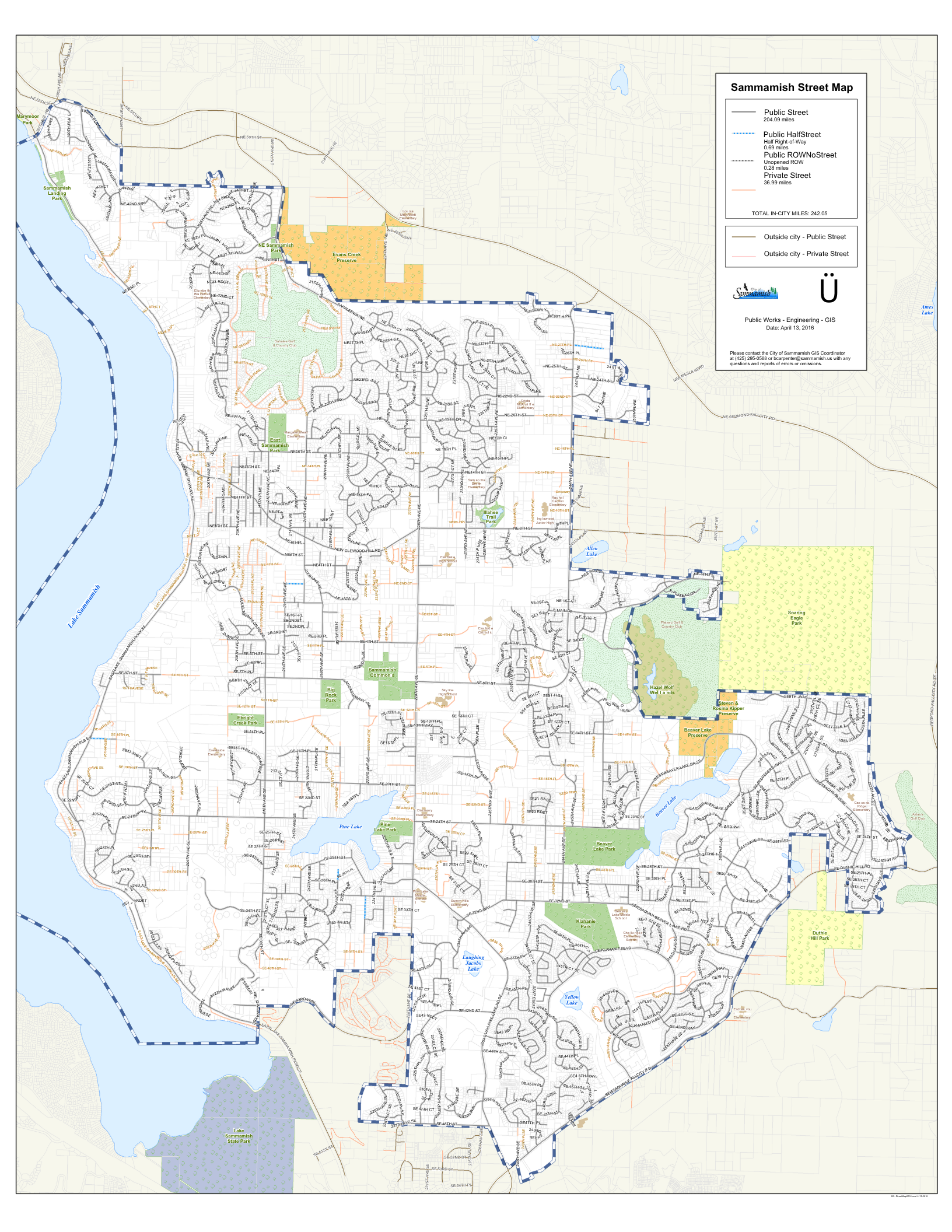
.
Want to sell? Don’t miss out on a hidden gem: hardwoods under the carpet
If your home was built in the 1970's or earlier, which is not uncommon in established neighborhoods in Bellevue, Sammamish, Redmond, Issaquah, and Renton, there's a decent chance real hardwood is hiding under that living room carpet. Even if you're not sure what's under that carpet, it's a good idea to check it out before spending thousands replacing worn carpet when the better, and maybe even cheaper, move is right underneath your feet.
How to Check Before You Commit to Anything
Before you order new carpet or call a flooring crew, pull up a corner in a closet or under a heat register — anywhere the seam won't be seen if you decide to keep the carpet after all. You're looking for solid wood strip flooring, which shows up in all kinds of homes, sometimes in surprising places.
If you find it, a light sand and refinish typically runs a fraction of the cost of new carpet or engineered flooring, and buyers consistently respond to real hardwood in listing photos.
Why This Is Worth the Effort
Buyers touring homes for sale in Bellevue, Sammamish, Redmond, Issaquah, Renton, and Klahanie expect a certain level of finish, and original hardwood flooring signals quality and character that builder-grade flooring can't fake. It's one of the few updates where the “before” condition of the house actually works in your favor. This is especially true if the house has the charm of a craftsman or mid-century modern build — a style you'll find throughout many of these Eastside neighborhoods. Make certain you speak to your broker before doing anything though, as brokers like us have contacts and experience to help guide you through.
What It Costs vs. What It's Worth
A professional hardwood floor refinishing job is generally priced per square foot and is almost always less expensive than replacing flooring outright — and it photographs beautifully for real estate listing marketing.
One of the first questions sellers across Bellevue, Sammamish, Redmond, Issaquah, Renton, and Klahanie ask us about refinishing their hardwoods is whether they'll get their money back; the ever-present ROI debate. There's no easy answer to this, and there are many things that go into making this decision. In our experience helping local sellers get their homes ready to sell, ROI on a project like this shows up in a few different ways:
1. Real return. This is the straightforward version: you put in $10,000 and the sale price increases by $10,000 — or $8,000, or $6,000. It's rarely a dollar-for-dollar trade, but it's the easiest to measure.
2. Attraction. This is where a project makes the home more appealing to buyers without necessarily attaching to a specific dollar amount. A more attractive home draws more interest, which can mean more showings, more offers, and a stronger negotiating position — even if you can't point to the exact number it added.
3. Detraction. This is the flip side: something about the home is unattractive enough that buyers notice it, and if you don't address it before listing, you're doing the home — and yourself — a disservice. It's not about adding value so much as it is about not losing it.
Sometimes you have the history of why the carpet was installed. If it was installed to hide poorly installed floors, or floors that were damaged (water, pets, etc.), you'll need to consider whether or not it's worth it to refinish, recarpet, or replace entirely.
In our example below, that carpet was old, unattractive, musty, and worn — squarely in the “detraction” category. It had to go. Luckily, we discovered the hardwood beneath it was in great shape.
An Example From Our Own Experience
In a recent case for us, a client came to us with her parents' older home in the Eastside area. They had lived there for 50 years, and the carpet in the home today was there when they bought it. After 5 minutes of investigation we determined that the hardwoods were throughout the main floor of the house (with the exception of the kitchen) and they seemed to be in very good condition.
We recommended pulling up the carpet (which needed to be done anyway), and in this case decided that refinishing was not necessary. Why?
1. The hardwoods were in very good shape (no major stains, though some fading, no large scratches, etc.).
2. The color of the floors was fairly neutral, and refinishing, like painting, is very personal. Not only would the savings of not refinishing go to the sellers' bottom line, but buyers would refinish it the way they wanted and wouldn't be paying for someone else's “tastes” in color.
Here's the dining room before, still carpeted, and the same room after the carpet came up — no sanding, no refinishing, just the original floor underneath:

Before: the dining room, still carpeted

After: same dining room, original hardwood exposed

Living room, carpet pulled back mid-process
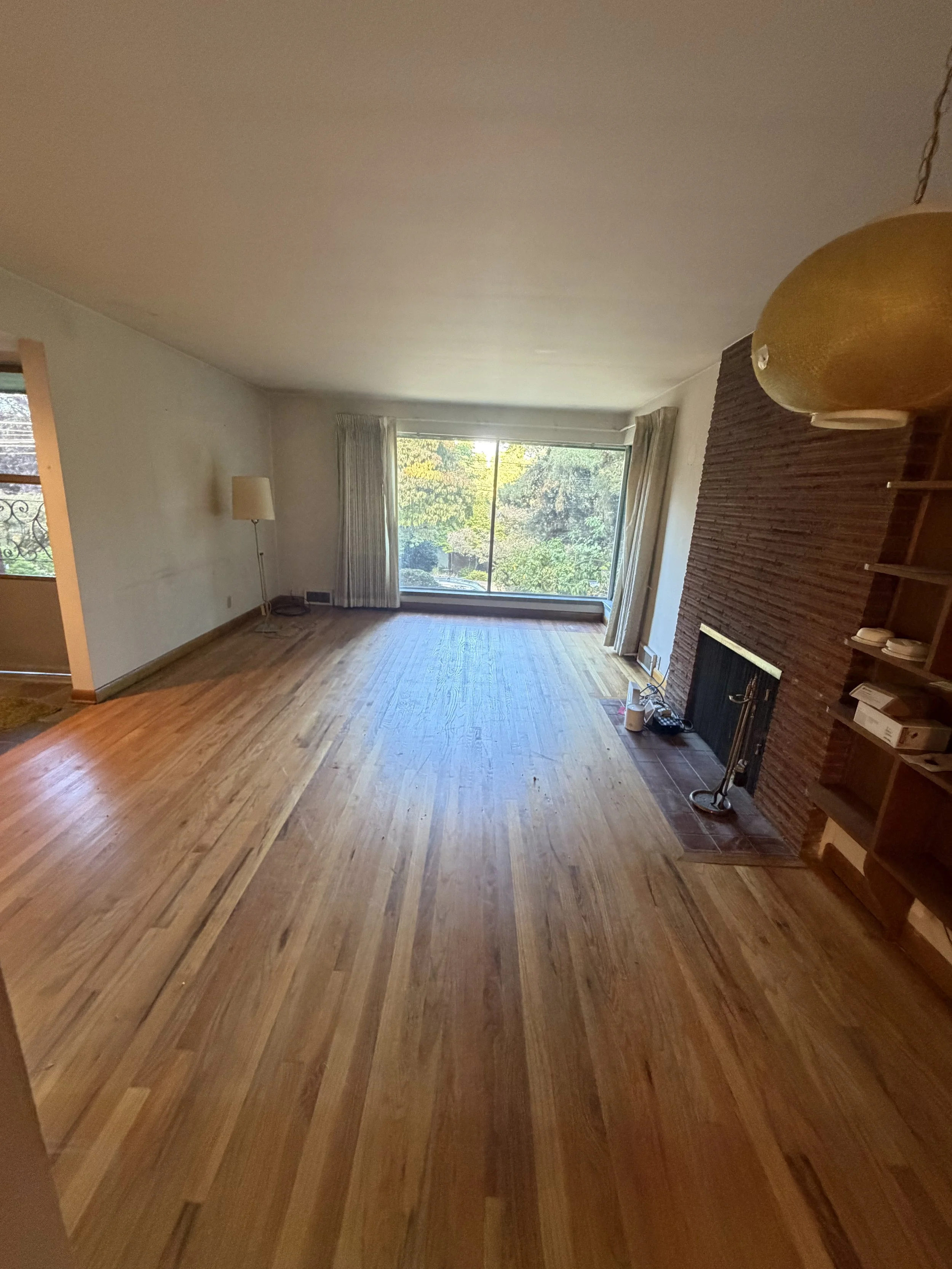
Living room after, hardwood fully exposed
It's worth saying plainly: at this point, there has been zero refinishing done to these floors. What you're seeing is simply the original hardwood, cleaned up, with the carpet and padding removed. It already looks great.
One detail worth knowing about: it's common with hardwood floors to have quarter round trim at the bottom of the baseboards. That quarter round is often removed when carpet is installed, since carpet gets tucked under the baseboard for a more finished look. In this case, we decided not to reinstall the quarter round — matching the existing trim exactly would have been difficult, and we expect the new owners will want to refinish the floors themselves, at which point they'll likely replace the quarter round to match whatever finish they choose.
We also didn't touch the flooring anywhere else in the house. The basement and kitchen both have rolled linoleum, and we left both as-is rather than expanding the scope of this project.
If a buyer's feedback mentions the floors needing refinishing, or the missing quarter round, our response is simple: “We discovered wonderful hardwoods below the old carpet and felt that buyers would appreciate them more than simply covering them up again. We didn't refinish them because we expected the buyers would want to pick the finishes themselves, and replace the quarter-round at that time as well as flooring in other areas of the house. We priced it with the fact that the buyer would want to refinish themselves, not pay the seller for that — especially if they wanted a different color or finish.”
While I wouldn't say it's easy to pull up carpet, tack strips, and staples in the flooring, it is definitely something that can be done by the seller or a handyman. You'll want to be careful not to mar the flooring during carpet removal, but it doesn't require a flooring professional, and YouTube will be your friend. You'll need a few tools and some way to get the old carpet and tack strips to the dump, but you'll likely find a use for the tools — maybe in your next home when you prepare to move in.
Even a partial refinish in the main living areas can be enough to shift buyer perception the moment they walk in.
Thinking About Selling Your Home in Bellevue, Sammamish, Redmond, Issaquah, Renton, or Klahanie?
Every home is different, and not every fix is worth the money. If you'd like a second set of eyes on what's actually worth doing before you list — and what to skip — we're happy to walk through it with you, room by room. We work with sellers throughout the Eastside and know what local buyers respond to.
Kelly Azzarello Real Estate | Compass Real Estate
📞 (425) 830-6457
🎥 Watch home-selling tips and Eastside market updates on our YouTube channel — [link coming soon]

What’s Next? #2: Should You Stay or Should You Go? Finding the Right Fit
Staying or Moving | Kelly Azzarello Real Estate
One of the most common questions we hear from homeowners isn't when should we move.
It's something simpler — and often harder.
Should we stay? Or should we move at all?
For many people, that question lingers quietly in the background for years. Not because anything is wrong, but because life keeps changing. And this conversation isn't about pushing toward a move — it's about making sure your home still supports the life you want to live.
There Is No Universal Right Answer
What works perfectly for one person might feel completely wrong for someone else.
Some people stay in the same home for decades and never look back. Others reach a point where the home that once felt perfect begins to feel like more than they want to manage. The goal isn't to choose what sounds good on paper — it's to understand what actually fits your life today, and where it may be headed.
When Staying Makes Sense
For many homeowners, staying put truly is the right choice.
You may love your neighborhood. You may have strong community ties. Your home may still function well for how you live day to day. In those cases, planning might simply mean making small adjustments — improving comfort, safety, or accessibility — or just confirming that staying aligns with your long-term goals.
Planning doesn't always lead to moving. Sometimes it leads to confidence — confidence that you're exactly where you should be.
When Moving Enters the Conversation
For others, the question of moving begins to surface gradually.
Maybe the home feels larger than you need. Maybe maintenance takes more time and energy than it used to. Maybe daily routines involve stairs, layouts, or features that no longer feel as easy to navigate.
These thoughts don't mean you're behind. They don't mean change needs to happen now. They're simply signals worth paying attention to — because ignoring them often leads to rushed decisions later.
Planning Creates Options
When you explore staying versus moving early, you give yourself options.
You can look at different paths without committing to any of them. You can understand what a move could look like, what staying could require, and what trade-offs matter most to you.
Planning early keeps the decision flexible. It allows you to move forward calmly, instead of reacting when circumstances force the issue.
Reframing the Question
Let's look at this differently.
This isn't about choosing between right and wrong. It isn't about giving something up. It isn't about rushing into change.
It's about fit. Does your home fit your life today? Will it continue to fit in the years ahead? When you frame it this way, the decision becomes less emotional and more empowering.
Ready to Think It Through?
We've put together a simple planning guide designed to help you think through the staying vs. moving question — to organize what matters most to you and see your options more clearly, without pressure and without timelines.
You can access it at KellyAzzarello.com. And if you'd like to talk through your specific needs, questions, or goals, we're here to help.
📞 425.830.6457 | KellyAzzarello.com